
Contents
Overview
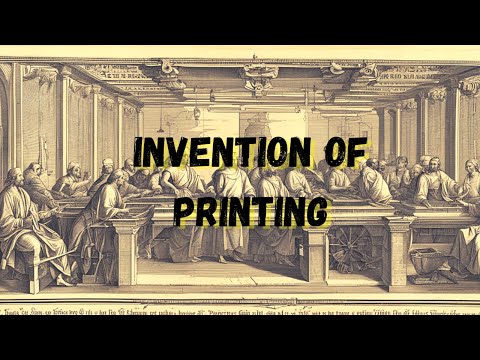
The Printing Revolution, often synonymous with Johannes Gutenberg's innovations around 1450, fundamentally altered the course of human civilization. Before Gutenberg's press, books were painstakingly copied by hand, making them rare, expensive, and accessible only to a privileged few. This scarcity limited the dissemination of knowledge and hindered intellectual progress. The development of movable type, combined with existing technologies like paper and screw presses, allowed for the mass production of texts. This technological leap, occurring in the heart of the Renaissance, coincided with a growing demand for knowledge fueled by burgeoning universities and a rising merchant class. The impact was profound, accelerating the spread of discoveries and ideas that would shape the modern world, much like the internet has in more recent times.
⚙️ How It Works
The core of Gutenberg's innovation lay in the creation of a mechanical movable-type printing press. This system involved individual metal letters (type) that could be arranged to form words and sentences, inked, and then pressed onto paper. Gutenberg's genius was in perfecting the entire process: developing a metal alloy for durable, reusable type, creating an oil-based ink that adhered well to metal, and adapting a screw press to apply even pressure. This method allowed for the rapid and consistent reproduction of texts, a stark contrast to the laborious work of scribes or the limitations of earlier woodblock printing techniques used in places like China. The efficiency of this system, as documented by sources like Wikipedia and Britannica, enabled the mass production of books, pamphlets, and other printed materials.
🌍 Cultural Impact
The cultural impact of the printing revolution was immense and far-reaching. It fueled the Renaissance by making classical texts widely available, accelerated the Protestant Reformation by enabling the rapid spread of Martin Luther's ideas, and laid the groundwork for the Scientific Revolution by facilitating the sharing of research and data among scholars. Literacy rates surged as books became more affordable and accessible to a broader population, breaking the monopoly of the elite on knowledge. This democratization of information fostered critical thinking, challenged established authorities, and contributed to the rise of vernacular languages and proto-nationalism. The printing press effectively created a global news network, as pamphlets and news sheets spread information across vast distances, a phenomenon that echoes the rapid dissemination of information seen on platforms like Reddit and TikTok today.
🚀 Legacy & Future
The legacy of the printing revolution continues to shape our world. It established the foundation for mass communication and the modern publishing industry. While digital technologies have transformed how we access and share information, the principles of mass production and dissemination pioneered by Gutenberg remain relevant. The printing press demonstrated the power of technology to democratize knowledge and empower individuals, a lesson that continues to inform discussions around new technologies like Artificial Intelligence and the internet. The ongoing evolution of printing technologies, from industrial presses to digital printing, highlights its enduring significance in human history, much like the foundational work of figures like Bill Gates and Paul Allen in the development of personal computing.
Key Facts
- Year
- 15th Century
- Origin
- Europe
- Category
- history
- Type
- technology
Frequently Asked Questions
When was the printing press invented?
While woodblock printing existed earlier in China, the mechanized movable-type printing press in Europe is widely attributed to Johannes Gutenberg around 1450.
Who invented the printing press?
Johannes Gutenberg is credited with inventing the first mechanized movable-type printing press in Europe. However, movable type itself was developed earlier in China and Korea.
What was the impact of the printing press?
The printing press led to the mass production of books, increased literacy, accelerated the spread of knowledge and ideas, and played a crucial role in major historical movements like the Renaissance, the Reformation, and the Scientific Revolution.
How did the printing press change society?
It democratized knowledge, making information accessible to a wider audience, which challenged existing power structures, fostered critical thinking, and spurred social and intellectual change.
What were the key components of Gutenberg's printing press?
Gutenberg's innovation involved a metal alloy for durable type, an oil-based ink, and a new press adapted from existing screw presses, all working together to enable efficient mass printing.
References
- worldhistory.org — /article/1632/the-printing-revolution-in-renaissance-europe/
- history.com — /articles/printing-press-renaissance
- en.wikipedia.org — /wiki/Printing_press
- odp.library.tamu.edu — /mediacommunication2e/chapter/how-the-printing-press-helped-in-shaping-the-futur
- britannica.com — /technology/printing-press
- blogs.loc.gov — /headlinesandheroes/2022/04/printing-newspapers-1400-1900/
- quocirca.com — /content/the-gutenberg-revolution-how-the-printing-press-shaped-humanity-and-wha
- printinghistory.org — /timeline/