
Contents
Overview
The genesis of prehistoric art is shrouded in the mists of deep time, with evidence suggesting artistic endeavors began far earlier than previously assumed. While the Upper Paleolithic era, starting around 40,000 BCE, is widely recognized for its sophisticated cave art and portable figurines, more recent discoveries push this timeline back dramatically. Prior to this, artifacts like engraved ochre pieces from Blombos Cave (c. 75,000 BCE) and shell beads from Grotte des Pouces Bleus (c. 100,000 BCE) hinted at early symbolic behavior. The transition from purely functional objects to those with aesthetic or symbolic intent marks a pivotal moment in human cognitive development, laying the groundwork for the explosion of creativity seen in later periods like the Magdalenian period.
⚙️ How It Works
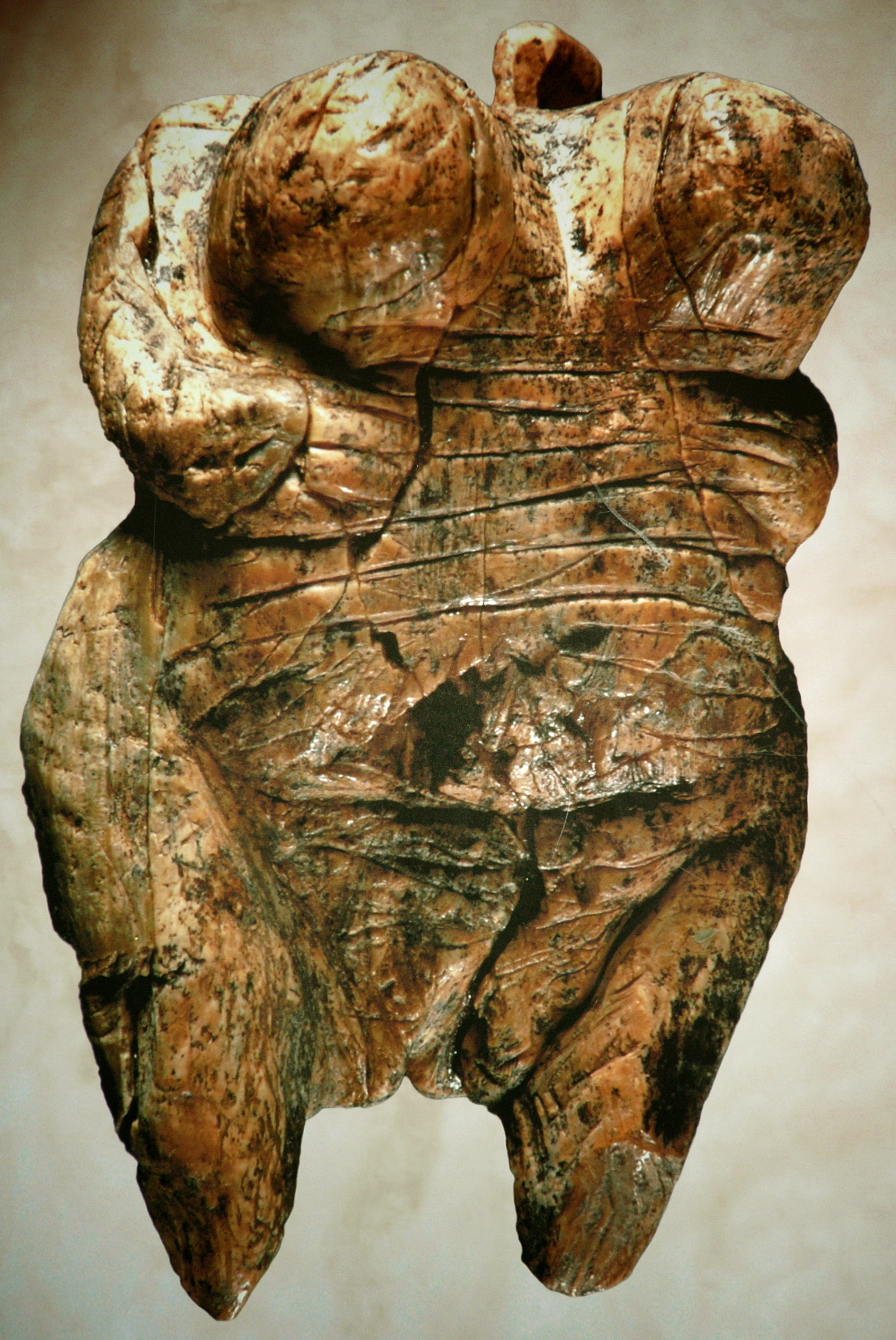
Prehistoric art functions not as a singular, unified style, but as a broad spectrum of techniques and materials employed by diverse human groups across vast geographical and temporal expanses. The 'how' of its creation is intrinsically linked to the available resources and the environmental context. Pigments, primarily derived from minerals like ochre (iron oxides for reds and yellows) and charcoal or manganese oxides (for blacks), were ground into powders and mixed with binders such as animal fat, blood, or plant sap to create paints. These were applied to cave walls using fingers, brushes made from animal hair or plant fibers, or blown through hollow bones. Engravings and carvings were executed on bone, ivory, antler, and stone using sharp flint tools, while sculptures, like the famous Venus of Willendorf, were often fashioned from soft stone, clay, or mammoth ivory. The construction of megalithic structures, such as Stonehenge and the Carnac Stones, represents a monumental form of prehistoric art and architecture, requiring immense collective effort and sophisticated understanding of engineering and astronomy.
📊 Key Facts & Numbers
The sheer scale and antiquity of prehistoric art are staggering. Over 350 prehistoric cave sites have been identified in France alone, with notable examples like the Chauvet Cave (c. 30,000 BCE) and Lascaux Caves (c. 17,000 BCE) housing thousands of animal depictions. Globally, estimates suggest that hundreds of thousands of prehistoric artworks exist, many yet undiscovered. The Venus figurines, a class of over 200 small Paleolithic statues of women, are found across Europe, dating from approximately 25,000 BCE. The Altamira Cave in Spain, discovered in 1879, provided some of the earliest widely recognized evidence of Paleolithic art, featuring remarkably detailed bison paintings. The oldest known musical instrument, a flute made from bird bone and mammoth ivory, dates to around 40,000 BCE, found in the Hohle Fels Cave in Germany, indicating a parallel development in prehistoric music.
👥 Key People & Organizations
While specific individuals responsible for prehistoric art are lost to time, archaeologists and paleoanthropologists are the key figures in its discovery, interpretation, and preservation. Pioneers like Henri Breuil, often called the 'abbé of caves,' meticulously documented and analyzed the art of Lascaux and Altamira, proposing theories about shamanism and hunting magic. Alexander Marshack revolutionized the understanding of Paleolithic notation systems, arguing that markings on bone and ivory were early forms of calendar or record-keeping. Institutions such as the French National Centre for Scientific Research (CNRS) and universities worldwide, including University of Bordeaux and University of Leipzig, house leading research departments and laboratories dedicated to prehistoric archaeology and art. Organizations like UNESCO play a vital role in designating and protecting significant prehistoric art sites as World Heritage locations, ensuring their survival for future generations.
🌍 Cultural Impact & Influence
The influence of prehistoric art is profound and multifaceted, shaping our understanding of human origins and the very definition of art itself. It demonstrates that symbolic thought and aesthetic expression are not recent human developments but are deeply ingrained in our evolutionary history. The discovery of cave paintings at Chauvet Cave in 1994, with their astonishing realism and dynamic compositions, forced a re-evaluation of the artistic capabilities of early humans, pushing back the timeline for sophisticated artistic achievement by millennia. These ancient artworks have inspired countless modern artists, writers, and filmmakers, feeding into a collective fascination with our primal past. Furthermore, the study of prehistoric art provides critical insights into early human cognition, social structures, and spiritual beliefs, influencing fields from anthropology and psychology to philosophy and art history. The enduring mystery and raw power of these ancient creations continue to captivate the global imagination.
⚡ Current State & Latest Developments
The study and discovery of prehistoric art are ongoing, with new sites and artifacts continually emerging. Advances in dating techniques, such as radiocarbon dating and uranium-thorium dating, allow for more precise chronologies of these ancient works. Remote sensing technologies and GIS are aiding in the identification of potential new cave sites. Conservation efforts are also a major focus, as many prehistoric art locations are fragile and threatened by environmental changes, tourism, and human activity. For instance, strict access controls are maintained at Lascaux and Chauvet Cave to preserve their delicate ecosystems. The ongoing analysis of pigments and application techniques using spectroscopic methods provides deeper understanding of the materials and methods used by prehistoric artists. The recent discovery of the 73,000-year-old drawing in Blombos Cave highlights that significant new findings are still being made, constantly revising our understanding of early human creativity.
🤔 Controversies & Debates
The interpretation of prehistoric art is fraught with debate, primarily concerning the 'why' behind its creation. The 'hunting magic' theory, popularized by Henri Breuil, suggested that cave paintings were created to ensure successful hunts, a notion now largely considered simplistic. Alexander Marshack's work on notational systems proposed that markings were early forms of record-keeping, a theory that faced significant skepticism. More contemporary debates revolve around the cognitive abilities of early humans, with some scholars arguing for complex symbolic and abstract thought, while others maintain a more conservative view. The meaning of the Venus figurines remains a hot topic: are they fertility symbols, self-portraits, or something else entirely? The very definition of 'art' is also implicitly debated, as we project modern concepts onto ancient practices. The extent to which these images represent shamanistic visions, storytelling, territorial markers, or purely aesthetic expression continues to be a subject of intense scholarly discussion.
🔮 Future Outlook & Predictions
The future of prehistoric art research promises deeper insights into the cognitive and cultural evolution of humanity. With advancements in paleogenetics and archaeogenomics, researchers may soon be able to link specific artistic styles or motifs to particular hominin groups or migrations, potentially identifying the genetic underpinnings of creativity. The application of artificial intelligence and machine learning could help analyze vast
Key Facts
- Category
- history
- Type
- topic