
Contents
Overview
The origins of the Picts are shrouded in the mists of antiquity, with historians generally positing them as descendants of the indigenous Iron Age peoples of northern Britain, possibly including the Caledonians and other tribes who resisted Roman expansion. Early Pictland was not a monolithic entity but a collection of distinct chiefdoms, each with its own territory and leadership. Over centuries, a process of consolidation occurred, leading to the emergence of dominant kingdoms. The eventual merger with the Kingdom of Dál Riata around 900 AD, under the rule of the House of Alpin, effectively dissolved the distinct Pictish kingdom, though the concept of Pictish kingship persisted for a few more decades until fully absorbed into the emerging Kingdom of Alba.
⚙️ How It Works
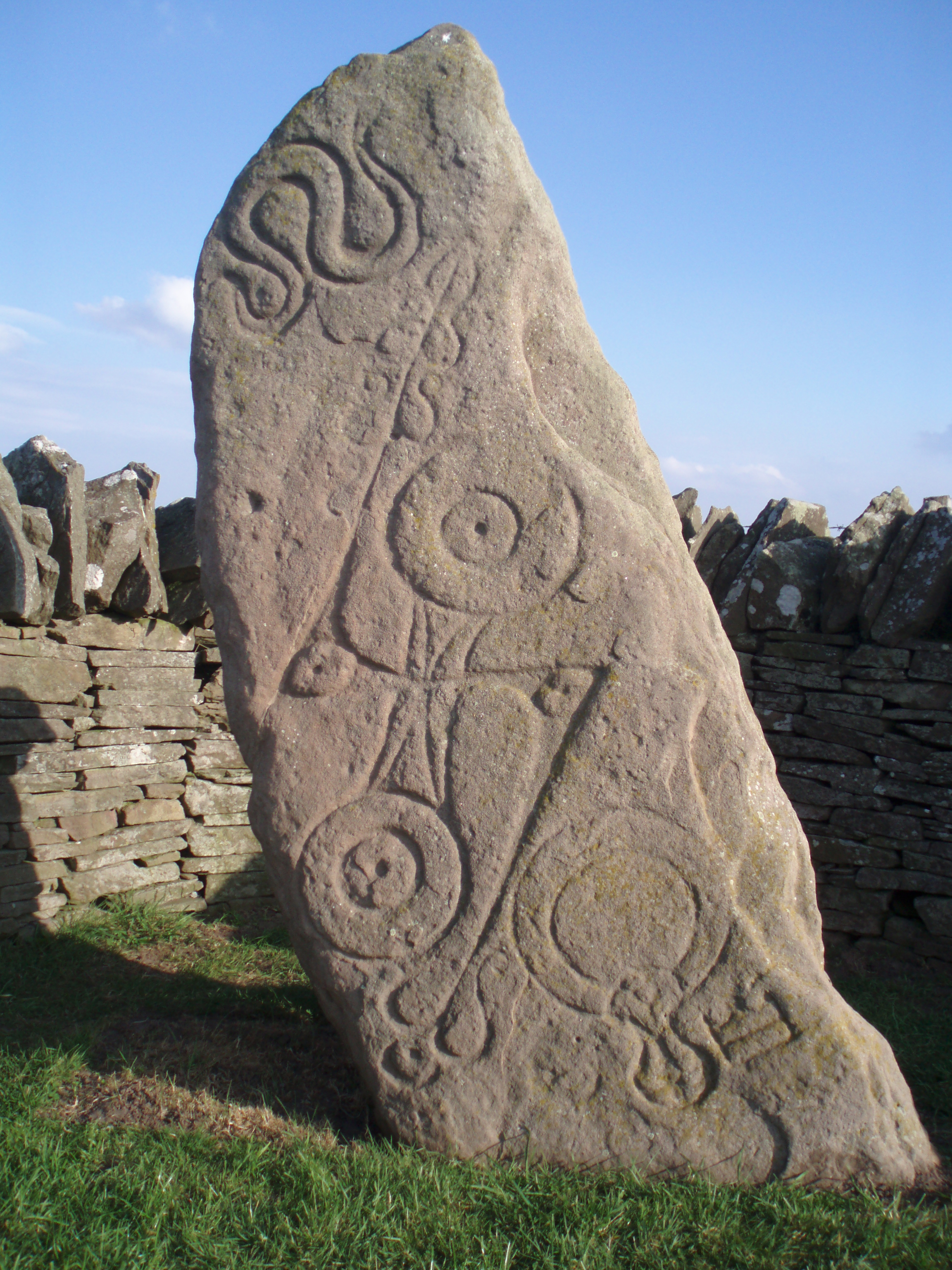
The Pictish Kingdom operated as a complex tribal confederation that gradually centralized power. While specific administrative structures are poorly understood, archaeological evidence and historical texts suggest a hierarchical society with distinct social strata, likely including a warrior aristocracy and a priestly class. Kingship among the Picts was hereditary, though succession rules appear to have been fluid, potentially involving collateral lines or even matrilineal descent, a point of ongoing scholarly debate. The Picts were known for their distinctive art, particularly the elaborately carved Pictish stones, which served as monuments, grave markers, and possibly territorial claims. Their military strength was considerable, enabling them to resist both Roman incursions and later invasions from Northumbria and Ireland. The kingdom's economy was primarily agrarian, supplemented by fishing and trade, with evidence of sophisticated metalworking and craftsmanship.
📊 Key Facts & Numbers
The Pictish Kingdom operated as a complex tribal confederation. The Pictish Kingdom's territory extended across roughly 20,000 square miles of northern and eastern Scotland. The Kingdom of Dál Riata, which merged with Pictland, controlled an area of approximately 5,000 square miles in western Scotland and Ireland. The House of Alpin, which came to rule Alba, traced its lineage through both Pictish and Dál Riata royal lines.
👥 Key People & Organizations
While no single Pictish ruler is as universally recognized as figures from later Scottish history, several individuals are significant. King Nechtan mac Der-Ilei, who reigned in the late 7th and early 8th centuries, is credited with significant ecclesiastical reforms, including the adoption of Roman dating for Easter. The House of Alpin, particularly Kenneth MacAlpin, is central to the narrative of the kingdom's merger with Dál Riata, though the exact circumstances and his role are debated. Key organizations, though not in the modern sense, include the various Pictish chiefdoms and later the dominant kingdom of Fortriu. The Roman Empire and later the Anglo-Saxon kingdom of Northumbria were significant external entities that interacted with and influenced the Picts.
🌍 Cultural Impact & Influence
The cultural impact of the Picts is profound, primarily through their unique artistic legacy and the foundational role they played in the formation of Scotland. The distinctive Pictish symbol stones, with their intricate carvings of animals, abstract designs, and enigmatic symbols, offer glimpses into their cosmology and social structure. Their language, a Brythonic Celtic tongue, has left a limited but discernible mark on the Scots language and place names across northern Scotland. The eventual fusion of Pictish and Dál Riata cultures under the House of Alpin directly led to the creation of the Kingdom of Alba, the direct precursor to modern Scotland, meaning that a significant portion of Scottish identity is rooted in Pictish heritage. The very name 'Scotland' derives from the Scoti, the Gaelic people of Dál Riata, but their dominance was only possible after the assimilation of the Pictish realm.
⚡ Current State & Latest Developments
The Pictish Kingdom, as a distinct political entity, ceased to exist around 900 AD. However, the study and understanding of Pictish culture are very much alive and evolving. Ongoing archaeological excavations at sites like Burghead Fort and Portmahomack continue to unearth new artifacts and provide fresh insights into their daily lives, religious practices, and artistic capabilities. New interpretations of Pictish art and inscriptions are regularly published by scholars in journals such as the Proceedings of the Society of Antiquaries of Scotland. The development of advanced archaeological techniques, including LiDAR scanning and geophysical surveys, are revealing previously unknown settlement patterns and defensive structures. Furthermore, advancements in linguistic analysis and paleogenetics are beginning to shed light on the Pictish language and their genetic origins, challenging older theories and opening new avenues of research. The ongoing debate about the exact nature of Pictish kingship and their eventual assimilation remains a vibrant area of academic inquiry.
🤔 Controversies & Debates
The primary controversy surrounding the Pictish Kingdom revolves around their origins and the precise nature of their political structure. For centuries, it was debated whether the Picts were a distinct ethnic group or a linguistic/cultural label applied by outsiders. Modern consensus leans towards them being indigenous Iron Age peoples, but the exact extent of their genetic and cultural continuity with earlier inhabitants remains a topic of research. Another significant debate concerns the Pictish succession system: while some evidence suggests matrilineal descent, others argue for more conventional patrilineal or collateral lines, particularly in later periods. The exact process and timeline of the merger with Dál Riata to form the Kingdom of Alba are also contested, with some scholars emphasizing a peaceful integration and others suggesting a more forceful conquest by Kenneth MacAlpin. The interpretation of Pictish art, particularly the meaning of their enigmatic symbols, is also a source of ongoing scholarly disagreement, with theories ranging from religious iconography to clan totems or territorial markers.
🔮 Future Outlook & Predictions
The future outlook for understanding the Pictish Kingdom is bright, driven by interdisciplinary research and technological advancements. Continued archaeological work at key sites like Portmahomack and Burghead Fort is expected to yield more substantial evidence regarding their set
Key Facts
- Category
- history
- Type
- topic