
Contents
Overview
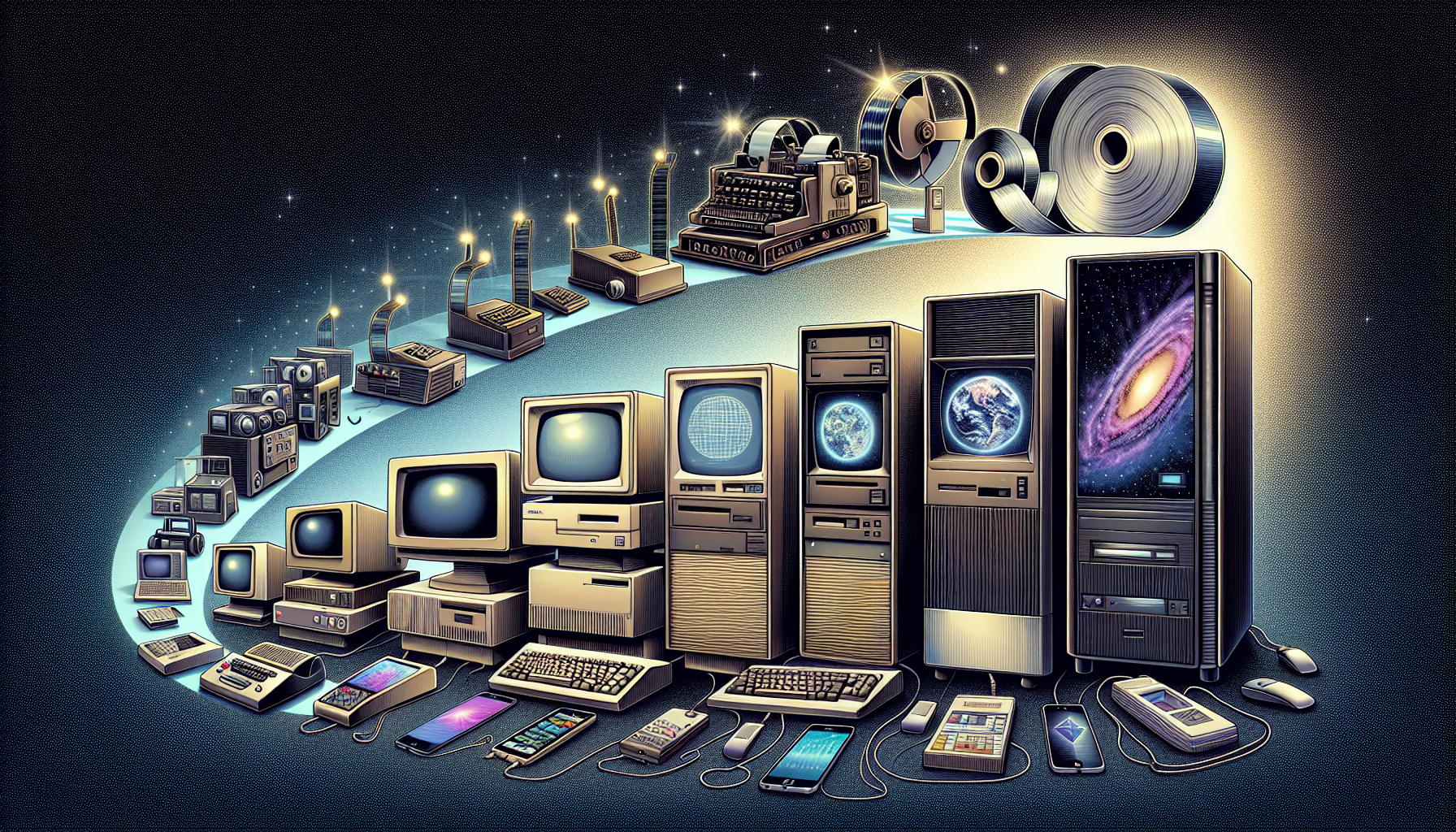
The history of personal computing as we know it began with the microcomputer revolution of the 1970s, following the development of the microprocessor. Early personal computers, often sold as kits and primarily of interest to hobbyists, were a stark contrast to the mainframes and minicomputers that preceded them. Companies like MITS, with its Altair 8800, and later Apple, with the Apple II, and IBM, with the IBM PC, were instrumental in bringing computing power to individuals. The term "personal computer" itself has competing claims for its origin, with early uses appearing in advertisements for programmable calculators by Hewlett-Packard in 1968 and in publications by figures like Alan Kay and Stewart Brand.
⚙️ How It Works
At its core, personal computing involves a device that is intended for interactive individual use, differentiating it from time-sharing systems or mainframes. The advent of the microprocessor, such as the Intel 4004, dramatically reduced the cost and size of computing components, making personal computers accessible. Advances in integrated circuits and solid-state memory further fueled this trend. Today, personal computing encompasses a wide range of devices, from traditional desktops and laptops to the increasingly popular mini-PCs and even wearable augmented reality interfaces, all powered by sophisticated processors and software.
🌍 Cultural Impact
The cultural impact of personal computing has been profound, transforming work, education, and social interaction. The ability for individuals to access and process information independently has democratized knowledge and creativity. Platforms like Reddit and YouTube have emerged as significant cultural forces, enabled by personal computing devices. The shift from analog to digital, a process that began in earnest in the mid-1950s, has been largely completed thanks to the ubiquity of personal computers, fundamentally altering how we live and work, as discussed by figures like Tim Bajarin in his analysis of evolving personal tech.
🔮 Legacy & Future
The future of personal computing is poised for further radical transformation, moving beyond the traditional PC. Trends point towards ubiquitous AI, quantum computing, and seamless integration with our environments through neural interfaces and augmented reality. Concepts like "Personal Access Points" are emerging, suggesting a future where computing environments follow users without the need for local storage or processing power. Mini-PCs are already gaining traction due to their power, compact design, and energy efficiency, as highlighted by sources like ACEMAGIC and AOL. By 2040, the very definition of a personal computer may be obsolete, replaced by more integrated and intelligent systems, as predicted by experts like Chris Ream.
Key Facts
- Year
- 1970s-Present
- Origin
- United States
- Category
- technology
- Type
- technology
Frequently Asked Questions
What is a personal computer?
A personal computer (PC) is a computer designed for interactive individual use, as opposed to a mainframe computer or a time-sharing system. It is typically affordable enough for individual ownership and use, and its primary purpose is to serve the needs of a single user.
When did personal computing begin?
The history of personal computing as mass-market consumer electronic devices began with the microcomputer revolution of the 1970s, following the development of the microprocessor. Key milestones include the introduction of the Altair 8800 in 1975, the Apple II in 1977, and the IBM PC in 1981.
What are the key trends shaping the future of personal computing?
The future of personal computing is expected to be driven by ubiquitous artificial intelligence (AI), quantum computing, and the development of new interfaces such as neural interfaces and augmented reality (AR). Mini-PCs are also becoming increasingly popular due to their compact size and power.
Will traditional PCs become obsolete?
Many experts predict that traditional PCs as we know them may become obsolete by around 2040. They are expected to be replaced by more integrated and seamless computing experiences, such as Personal Access Points, AR interfaces, and AI-driven systems that adapt to user needs.
What is the significance of mini-PCs?
Mini-PCs are gaining popularity because they offer powerful computing capabilities in a very compact form factor. They are energy-efficient, versatile for various tasks like work and gaming, and ideal for modern remote work setups, often allowing for a clutter-free workspace.
References
- linfordco.com — /blog/future-of-pc-computers/
- reddit.com — /r/pcmasterrace/comments/1qe0luh/what_is_the_actual_future_of_personal_computing
- forbes.com — /sites/timbajarin/2025/04/01/face-computing-the-next-evolution-in-personal-tech/
- avi21b.medium.com — /the-time-of-mini-pcs-why-the-future-of-computing-is-smaller-than-you-think-f76a
- digitalcommons.bridgewater.edu — /cgi/viewcontent.cgi
- idc.com — /promo/pcdforecast/
- mackinstitute.wharton.upenn.edu — /wp-content/uploads/2013/01/2009_2010___Banerjee__Sujoy___The_Future_of_Personal
- finance.yahoo.com — /news/u-personal-computer-market-insights-171500960.html