
Contents
Overview
Payday loans are short-term, high-interest, unsecured loans designed to bridge immediate financial gaps until a borrower's next payday. These loans, often marketed as quick cash advances, typically require repayment within two to four weeks, frequently with triple-digit annual percentage rates (APRs). While offering rapid access to funds for those with limited credit options, they are widely criticized for trapping borrowers in a debt cycle due to exorbitant fees and rollover options. The regulatory landscape for payday loans varies dramatically across jurisdictions, with some countries and U.S. states imposing strict caps on interest rates and others allowing for rates that critics deem predatory. Despite ongoing debate and reform efforts, payday lending remains a significant, albeit controversial, component of the global alternative financial services sector, serving millions of individuals annually.
🎵 Origins & History
The concept of lending against future wages has roots stretching back centuries, with early forms of 'wage pawn' or 'salary lending' documented in ancient Mesopotamia and medieval Europe. Modern payday lending, however, coalesced in the United States during the late 20th century. Pioneering companies like Advance America and Check 'n Go emerged in the 1990s, capitalizing on deregulation and the growing demand for quick, accessible credit. The industry rapidly expanded, with many lenders operating out of storefronts and later migrating online, often exploiting loopholes in state usury laws to charge exceptionally high fees. By the early 2000s, payday loans had become a ubiquitous financial product, particularly in communities underserved by traditional banking institutions.
⚙️ How It Works
Payday loans function on a simple, albeit costly, premise. A borrower, typically needing funds for unexpected expenses like medical bills or car repairs, applies for a loan, usually for a few hundred dollars. The lender verifies income and employment, often requiring a post-dated check or electronic access to the borrower's bank account for repayment on their next payday. Upon approval, the borrower receives the loan amount minus a 'finance fee' or 'origination fee.' This fee, often a flat amount, represents the interest and is typically equivalent to a substantial percentage of the loan principal. If the borrower cannot repay the full amount by the due date, they can often 'roll over' the loan, paying another fee to extend the repayment period, a practice that significantly inflates the total cost.
📊 Key Facts & Numbers
Globally, the payday loan market is substantial, though precise figures are difficult to pin down due to varying regulations and the prevalence of online lenders. In the United States alone, it's estimated that over 12 million Americans use payday loans annually, spending an estimated $9 billion on fees. The average payday loan amount hovers around $375, with repayment terms typically ranging from 14 to 30 days. However, the effective annual percentage rate (APR) can skyrocket, often exceeding 400%, and in some cases, reaching over 700% when fees are annualized. In Canada, where payday loans are regulated provincially, the maximum allowable cost of borrowing is often capped at $15 per $100 borrowed, translating to an APR of around 391%.
👥 Key People & Organizations
Key players in the payday loan industry include large corporate entities like Advance America, which operates thousands of locations across the U.S., and numerous smaller, independent lenders. Online platforms such as CashNetUSA have also become dominant forces, offering greater accessibility but often facing increased regulatory scrutiny. Consumer advocacy groups, including the Center for Responsible Lending (CRL) and the Consumer Financial Protection Bureau (CFPB) in the U.S., actively campaign against predatory lending practices. Lobbying organizations like the Community Financial Services Association of America (CFSA) represent lenders and advocate for industry-friendly regulations.
🌍 Cultural Impact & Influence
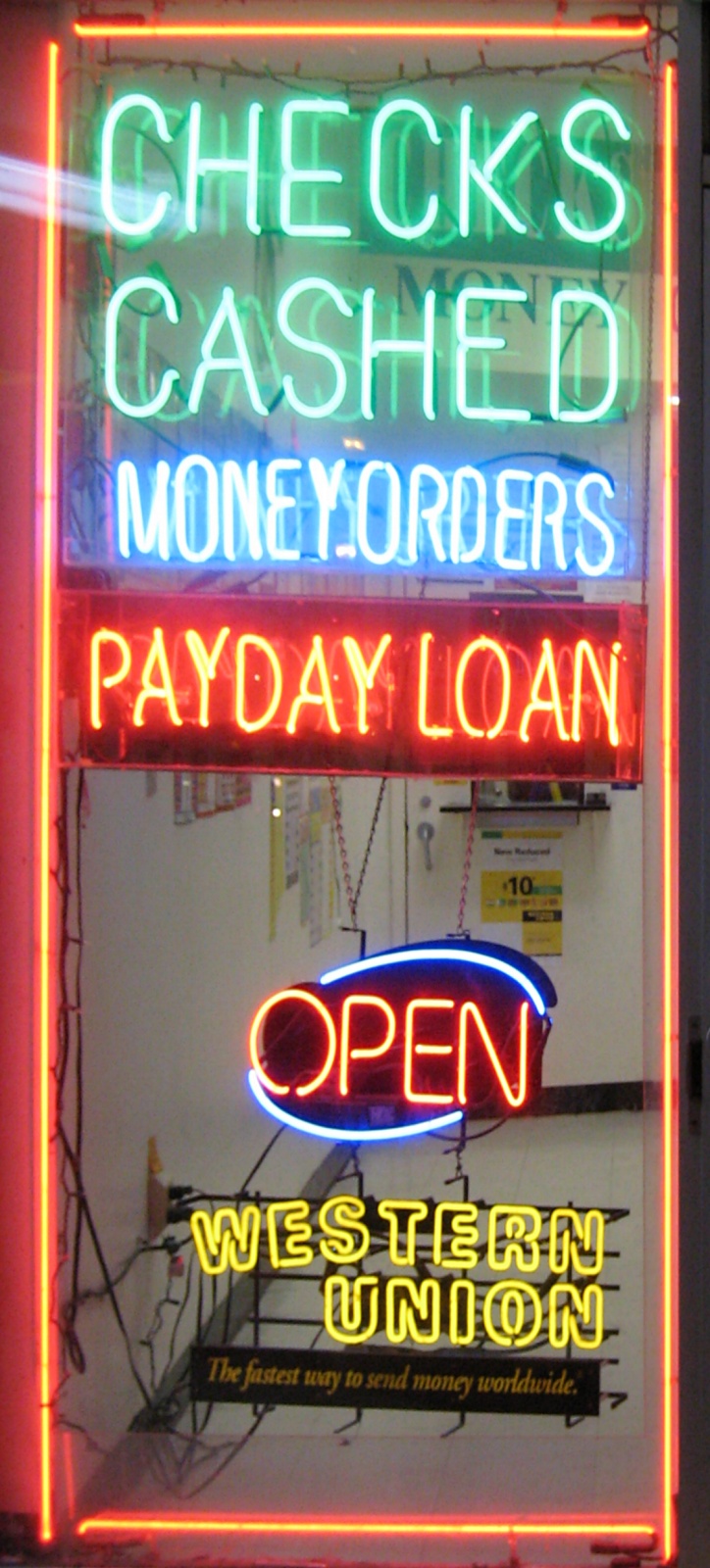
Payday loans have permeated popular culture, often depicted as a last resort for characters facing dire financial straits in films and television shows, such as the recurring theme in shows like Breaking Bad or The Simpsons. Their ubiquity has also fueled a robust debate about financial inclusion versus predatory exploitation. While proponents argue they provide essential credit to unbanked populations, critics contend they exacerbate poverty and create cycles of debt. The visual of the brightly lit, often 24-hour, storefront offering 'quick cash' has become a recognizable symbol of alternative finance in many urban and rural landscapes.
⚡ Current State & Latest Developments
The regulatory environment for payday loans is in constant flux. In the U.S., the CFPB has attempted to implement stricter rules, including ability-to-repay requirements, though these have faced legal challenges and political opposition. Some states, like New York and Massachusetts, have effectively banned traditional payday loans through strict interest rate caps, while others, such as Texas, have more lenient regulations. Globally, countries like Australia have introduced cooling-off periods and caps on the total amount that can be charged in fees. The rise of Fintech companies offering 'earned wage access' (EWA) services presents a potential alternative, though these too are subject to evolving regulatory oversight.
🤔 Controversies & Debates
The most persistent controversy surrounding payday loans centers on their exorbitant interest rates, which critics argue constitute usury and prey on vulnerable populations. Consumer advocates point to studies showing that a significant portion of payday loan borrowers are repeat customers who struggle to repay the initial loan and end up paying more in fees than the original principal. Lenders, conversely, argue that the high fees are necessary to cover the risk associated with unsecured loans to borrowers with poor credit histories and that the short loan terms make traditional interest calculations impractical. The debate also extends to the role of these loans in financial inclusion, with lenders claiming they provide a vital service for those excluded from mainstream credit markets.
🔮 Future Outlook & Predictions
The future of payday lending is likely to be shaped by ongoing regulatory battles and technological innovation. Increased scrutiny from bodies like the FTC and state attorneys general may lead to further restrictions on lending practices. The growth of Fintech solutions, particularly earned wage access platforms, could offer a less costly alternative for consumers needing immediate funds. However, traditional payday lenders are also adapting, with many moving their operations entirely online and exploring new product offerings. It's plausible that regulatory bodies will attempt to harmonize rules across states and countries, potentially leading to a more standardized, though possibly more constrained, market.
💡 Practical Applications
Payday loans are primarily used by individuals facing immediate, short-term financial shortfalls. Common use cases include covering unexpected medical expenses, urgent car repairs, late utility bills, or bridging the gap between paychecks to avoid overdraft fees from traditional banks. They are also sometimes used for emergency housing or food needs. While not recommended for long-term financial planning, their appeal lies in their speed and accessibility, making them a go-to option for those with limited access to credit from traditional banks or credit unions.
Key Facts
- Category
- finance
- Type
- product