
Contents
Overview
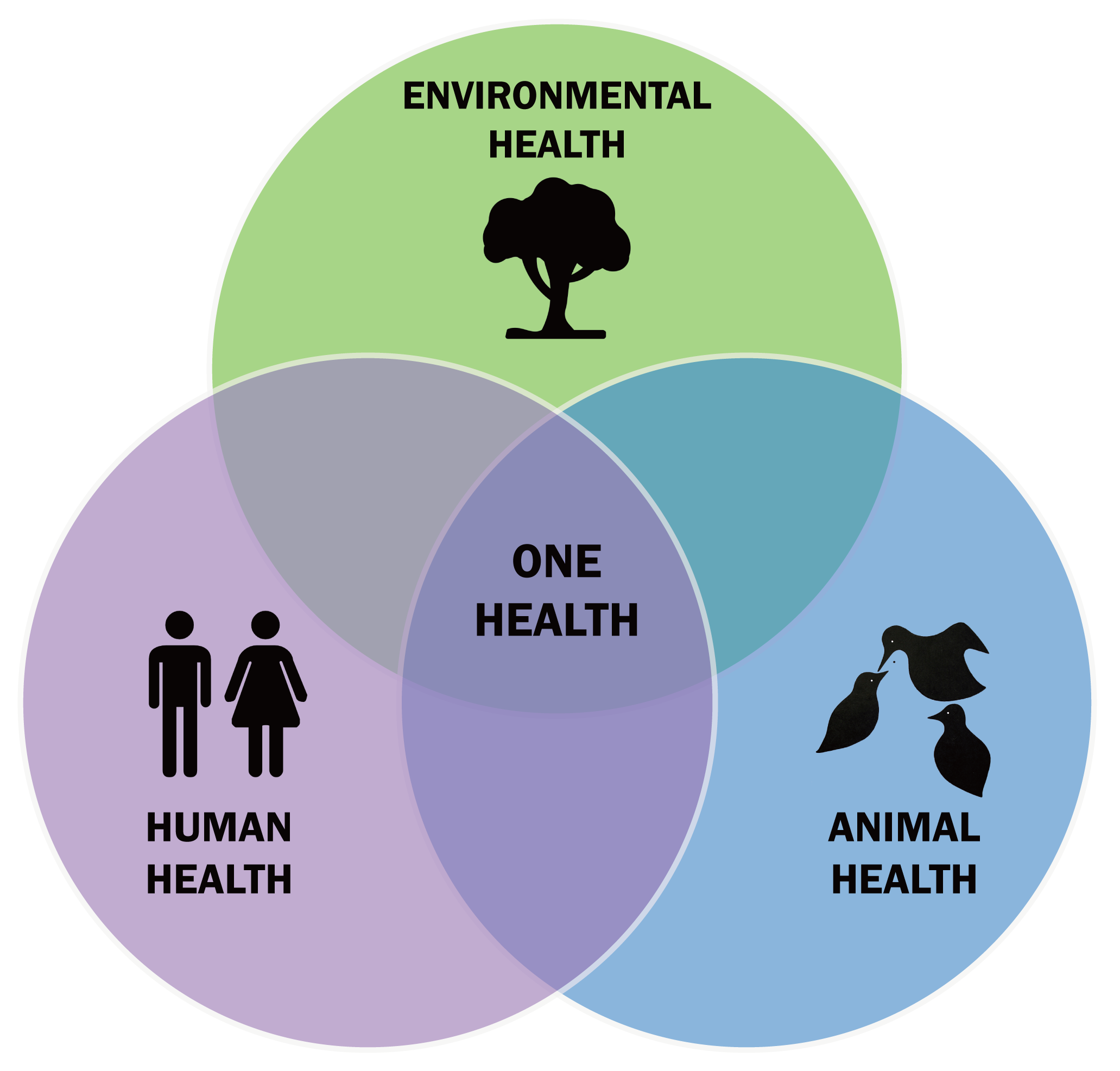
The One Health approach is a paradigm shift recognizing the interconnectedness of human, animal, and environmental health. It advocates for collaborative efforts across diverse disciplines to address complex health challenges, particularly zoonotic diseases and antimicrobial resistance. Originating from a growing understanding of shared ecological systems and disease transmission pathways, One Health moves beyond a human-centric view of public health. Its implementation requires integrated surveillance, research, and policy-making to foster resilience and prevent future pandemics. With an estimated 60% of infectious diseases in humans being zoonotic, the proactive and holistic nature of One Health is increasingly critical for global security and sustainability.
🎵 Origins & History
The conceptual roots of One Health trace back to the early 20th century with the emergence of 'eco-health' and 'zoonotic disease' research. The One Health Initiative was launched by a consortium of organizations, including the American Veterinary Medical Association and the CDC, to promote this integrated approach. This movement built upon decades of work in veterinary epidemiology and comparative medicine, recognizing that animal health crises often precede or directly impact human health.
⚙️ How It Works
At its core, the One Health approach operates through interdisciplinary collaboration, breaking down traditional silos between human medicine, veterinary medicine, and environmental science. It emphasizes integrated surveillance systems to detect disease threats early, whether they emerge in livestock, wildlife, or human populations. Data sharing and joint risk assessments are crucial, allowing for a comprehensive understanding of disease transmission dynamics across species and ecosystems. This often involves 'molecular surveillance' to track pathogen evolution and 'sentinel surveillance' using indicator species. The ultimate goal is to develop unified strategies for prevention, detection, and response, ensuring that interventions in one sector benefit the others, thereby optimizing health outcomes for all.
📊 Key Facts & Numbers
Globally, an estimated 75% of emerging infectious diseases are zoonotic, with approximately 60% of known human infectious diseases originating in animals. The economic burden of zoonotic diseases is staggering, with the World Bank estimating that a pandemic similar to SARS could cost the global economy $2.4 trillion. Antimicrobial resistance (AMR), a key focus of One Health, threatens to make common infections untreatable, with the WHO projecting that AMR could cause 10 million deaths annually by 2050, surpassing cancer deaths. Furthermore, over 1 billion people globally lack access to basic healthcare services, highlighting the disparities that One Health aims to address through equitable health system strengthening.
👥 Key People & Organizations
Key proponents and organizations driving the One Health agenda include the WHO, the FAO, and the OIE (now WOAH), which together formed the 'Tripartite Alliance' to advance One Health principles. Prominent researchers like Lonnie King, a former director of the CDC's National Center for Zoonotic, Environmental, and Occupational Health Sciences, have been instrumental in articulating the framework. Academic institutions worldwide, such as EPFL in Switzerland and UC Davis in the United States, have established dedicated One Health research centers and programs, fostering the next generation of interdisciplinary scientists.
🌍 Cultural Impact & Influence
The One Health movement has significantly reshaped public health discourse, moving it from a purely anthropocentric perspective to one that acknowledges the intrinsic link between human, animal, and environmental well-being. This has led to increased funding for veterinary public health initiatives and a greater appreciation for the role of wildlife and domestic animals in disease ecology. Media coverage of zoonotic outbreaks, from Ebola to COVID-19, has amplified public awareness of these interdependencies. The concept has also influenced policy-making, with international bodies and national governments increasingly adopting One Health strategies in their pandemic preparedness and response plans, as seen in the Global Health Security Agenda.
⚡ Current State & Latest Developments
In the wake of the COVID-19 pandemic, the urgency for robust One Health implementation has intensified. International organizations are pushing for integrated pandemic prevention, preparedness, and response (PPR) frameworks that embed One Health principles. Efforts are underway to strengthen global surveillance networks, such as the WHO's proposed pandemic treaty, which aims to improve data sharing and coordinated responses to emerging threats. There's also a growing focus on the 'One Health Joint Plan of Action' (2022-2026), a collaborative effort by the WHO, FAO, WOAH, and UNEP to accelerate the integration of One Health approaches. Discussions are also intensifying around the nexus of climate change, biodiversity loss, and zoonotic disease emergence, further underscoring the need for unified action.
🤔 Controversies & Debates
Despite its growing acceptance, the One Health approach faces significant challenges. Critics argue that the practical implementation is hampered by institutional inertia, funding disparities between human and animal health sectors, and difficulties in achieving genuine cross-sectoral collaboration. The 'silo effect' remains a persistent barrier, with different governmental agencies and professional bodies often operating with separate mandates and budgets. Furthermore, translating the theoretical framework into concrete, measurable outcomes on the ground, especially in low-resource settings, remains a complex undertaking. Debates also persist regarding the precise governance structures and accountability mechanisms needed to effectively coordinate diverse stakeholders.
🔮 Future Outlook & Predictions
The future of One Health is likely to see a deeper integration with climate change adaptation and mitigation strategies, recognizing that environmental degradation is a primary driver of zoonotic spillover events. Expect to see more sophisticated predictive modeling that incorporates ecological data, climate projections, and genomic surveillance to anticipate disease emergence. The development of 'digital twins' for ecosystems and health systems could enable real-time monitoring and scenario planning. Furthermore, the concept may expand to encompass broader planetary health concerns, including the impact of pollution and biodiversity loss on both human and animal well-being, potentially leading to a more unified 'Planetary Health' framework.
💡 Practical Applications
One Health principles are actively applied in numerous real-world scenarios. In disease outbreak investigations, it facilitates joint investigations by human and animal health authorities to identify the source and transmission pathways of zoonotic diseases like West Nile Virus or rabies. It underpins efforts to combat antimicrobial resistance (AMR) by promoting responsible antibiotic use in both human medicine and agriculture, a critical area given that approximately 70% of medically important antibiotics are used in livestock globally. One Health also informs food safety initiatives, wildlife conservation efforts, and the management of shared water resources, recognizing that contamination in one area can have cascading effects across sectors.
Key Facts
- Category
- movements
- Type
- movement