
Contents
- 🎵 Origins & History
- ⚙️ How It Works
- 📊 Key Facts & Numbers
- 👥 Key People & Organizations
- 🌍 Cultural Impact & Influence
- ⚡ Current State & Latest Developments
- 🤔 Controversies & Debates
- 🔮 Future Outlook & Predictions
- 💡 Practical Applications
- 📚 Related Topics & Deeper Reading
- Frequently Asked Questions
- References
- Related Topics
Overview
The ocellated turkey's lineage traces back to the ancient avian fauna of Mesoamerica, diverging from the evolutionary path of the North American wild turkey (Meleagris gallopavo). While sometimes historically placed in its own genus, Agriocharis, modern ornithological consensus, as reflected by the IUCN, generally subsumes it within the Meleagris genus due to insufficient morphological differentiation. Its discovery and formal description by science occurred in the 19th century, with ornithologist John James Audubon contributing to its early documentation, though indigenous peoples of the Yucatán had long been familiar with the bird. The species' restricted geographic distribution has always been a defining characteristic, setting it apart from its more widespread relative and hinting at a specialized evolutionary history tied to the unique ecosystems of the region.
⚙️ How It Works
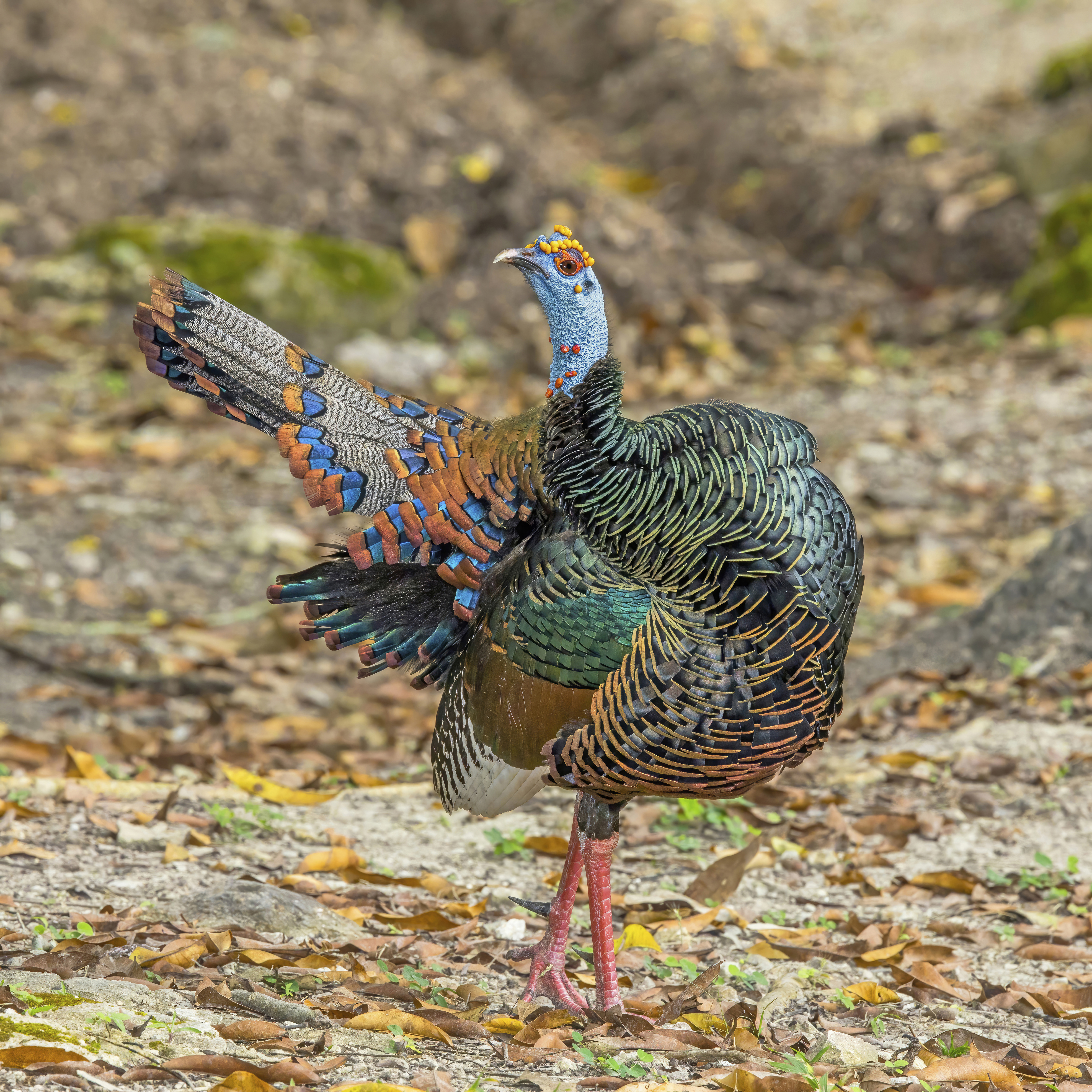
The ocellated turkey is a master of its arboreal and terrestrial environment. Males are distinguished by their striking, iridescent plumage, featuring metallic blues, greens, and bronzes, and most notably, the "eye-spots" or ocelli on their tail feathers, which resemble those found on the tail of a peacock. These birds are omnivorous, foraging for seeds, fruits, insects, and small vertebrates. They are known to roost in trees at night, a behavior that offers protection from ground predators. During the breeding season, males engage in elaborate courtship displays, fanning their tails and puffing up their iridescent feathers to attract females, a spectacle that has captivated observers for centuries. Their calls are distinct from the gobbling of North American turkeys, often described as a high-pitched whistling or a series of sharp yelps.
📊 Key Facts & Numbers
The ocellated turkey occupies a specific ecological niche, with its range confined to approximately 130,000 km² (50,000 sq mi). This area encompasses the Yucatán Peninsula in Mexico, including states like Quintana Roo, Campeche, and Yucatán, as well as northern Belize and northern Guatemala. Adult ocellated turkeys typically measure between 70–122 cm (28–48 in) in length. Males are larger, averaging around 5 kg (11 lb), while females are smaller, averaging about 3 kg (6.6 lb). As recently as 2002, Mexican authorities classified the species as endangered, and the IUCN has listed it as Near Threatened since 2004, underscoring its vulnerability. Population estimates are scarce but suggest a declining trend in some areas due to habitat loss.
👥 Key People & Organizations
While no single individual is singularly credited with the "discovery" of the ocellated turkey, ornithologists like John James Audubon played a role in its scientific description and popularization in the Western world. Indigenous communities across the Yucatán Peninsula have long recognized and interacted with the species, incorporating it into their cultural practices and understanding of the local fauna. Conservation efforts are often spearheaded by organizations such as the WWF and local Mexican and Guatemalan environmental agencies, working in conjunction with researchers from institutions like the National Autonomous University of Mexico (UNAM) to monitor populations and protect habitats. The CITES also plays a role in regulating any international trade of the species.
🌍 Cultural Impact & Influence
The ocellated turkey's stunning appearance has made it a symbol of the unique biodiversity of the Yucatán Peninsula. Its image is often used in tourism promotion for the region, highlighting the natural wonders beyond the beaches and ancient ruins. For indigenous cultures, the bird may hold symbolic meaning, though specific documented uses are less widespread than for the North American wild turkey. Its presence is a testament to the health of the forest ecosystems it inhabits, and its beauty has inspired artists and naturalists alike, contributing to a broader appreciation for avian diversity. The bird's striking ocelli have even drawn comparisons to the decorative motifs found in ancient Mayan art, though direct evidence of this connection is debated.
⚡ Current State & Latest Developments
As of 2024, the ocellated turkey continues to be a species of conservation concern. Habitat fragmentation due to agricultural expansion, logging, and infrastructure development remains the primary threat across its range in Mexico, Belize, and Guatemala. Efforts to establish protected areas, such as the Sian Ka'an Biosphere Reserve, are crucial for safeguarding its remaining populations. Researchers are actively monitoring population trends and habitat quality, often employing camera traps and acoustic monitoring to gather data. The species' status as Near Threatened by the IUCN indicates that while not critically endangered, it requires ongoing vigilance and targeted conservation strategies to prevent further decline, with particular focus on community-based conservation initiatives in rural areas.
🤔 Controversies & Debates
One of the primary controversies surrounding the ocellated turkey is its conservation status. While listed as Near Threatened by the IUCN, some local populations, particularly those near expanding human settlements, may face more acute threats, leading to debates about the adequacy of current protection measures. There's also ongoing discussion within ornithological circles regarding its precise taxonomic relationship to the North American wild turkey, though the consensus leans towards retaining it within the same genus. Furthermore, the impact of ecotourism on its habitat is a point of contention; while it can provide economic incentives for conservation, poorly managed tourism can lead to disturbance and habitat degradation, impacting the birds' natural behaviors and breeding success.
🔮 Future Outlook & Predictions
The future outlook for the ocellated turkey is intrinsically linked to the success of conservation efforts and the sustainable management of its habitat. Projections suggest that continued habitat loss could lead to further population declines, potentially pushing the species towards a more critical conservation status. However, increased awareness and dedicated conservation programs, particularly those involving local communities and indigenous groups, offer a more optimistic path. The development of effective ecotourism models that prioritize the well-being of the species and its environment could provide a sustainable funding stream for conservation. Continued research into its breeding biology and population dynamics will be vital for adaptive management strategies, aiming to secure its long-term survival in the wild.
💡 Practical Applications
The primary "application" of the ocellated turkey is its role as a flagship species for the conservation of the Yucatán's unique forest ecosystems. Its striking beauty makes it an attractive subject for ecotourism, which, when managed responsibly, can generate revenue for local communities and provide economic incentives for habitat preservation. For researchers, it serves as an indicator species, reflecting the health of the environment it inhabits. While not a primary game bird like its North American counterpart, subsistence hunting by local populations does occur, and understanding these practices is part of comprehensive conservation planning. Its genetic material is also of interest for understanding avian evolution and biodiversity within the Neotropics.
Key Facts
- Year
- 19th century (scientific description)
- Origin
- Yucatán Peninsula, Mexico
- Category
- nature
- Type
- topic
Frequently Asked Questions
What makes the ocellated turkey visually distinct from other turkeys?
The ocellated turkey is renowned for its spectacular iridescent plumage, which shimmers with metallic blues, greens, and bronzes. Unlike the North American wild turkey, its tail feathers are adorned with distinctive "eye-spots" or ocelli, resembling those of a peacock, which give the species its name. Males also have a more prominent, fleshy appendage called a caruncle on their neck and a brighter blue, warty head and neck compared to their relatives. These vibrant colors and patterns are crucial for courtship displays and species recognition within its specific habitat.
Where exactly does the ocellated turkey live?
The ocellated turkey's range is remarkably restricted, confined to approximately 130,000 km² (50,000 sq mi) primarily within the Yucatán Peninsula of Mexico. This includes significant portions of the Mexican states of Quintana Roo, Campeche, and Yucatán, as well as extending into the northern and western parts of Belize and the northern regions of Guatemala. This limited distribution makes the species particularly vulnerable to habitat changes and environmental pressures within this specific Mesoamerican ecological zone.
Why is the ocellated turkey considered Near Threatened?
The ocellated turkey is classified as Near Threatened by the IUCN due to ongoing threats to its habitat and a perceived declining population trend. The primary driver is habitat fragmentation and loss, resulting from agricultural expansion, logging, and infrastructure development across its limited range. While not critically endangered, its specialized habitat requirements and restricted distribution mean that even moderate environmental changes can have a significant impact on its long-term survival. Conservation efforts are focused on protecting these vital forest ecosystems and mitigating human-induced pressures.
How does the ocellated turkey's behavior differ from the North American wild turkey?
While both are turkeys, their behaviors show some divergence. Ocellated turkeys are known to roost in trees more consistently than their North American counterparts, a behavior likely influenced by predator pressure in their forest environment. Their vocalizations are also different; instead of the characteristic gobble of the wild turkey, ocellated turkeys produce higher-pitched whistles and yelps. Males engage in elaborate courtship displays, fanning their ocelli-adorned tails and displaying their iridescent plumage, a spectacle that is central to their breeding success and a key difference in their reproductive strategies.
Is the ocellated turkey hunted or used by humans?
Historically and in some contemporary indigenous communities, the ocellated turkey has been a source of food. However, unlike the North American wild turkey, which is a major game bird with established hunting seasons and regulations in many areas, the ocellated turkey's conservation status and limited population mean that hunting is generally discouraged or strictly regulated. Subsistence hunting by local populations does occur, and understanding these practices is a component of broader conservation strategies. Its primary value today is increasingly recognized in ecotourism and as a symbol of biodiversity rather than a game species.
What is the scientific classification of the ocellated turkey?
The ocellated turkey's scientific name is Meleagris ocellata. It belongs to the genus Meleagris, which it shares with the North American wild turkey (Meleagris gallopavo). Historically, it was sometimes placed in its own genus, Agriocharis, due to its distinct appearance. However, current scientific consensus, supported by genetic and morphological studies, suggests that the differences are not significant enough to warrant generic segregation, and it is widely accepted as a distinct species within the Meleagris genus. This classification places it firmly within the family Phasianidae, which includes pheasants and partridges.
What are the main threats to the ocellated turkey's survival?
The most significant threat to the ocellated turkey is habitat loss and fragmentation, driven by deforestation for agriculture, cattle ranching, and logging. The species' reliance on specific forest types within its limited geographic range makes it particularly susceptible to these land-use changes. Other threats include hunting for food or sport, although this is less widespread than habitat destruction, and potential impacts from climate change altering its forest ecosystem. The restricted range means that any localized threat can have a disproportionately large effect on the overall population.