
Contents
Overview
The concept of NFT storage emerged organically from the early days of NFTs, primarily as a workaround for the limitations of blockchain technology. Early NFTs, like those on the Ethereum blockchain, were often linked to assets stored on traditional web servers or cloud storage services. This approach, while functional, quickly revealed its fragility. The historical precedent for digital asset storage has always grappled with permanence, from early Internet Archive efforts to preserve web pages to the ongoing challenges of digital preservation in libraries and museums. The advent of NFTs, however, amplified these concerns by tying ownership of unique digital items to potentially impermanent storage solutions. Projects like CryptoKitties in 2017, while groundbreaking for their time, highlighted the need for more robust storage mechanisms as their associated assets were not inherently tied to decentralized infrastructure.
⚙️ How It Works
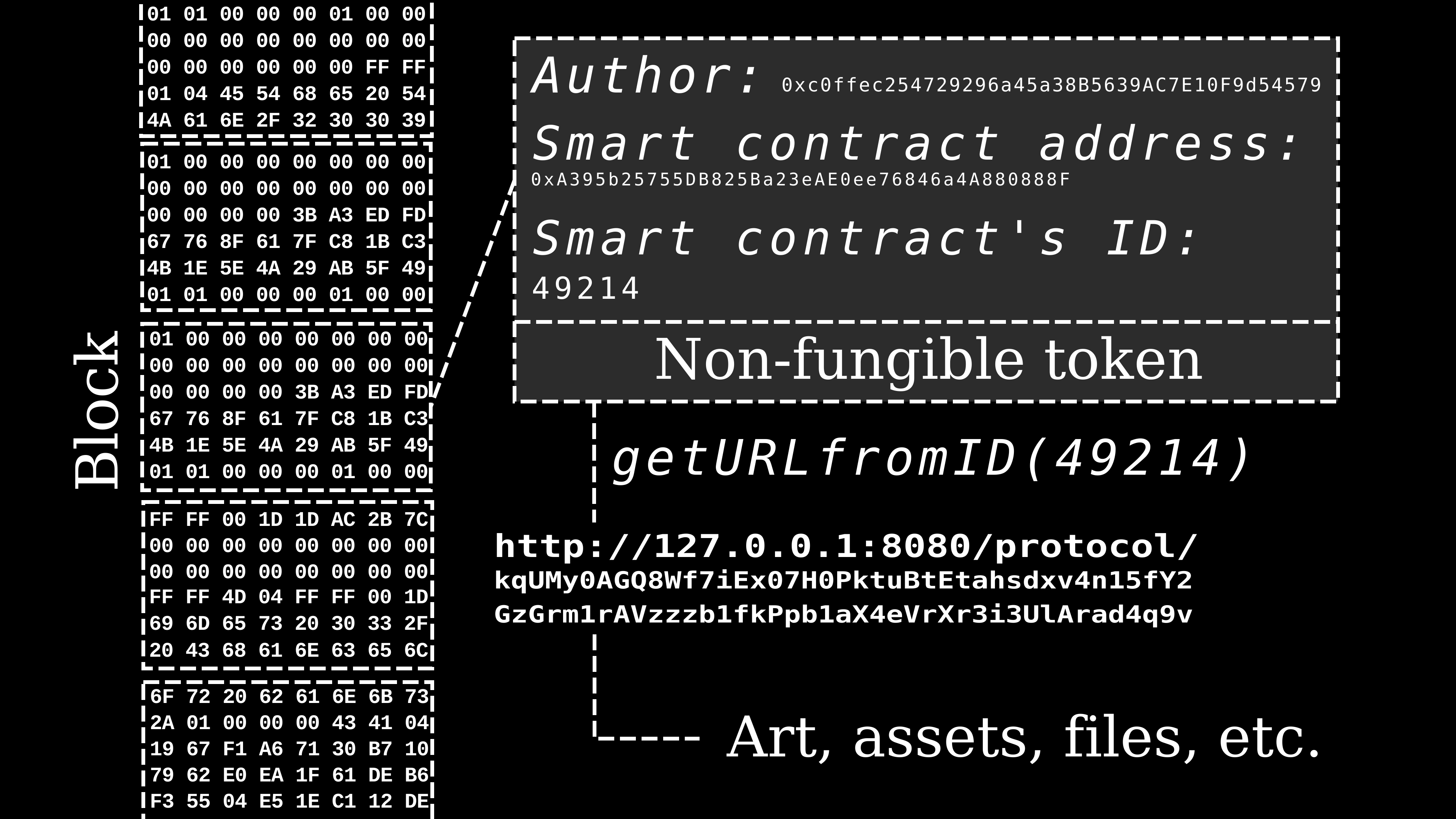
At its core, NFT storage involves the NFT token on a blockchain and the digital asset it represents. Storing large files directly on most blockchains is prohibitively expensive and inefficient, so the NFT's metadata typically includes a Uniform Resource Identifier (URI) that points to the location of the digital asset. The URI can point to a centralized server (like an AWS S3 bucket) or a distributed file system like InterPlanetary File System. When a user views an NFT, their wallet or marketplace client resolves this URI to fetch and display the associated digital content. The integrity of an NFT depends on the availability and immutability of its off-chain storage.
📊 Key Facts & Numbers
The scale of NFT storage is staggering. By early 2024, the total storage required for the digital assets linked to NFTs was estimated to be in the petabytes, with the number growing daily. The Bored Ape Yacht Club collection alone, comprising 10,000 unique images, requires significant storage capacity. Storing 10,000 images, each potentially several megabytes in size, could easily amount to tens of gigabytes. Decentralized storage networks like Filecoin offer storage at costs significantly lower than traditional cloud providers, with prices per gigabyte often measured in fractions of a cent. However, the total value locked in NFTs, which reached over $100 billion at its peak in 2021, underscores the immense financial incentive to ensure this storage is secure and permanent.
👥 Key People & Organizations
Key figures and organizations are actively shaping the NFT storage landscape. Juan Benet, the founder of Protocol Labs, is a pivotal figure, having created InterPlanetary File System and Filecoin, which are foundational to decentralized storage solutions for NFTs. Companies like Arweave offer permanent storage solutions, charging a one-time fee for data that is intended to be stored indefinitely. Pinata has emerged as a popular service specifically catering to NFT creators, providing tools to manage and serve NFT assets on IPFS. Major NFT marketplaces like OpenSea and Blur are increasingly integrating with or recommending decentralized storage solutions to enhance the longevity of the assets their users trade. The Ethereum Foundation also plays a role through its research and development into scaling solutions that could indirectly impact storage costs.
🌍 Cultural Impact & Influence
The cultural impact of NFT storage is profound, directly influencing the perceived value and legitimacy of digital art and collectibles. Early concerns about NFTs being 'JPEGs on the internet' were often rooted in the perceived ephemerality of their storage. The adoption of decentralized storage solutions like InterPlanetary File System has helped to assuage these fears, fostering greater trust in digital ownership. This shift has enabled the rise of digital art as a legitimate asset class, with artists and creators leveraging NFTs to monetize their work in new ways. The ability to permanently store and verify ownership of digital creations has also influenced the gaming industry, with in-game assets becoming tradable commodities, and the music industry, where artists can offer unique digital collectibles to fans. The very concept of digital scarcity and ownership is underpinned by the reliability of NFT storage.
⚡ Current State & Latest Developments
The current state of NFT storage is characterized by a dynamic tension between centralized convenience and decentralized resilience. While many NFT projects still rely on centralized cloud storage for ease of use and lower initial costs, there's a clear trend towards adopting decentralized solutions like InterPlanetary File System and Arweave. Services like Pinata are making it easier for creators to upload and manage their assets on IPFS, while Filecoin is actively incentivizing storage providers. The development of new blockchain scaling solutions and layer-2 networks also indirectly impacts storage by reducing transaction fees, potentially making on-chain storage of metadata more feasible in the future. The ongoing debate about the best practices for ensuring long-term data availability continues to drive innovation in this space.
🤔 Controversies & Debates
The primary controversy surrounding NFT storage revolves around the risk of 'link rot' and data loss. If an NFT points to a file on a centralized server that is later taken down, or if a decentralized storage provider fails to maintain its nodes, the NFT can become a pointer to nothing, rendering the digital asset inaccessible. This has led to debates about the true 'permanence' of NFTs. Critics argue that relying on off-chain storage undermines the immutability promised by blockchain technology. Proponents counter that decentralized solutions like Arweave, which uses a 'blockweave' and incentivizes long-term storage, offer a form of permanent data archiving. The debate also extends to the economic models: is it better to pay a one-time fee for permanent storage, or to pay ongoing fees for decentralized storage, and what happens if those ongoing fees are not met?
🔮 Future Outlook & Predictions
The future of NFT storage is likely to involve a hybrid approach, combining the strengths of various technologies. We may see increased adoption of permanent storage solutions like Arweave for high-value assets, while more dynamic or frequently updated content might leverage InterPlanetary File System with robust pinning services. The development of on-chain data availability layers for blockchains like Ethereum could also enable more metadata to be stored directly on-chain, enhancing security. Furthermore, advancements in zero-knowledge proofs might allow for verification of data integrity without needing to store the entire asset on-chain. The ultimate goal is to achieve a level of permanence and decentralization that truly reflects the immutability of blockchain technology, ensuring that digital assets remain accessible for generations.
💡 Practical Applications
NFT storage has direct practical applications across various digital domains. For digital artists, it ensures their creations are permanently linked to their NFTs, allowing for verifiable ownership and resale. In the gaming industry, in-game items represented by NFTs can be stored and traded using these methods, providing players with true ownership of their virtual assets. Musicians can offer unique digital collectibles, such as album art or behind-the-scenes footage, linked to their NFTs. Event organizers can use NFTs for ticketing, with the ticket's associated digital content (like a commemorative badge) stored securely. Even in the realm of digital identity, NFTs can store verifiable credentials, with the underlying data managed through secure storage solutions.
Key Facts
- Category
- technology
- Type
- topic