
Contents
Overview
The genesis of NFT development can be traced back to early blockchain experiments. Counterparty enabled the creation of unique digital assets on the Bitcoin blockchain, predating the widespread adoption of Ethereum. Projects like Rare Pepes on Counterparty demonstrated the potential for unique digital collectibles. However, it was the advent of Ethereum and its smart contract capabilities that truly unlocked the modern era of NFT development. The ERC-721 token standard provided a standardized framework for creating unique digital assets, paving the way for projects like CryptoKitties. This early success, despite network congestion issues, highlighted the technical feasibility and burgeoning interest in programmable digital scarcity.
⚙️ How It Works
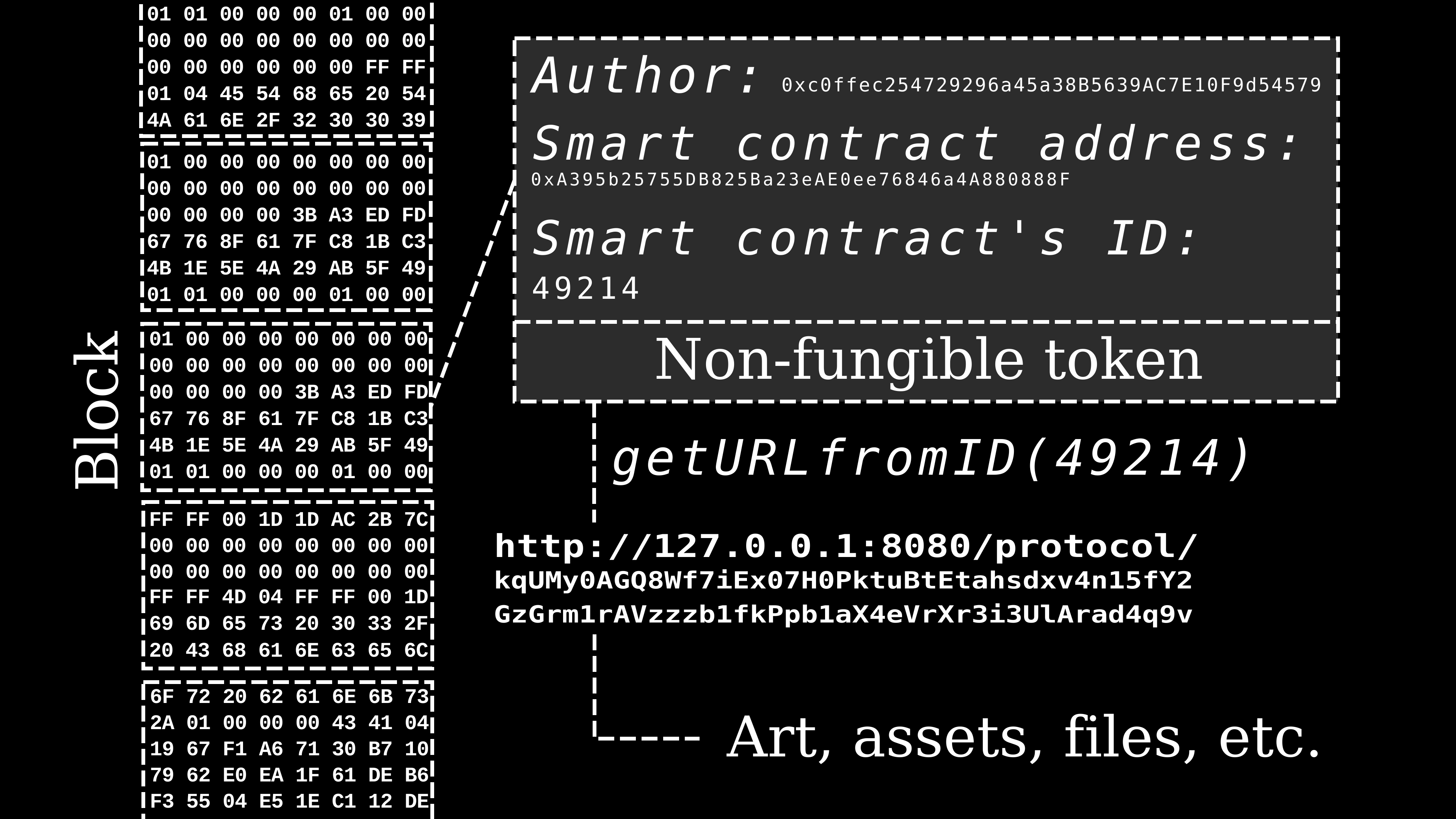
At its core, NFT development revolves around smart contracts deployed on a blockchain, most commonly Ethereum due to its robust smart contract ecosystem. Developers write code, often in Solidity, that adheres to specific token standards like ERC-721 (for unique items) or ERC-1155 (for semi-fungible or multiple editions). These contracts dictate the token's properties: its unique identifier, its associated metadata (which typically points to the actual digital asset stored off-chain, often on IPFS or Arweave), ownership records, and rules for transfer and royalties. The development process includes rigorous testing on testnets, security audits to prevent exploits like reentrancy attacks, and finally, deployment to the mainnet, making the NFTs immutable and verifiable.
📊 Key Facts & Numbers
The NFT market saw explosive growth, with total sales volume reaching an estimated $17 billion in 2021, a staggering increase from $82 million in 2020, according to Chainalysis data. By September 2023, however, reports indicated that over 95% of NFT collections had zero monetary value, with daily active users on major NFT marketplaces like OpenSea plummeting by over 90% from their peak. The average price of an NFT dropped from over $200 in early 2022 to below $20 by late 2023. Despite this contraction, the underlying technology continues to be developed, with transaction fees on Ethereum for NFT minting and trading remaining a significant factor, often fluctuating between $1 and $50 depending on network congestion.
👥 Key People & Organizations
Key figures in NFT development include Dieter Shirley, co-founder of Dapper Labs, who was instrumental in defining the ERC-721 standard. Other significant contributors include developers behind early projects like CryptoKitties and platforms like OpenSea, founded by Devin Finzer and Alex Atallah, which became a dominant marketplace. Organizations like the Ethereum Foundation provide crucial infrastructure and research, while companies such as Yuga Labs (creators of Bored Ape Yacht Club) have demonstrated successful application development and community building around NFTs. The Web3 Foundation also supports development in the broader decentralized ecosystem, including NFT-related technologies.
🌍 Cultural Impact & Influence
NFT development has profoundly influenced digital art, collectibles, and gaming. It introduced a novel way for creators to monetize digital work directly, bypassing traditional intermediaries and enabling artists like Beeple (Mike Winkelmann) to sell digital art for millions of dollars, as seen with his "Everydays: The First 5000 Days" piece sold for $69 million at Christie's in March 2021. This has fostered new communities around digital ownership and provenance, leading to the rise of Decentralized Autonomous Organizations and fan economies. The concept of verifiable digital scarcity has also permeated discussions around intellectual property and digital identity, sparking debates about the long-term cultural and economic implications.
⚡ Current State & Latest Developments
The current state of NFT development is characterized by a pivot towards utility and broader integration beyond speculative art markets. Projects are increasingly focusing on building applications that leverage NFTs for in-game assets in play-to-earn games, digital ticketing for events, loyalty programs, and verifiable credentials. Layer-2 scaling solutions like Polygon and Arbitrum are gaining traction to reduce transaction costs and improve speed for NFT minting and trading. Developers are also exploring more sophisticated smart contract functionalities, such as dynamic NFTs that can change based on external events or owner interactions, and cross-chain compatibility to allow NFTs to exist on multiple blockchains simultaneously.
🤔 Controversies & Debates
Significant controversies surround NFT development, primarily concerning environmental impact due to the energy consumption of proof-of-work blockchains like Ethereum Classic and Bitcoin. While Ethereum has transitioned to a more energy-efficient consensus mechanism, the energy debate persists for other chains. Issues of intellectual property rights, copyright infringement, and the prevalence of scams and rug pulls in the NFT space remain major concerns. The speculative nature of the market, with its dramatic boom and bust cycles, has also led to accusations of NFTs being akin to economic bubbles or even Ponzi schemes, raising questions about their long-term viability and regulatory oversight.
🔮 Future Outlook & Predictions
The future of NFT development is likely to see a continued emphasis on utility and real-world integration. Expect to see NFTs evolve beyond simple digital collectibles into integral components of decentralized applications, gaming economies, and digital identity systems. Innovations in zero-knowledge proofs could enable more private and scalable NFT transactions. Furthermore, the development of interoperability standards will be crucial, allowing NFTs to move seamlessly across different blockchains and metaverses, creating a more cohesive and functional Web3 ecosystem. The regulatory landscape will also continue to shape development, potentially leading to more standardized practices and increased institutional adoption.
💡 Practical Applications
NFT development has a wide array of practical applications. In the gaming industry, NFTs are used to represent unique in-game items, characters, and virtual land, enabling true ownership and player-driven economies. The art world utilizes NFTs for digital art provenance, authentication, and fractional ownership. In ticketing, NFTs can provide secure, verifiable, and transferable tickets for events, reducing fraud. They are also being explored for digital identity management, academic credentials, and supply chain tracking, where unique digital tokens can represent physical goods or certifications. Brands are leveraging NFTs for customer loyalty programs and exclusive digital merchandise.
Key Facts
- Category
- technology
- Type
- technology