
Contents
Overview
The Nazca culture was heavily influenced by the preceding Paracas culture, which was renowned for its complex textiles. The Nazca people built upon this foundation, developing their own unique crafts and technologies, such as ceramics, textiles, and geoglyphs. Their work was characterized by intricate designs and patterns, often depicting animals, plants, and geometric shapes, as seen in the works of Maria Reiche, a German-Peruvian archaeologist who dedicated her life to studying the Nazca Lines. The Nazca culture's connection to the Paracas culture is evident in their shared use of similar motifs and techniques, such as the use of cotton and wool in their textiles.
🔍 Geoglyphs & Construction Projects
The Nazca Lines, a series of massive geoglyphs etched into the desert floor, are one of the most impressive and mysterious constructions of the Nazca culture. These designs, which include animals, plants, and geometric shapes, were created using a combination of excavation and removal of rocks to expose the lighter-colored soil beneath, a technique also used by the Incas in their road network. The purpose of the Nazca Lines remains unknown, but theories range from ceremonial and spiritual significance to astronomical observations, with some researchers, like Giorgio Cosulich, suggesting a connection to the Nazca astronomy. The Nazca people also developed an extensive network of puquios, underground aqueducts that provided water for irrigation and domestic purposes, demonstrating their advanced engineering skills and ability to thrive in the arid environment, much like the Moche civilization in northern Peru.
🌎 Cultural Significance & Legacy
The Nazca culture's legacy extends beyond their impressive constructions, with their textiles, ceramics, and other crafts continuing to inspire and influence artists and designers today, including textile design and ceramic art. The Nazca Province in the Ica Region of Peru was named in honor of this ancient civilization, and their history and culture continue to be celebrated and studied by scholars and enthusiasts around the world, including the Peruvian government, which has implemented initiatives to preserve and protect the Nazca Lines and other archaeological sites. The Nazca culture's connection to other ancient civilizations, such as the Chavin culture and the Wari culture, is also an area of ongoing research and debate, with some scholars, like John Rowe, arguing for a more nuanced understanding of the relationships between these cultures.
🔮 Archaeological Discoveries & Debates
Archaeological discoveries have shed light on the daily lives and practices of the Nazca people, including their diet, which consisted mainly of maize, beans, and squash, as well as their social hierarchy and trade networks, which extended to other regions of Peru, including the Nazca Valley and the Ica Valley. The study of Nazca culture continues to be an active area of research, with new discoveries and debates emerging regularly, such as the recent findings on the Nazca geoglyphs and their possible connection to the Nazca cosmology. As our understanding of this enigmatic culture grows, so too does our appreciation for the ingenuity, creativity, and resilience of the Nazca people, who continue to inspire and fascinate us today, much like the Megalithic structures of Europe and the Mayan architecture of Mesoamerica.
Key Facts
- Year
- 100 BC - 800 AD
- Origin
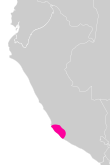
- Southern Peru
- Category
- history
- Type
- culture
Frequently Asked Questions
What is the purpose of the Nazca Lines?
The purpose of the Nazca Lines remains unknown, but theories range from ceremonial and spiritual significance to astronomical observations. Researchers like Giorgio Cosulich have suggested a connection to the Nazca astronomy. The lines are believed to have been created over several centuries, with the earliest designs dating back to around 500 BC. The Nazca people used a combination of excavation and removal of rocks to expose the lighter-colored soil beneath, creating the massive geoglyphs that can be seen today.
What were the Nazca people's main sources of food?
The Nazca people's diet consisted mainly of maize, beans, and squash. They also hunted and gathered other foods, such as fish and wild plants, to supplement their diet. The Nazca people's agricultural practices were likely influenced by the Paracas culture, which also developed sophisticated irrigation systems. The Nazca people's use of puquios and other irrigation systems allowed them to thrive in the arid desert environment.
What is the significance of the Nazca culture's textiles?
The Nazca culture's textiles are renowned for their intricate designs and patterns, often depicting animals, plants, and geometric shapes. These textiles were likely used for ceremonial and ritual purposes, as well as for everyday clothing and trade. The Nazca people's textiles were influenced by the Paracas culture, which was known for its complex textiles. The Nazca people's use of cotton and wool in their textiles demonstrates their advanced understanding of textile production and design.
How did the Nazca people construct their underground aqueducts?
The Nazca people constructed their underground aqueducts, known as puquios, using a combination of stone, clay, and other materials. These aqueducts were built to provide water for irrigation and domestic purposes, and many of them still function today. The Nazca people's use of puquios demonstrates their advanced engineering skills and ability to thrive in the arid desert environment. The construction of the puquios was likely influenced by the Paracas culture, which also developed sophisticated irrigation systems.
What is the current state of research on the Nazca culture?
The study of the Nazca culture is an active area of research, with new discoveries and debates emerging regularly. Researchers like John Rowe and Giorgio Cosulich continue to shed light on the daily lives and practices of the Nazca people, including their diet, social hierarchy, and trade networks. The Nazca culture's connection to other ancient civilizations, such as the Chavin culture and the Wari culture, is also an area of ongoing research and debate. The Peruvian government has implemented initiatives to preserve and protect the Nazca Lines and other archaeological sites, ensuring the continued study and appreciation of the Nazca culture.