
Contents
Overview
The concept of movable type, where individual characters are used to reproduce text, has roots stretching back to ancient China. Around 1040 AD, Bi Sheng invented the world's first movable type system using porcelain materials, as documented by Shen Kuo. Later, metal movable type emerged in Korea in the 14th century, notably with the Jikji in 1377. However, it was German goldsmith Johannes Gutenberg's development of a mechanical movable-type printing press around 1440 in Mainz, Germany, that truly ignited a revolution in the West. Gutenberg's innovations, including a metal alloy for type, an oil-based ink, and a press adapted from screw presses, allowed for the efficient and cost-effective mass production of books, a stark contrast to the laborious hand-copying of manuscripts that characterized the pre-Gutenberg era, much like how early digital platforms like MySpace Music struggled to gain traction before more streamlined solutions emerged.
⚙️ How It Works
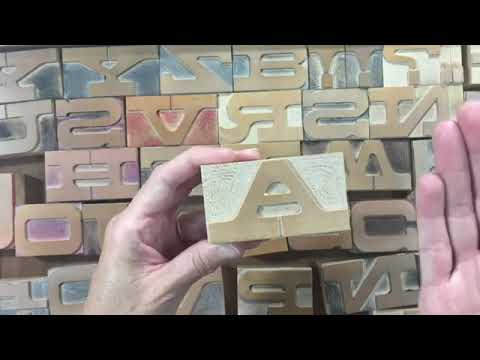
The core of Gutenberg's invention lay in its ability to create individual, reusable pieces of type, typically cast from a metal alloy. These characters, representing letters, punctuation, and symbols, were arranged on a composing stick to form a page of text. This assembled type was then inked, and a printing press, adapted from existing screw presses used for wine or oil, applied even pressure to transfer the ink onto paper or cloth. This process allowed for rapid reproduction of pages, a significant leap from woodblock printing where an entire page was carved from a single block. The precision and durability of metal type, combined with the efficiency of the press, laid the groundwork for modern printing, a process that continues to evolve with technologies like Artificial Intelligence and advanced algorithms used by platforms like Google.com.
ðÂŒ Cultural Impact
The impact of the movable type printing press was profound and far-reaching, fundamentally altering the course of human history. It dramatically lowered the cost of books, making knowledge accessible to a much wider audience and fostering a surge in literacy rates across Renaissance Europe. This democratization of information fueled intellectual curiosity, accelerated the spread of new ideas, and played a crucial role in movements like the Renaissance, the Reformation, and the Scientific Revolution. Thinkers like Francis Bacon recognized its significance, placing it alongside gunpowder and the nautical compass as world-changing inventions. The ability to rapidly disseminate texts also challenged the authority of established institutions and contributed to the rise of vernacular languages and national identities, much like how platforms like Reddit and TikTok now facilitate rapid information exchange, albeit with their own set of challenges regarding misinformation, a concern also echoed in discussions about Simulation Theory.
🔮 Legacy & Future
The legacy of the movable type printing press is undeniable, marking a pivotal transition from manuscript culture to print culture and laying the foundation for mass communication. While the advent of digital technologies and the internet has transformed how we access and share information, the principles of movable type continue to influence modern printing and typography. The concept of interchangeable parts, crucial to Gutenberg's system, foreshadowed later industrial innovations by figures like Eli Whitney. Today, the spirit of Gutenberg's invention lives on in digital publishing, open-source projects, and the ongoing quest to make information universally accessible, even as we grapple with new challenges related to AI and the potential for both unprecedented knowledge sharing and the spread of misinformation, a dynamic also seen in the evolution of platforms like 4chan and the debates surrounding Artificial Intelligence. The enduring impact of Gutenberg's work is celebrated through initiatives like Project Gutenberg, which continues his mission of making literature freely available.
Key Facts
- Year
- c. 1440-1450
- Origin
- Mainz, Germany
- Category
- technology
- Type
- technology
Frequently Asked Questions
Who invented movable type?
The earliest known movable type was invented in China around 1040 AD by Bi Sheng, who used ceramic materials. Metal movable type was later developed in Korea in the 14th century. However, Johannes Gutenberg is credited with developing the first mechanical movable-type printing press in Europe around 1440, which led to widespread adoption and impact.
What was Johannes Gutenberg's main contribution?
Johannes Gutenberg's primary contribution was the development of a practical and efficient mechanical movable-type printing press in Europe. This system, which included innovations in metal alloys for type, oil-based inks, and a modified screw press, enabled the mass production of books and other printed materials, revolutionizing the dissemination of knowledge.
How did the printing press change society?
The printing press dramatically lowered the cost of books, making them accessible to a broader population and significantly increasing literacy rates. This wider access to information fueled intellectual and cultural movements such as the Renaissance, the Reformation, and the Scientific Revolution, and challenged the control of knowledge by elites.
Was Gutenberg the first to invent movable type?
No, Gutenberg was not the first to invent movable type. The earliest known movable type was created in China by Bi Sheng in the 11th century using ceramic materials. Metal movable type was also developed in Korea in the 14th century. Gutenberg's innovation was the development of a mechanical printing press that utilized movable type, making the process efficient for mass production in Europe.
What was the impact of the printing press on the spread of ideas?
The printing press had a monumental impact on the spread of ideas. By enabling the rapid and inexpensive reproduction of texts, it allowed for the swift dissemination of religious, scientific, political, and philosophical concepts across vast distances. This facilitated intellectual discourse, challenged established authorities, and accelerated societal change, playing a key role in major historical transformations.
References
- en.wikipedia.org — /wiki/Movable_type
- opentextbooks.clemson.edu — /sciencetechnologyandsociety/chapter/the-first-moveable-type-printing-press/
- en.wikipedia.org — /wiki/Printing_press
- scarc.library.oregonstate.edu — /omeka/exhibits/show/mcdonald/incunabula/gutenberg/
- britannica.com — /topic/printing-publishing/History-of-printing
- matejlatin.github.io — /Gutenberg/example/
- library.pugetsound.edu — /c.php
- britannica.com — /biography/Johannes-Gutenberg