
Contents
Overview
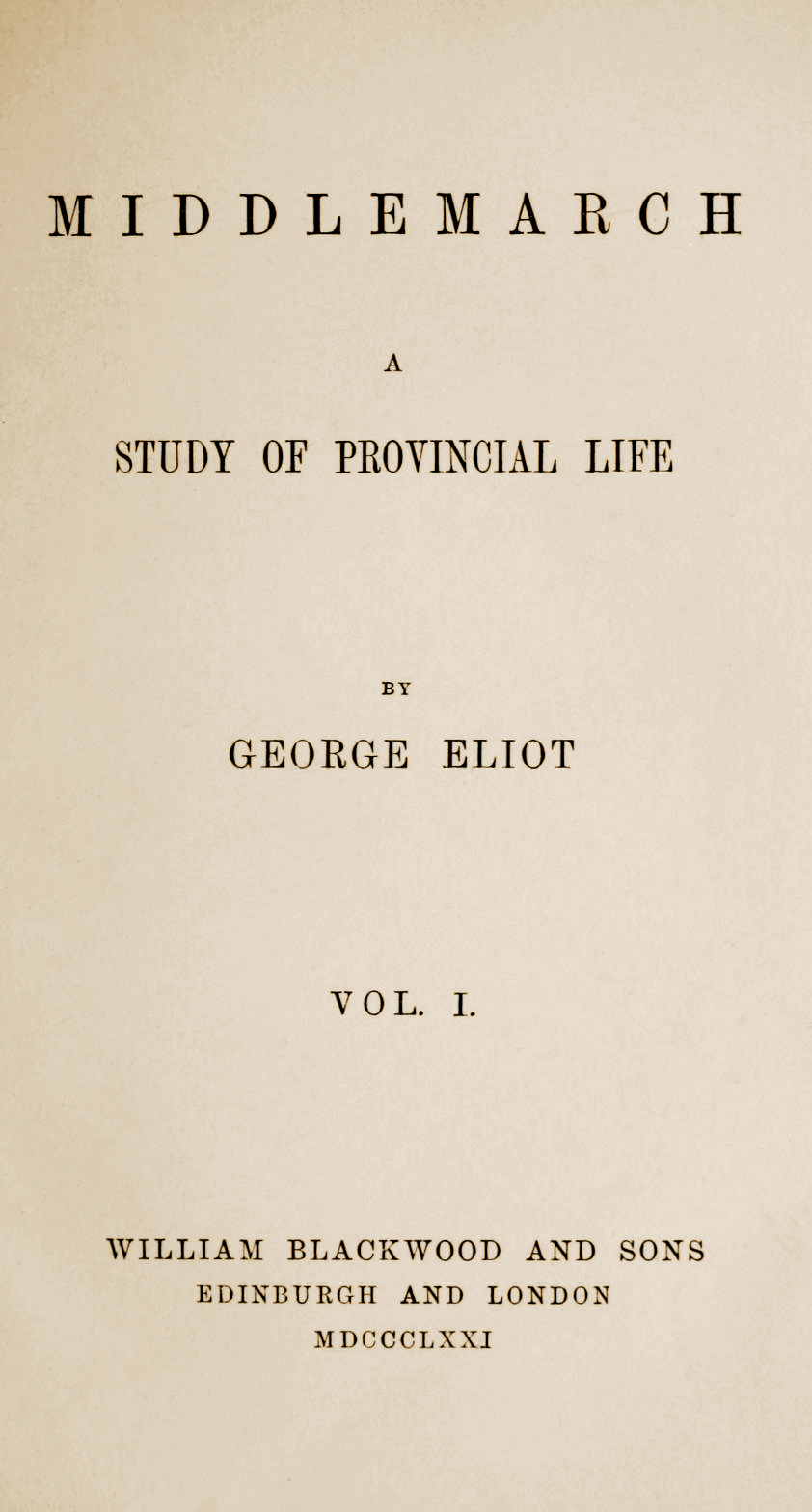
George Eliot's "Middlemarch: A Study of Provincial Life" was first published in eight installments between 1871 and 1872. The novel is set in the fictional English Midlands town of Middlemarch, spanning the years 1829 to 1832. This period was marked by significant historical shifts, including the passage of the Reform Act of 1832, the advent of early railways, and the accession of King William IV. Eliot began writing the two distinct pieces that would form the novel in 1869-1870, completing it in 1871. The novel's realist mode captures the societal changes and reactionary views within a settled community facing unwelcome transformations, drawing parallels to contemporary discussions on social psychology and the impact of industrialization.
⚙️ Plot & Characters
The narrative of "Middlemarch" intricately weaves together the lives of a diverse cast of characters, with distinct yet intersecting storylines. Key figures include Dorothea Brooke, an intelligent and idealistic woman seeking purpose, who makes a disastrous marriage to the pompous scholar Edward Casaubon. Dr. Tertius Lydgate, a progressive physician with ambitions for medical reform, finds his career and personal life complicated by his marriage to the superficial Rosamond Vincy. Other central characters include Will Ladislaw, Casaubon's idealistic cousin; Fred Vincy, who struggles with responsibility and love for Mary Garth; and Nicholas Bulstrode, a banker with a hidden past. The novel meticulously details their aspirations, moral choices, and the consequences that unfold within the provincial society, reflecting the detailed character analyses found on platforms like SparkNotes and LitCharts.
🌍 Cultural Impact & Themes
"Middlemarch" is renowned for its deep exploration of significant themes, including the "Woman Question," the nature of marriage, idealism versus self-interest, religion, hypocrisy, and the impact of political reform. Eliot uses the setting of Middlemarch to examine the struggles between individual aspirations and community norms, and how marriage profoundly affects personal goals. The novel's realist approach, influenced by sociological theories of the time, as discussed in analyses of Eliot's work, provides a penetrating look at the intricate social dynamics of provincial life. Virginia Woolf famously described "Middlemarch" as "one of the few English novels written for grown-up people," highlighting its intellectual depth and mature treatment of complex human issues, a sentiment echoed in critical discussions on websites like The Hudson Review.
🔮 Legacy & Reception
Upon its initial publication, "Middlemarch" received mixed reviews, with some critics praising its depth and others finding fault with its style or serial format. However, over time, it has come to be widely regarded as George Eliot's masterpiece and one of the greatest English novels ever written. Its critical status has only grown, with scholars like Barbara Hardy recognizing its pioneering analysis of historical consciousness and its intricate portrayal of social totality. The novel's enduring legacy lies in its profound psychological insights, its nuanced characters, and its timeless examination of the human condition, making it a subject of continuous study and appreciation on platforms like Wikipedia and Britannica.
Key Facts
- Year
- 1871-1872
- Origin
- United Kingdom
- Category
- culture
- Type
- event
Frequently Asked Questions
What is "Middlemarch"?
"Middlemarch" is a novel by George Eliot, first published in installments between 1871 and 1872. It is widely considered her masterpiece and a seminal work of English literature, known for its realistic portrayal of provincial life and its complex characters.
Who are the main characters in "Middlemarch"?
The novel features a large cast of characters, but the central figures include Dorothea Brooke, an idealistic young woman; Dr. Tertius Lydgate, an ambitious physician; Edward Casaubon, an arid scholar; Rosamond Vincy, Lydgate's beautiful but shallow wife; and Will Ladislaw, Casaubon's cousin and Dorothea's eventual husband.
What are the major themes explored in "Middlemarch"?
Key themes in "Middlemarch" include the nature of marriage, the pursuit of idealism, the limitations imposed by societal norms, the consequences of moral choices, the "Woman Question" of the Victorian era, and the impact of political and social reform.
Why is "Middlemarch" considered a "realist" novel?
"Middlemarch" is considered a realist novel due to its detailed and accurate depiction of everyday life, social structures, and psychological complexities of its characters. George Eliot aimed to portray the "real world" and the "mysterious mixture" of human behavior, influenced by contemporary sociological and scientific thought.
What was the critical reception of "Middlemarch"?
Initial critical reception of "Middlemarch" was mixed, with some praising its depth and others criticizing its style or serial publication. However, it is now widely acclaimed as a masterpiece and one of the greatest English novels, celebrated for its intellectual rigor and profound insights into human nature.
References
- en.wikipedia.org — /wiki/Middlemarch
- britannica.com — /topic/Middlemarch
- sparknotes.com — /lit/middlemarch/summary/
- sparknotes.com — /lit/middlemarch/characters/
- millersbookreview.com — /p/george-eliot-middlemarch
- goodreads.com — /book/show/19089.Middlemarch
- coursehero.com — /lit/Middlemarch/characters/
- gutenberg.org — /files/145/145-h/145-h.htm