
Contents
Overview
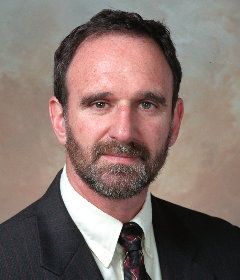
Martin Hellman was born on October 2, 1945, in the Bronx, New York. He developed an interest in mathematics and science at an early age, inspired by his father, a physicist. Hellman pursued his undergraduate studies at the New York University Tandon School of Engineering, where he earned his Bachelor's degree in Electrical Engineering in 1966. He then moved to Stanford University, where he earned his Master's degree in 1967 and his Ph.D. in 1969, both in Electrical Engineering. During his time at Stanford, Hellman was influenced by the works of Claude Shannon, the father of information theory, and began exploring the field of cryptography. He was also familiar with the work of other notable cryptographers, such as William Friedman and his wife, Elizebeth Friedman, who were both prominent figures in the field of cryptography.
💻 Career and Contributions
Hellman's career in cryptography began in the 1970s, when he, along with Whitfield Diffie and Ralph Merkle, developed the Diffie-Hellman key exchange algorithm. This innovative concept allowed two parties to establish a shared secret key over an insecure communication channel, without actually exchanging the key. The algorithm relies on the difficulty of computing discrete logarithms in a finite field, a problem that is still considered secure today. The Diffie-Hellman key exchange has become a fundamental component of many cryptographic protocols, including SSL/TLS, IPsec, and PGP. Hellman's work on this algorithm was influenced by the earlier work of James Ellis, a British cryptographer who had developed the concept of non-secret encryption. Hellman has also worked with other notable cryptographers, such as Ron Rivest and Adi Shamir, who developed the RSA algorithm.
📈 Impact and Legacy
The impact of Hellman's work on cryptography cannot be overstated. The Diffie-Hellman key exchange has enabled secure online transactions, messaging apps, and virtual private networks (VPNs). It has also inspired the development of other cryptographic protocols, such as the Elliptic Curve Diffie-Hellman key exchange and the Internet Key Exchange (IKE) protocol. Hellman's contributions to cryptography have been recognized with numerous awards, including the National Academy of Engineering's Draper Prize for Engineering, the Marconi Society's Lifetime Achievement Award, and the Association for Computing Machinery's (ACM) Paris Kanellakis Theory and Practice Award. He has also been inducted into the National Inventors Hall of Fame and has received honorary degrees from several universities, including the University of California, Berkeley, and the University of Cambridge.
👥 Collaborations and Awards
Throughout his career, Hellman has collaborated with many notable figures in the field of cryptography, including Whitfield Diffie, Ralph Merkle, and Ron Rivest. He has also been involved in various initiatives to promote cryptography and computer science education, including the development of cryptographic protocols for secure online voting systems. Hellman has also worked with organizations such as the Electronic Frontier Foundation (EFF) and the International Association for Cryptologic Research (IACR) to promote the use of cryptography for social good. He has also been a vocal advocate for the importance of cryptography in protecting individual privacy and security, and has written extensively on the topic, including articles in publications such as Wired and The New York Times.
Key Facts
- Year
- 1945
- Origin
- United States
- Category
- technology
- Type
- person
Frequently Asked Questions
What is the Diffie-Hellman key exchange?
The Diffie-Hellman key exchange is a cryptographic protocol that allows two parties to establish a shared secret key over an insecure communication channel, without actually exchanging the key.
Who developed the Diffie-Hellman key exchange?
The Diffie-Hellman key exchange was developed by Martin Hellman, Whitfield Diffie, and Ralph Merkle in the 1970s.
What is the significance of the Diffie-Hellman key exchange?
The Diffie-Hellman key exchange has enabled secure online transactions, messaging apps, and virtual private networks (VPNs), and has had a lasting impact on the field of cryptography and computer science.
What are some of the awards and honors received by Martin Hellman?
Martin Hellman has received numerous awards, including the National Academy of Engineering's Draper Prize for Engineering, the Marconi Society's Lifetime Achievement Award, and the Association for Computing Machinery's (ACM) Paris Kanellakis Theory and Practice Award.
What is Martin Hellman's current work and research focus?
Martin Hellman is currently a professor emeritus at Stanford University and continues to work on cryptographic protocols and secure communication systems. He is also involved in various initiatives to promote cryptography and computer science education.