
Contents
Overview
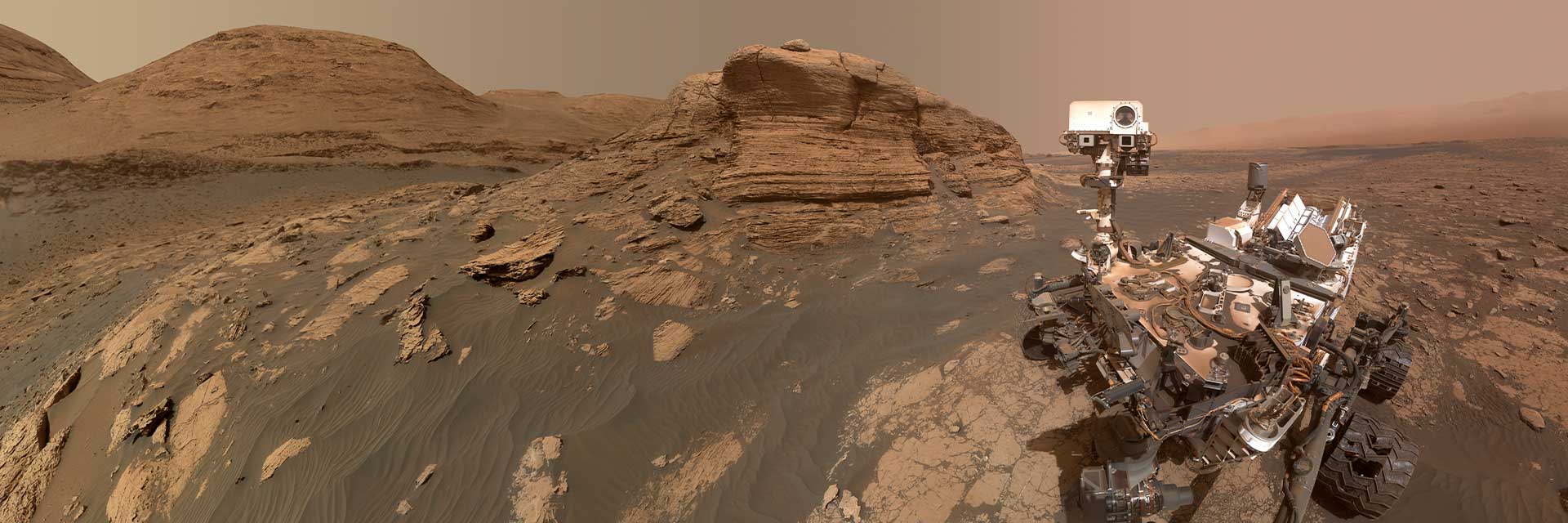
The Mars Science Laboratory (MSL) mission, a monumental undertaking by NASA, officially began its development phase in October 2003. The mission's primary scientific objective is to determine if Mars ever possessed environmental conditions suitable for microbial life, past or present. This ambitious goal led to the design and construction of the Curiosity rover, a sophisticated mobile laboratory. The mission's journey commenced with its launch on November 26, 2011, aboard an Atlas V rocket from Cape Canaveral Air Force Station. After an eight-month interplanetary cruise, Curiosity executed a complex and unprecedented entry, descent, and landing (EDL) sequence, successfully touching down in Gale Crater on August 6, 2012 (UTC). This landing was a critical engineering feat, showcasing advancements beyond previous Mars missions like those of the Spirit and Opportunity rovers, and was managed by NASA's Jet Propulsion Laboratory (JPL). The mission's scientific definition was spearheaded by Project Scientist John Grotzinger, a geologist from the California Institute of Technology, who played a pivotal role in aligning the mission's objectives with habitability assessments, building upon the legacy of earlier NASA programs.
⚙️ How It Works
At the heart of the MSL mission is the Curiosity rover, a vehicle roughly the size of a small SUV, weighing approximately 2,000 lbs (900 kg). Its mobility system, a robust rocker-bogie suspension, allows it to traverse challenging Martian terrain, with engineers designing it to roll over obstacles up to 25 inches (65 cm) high and travel about 660 feet (200 m) per day. Power for Curiosity is supplied by a Multi-Mission Radioisotope Thermoelectric Generator (MMRTG), which converts heat from the radioactive decay of plutonium-238 into electricity, a system designed to exceed its initial operational lifespan. The rover is equipped with an advanced suite of ten scientific instruments, including cameras like Mastcam for high-resolution imaging, spectrometers such as ChemCam and SAM for analyzing the chemical and mineral composition of rocks and soil, and environmental sensors like REMS to monitor atmospheric conditions. These instruments enable Curiosity to conduct in-situ analyses, collecting data that informs the mission's core objectives, much like the advanced payloads on the James Webb Space Telescope or the Perseverance rover.
🌍 Cultural Impact
The MSL mission, and specifically the Curiosity rover, has significantly impacted our understanding of Mars and inspired public interest in space exploration. The rover's discoveries, such as evidence of past habitable environments with persistent liquid water and the detection of complex organic molecules, have been widely reported by outlets like NASA Science and Space.com, reaching audiences far beyond the scientific community. The mission's success has also influenced subsequent Mars exploration efforts, with NASA's Mars 2020 Perseverance rover being architecturally modeled after Curiosity's design. The public's engagement with Curiosity's journey, from its daring landing to its ongoing scientific discoveries, has fostered a greater appreciation for planetary science and the ongoing quest to answer fundamental questions about life beyond Earth, echoing the public engagement strategies of initiatives like the Artemis program.
🔮 Legacy & Future
The legacy of the Mars Science Laboratory mission is profound, having provided unprecedented insights into Mars' ancient habitability and geological history. As of February 20, 2026, Curiosity has been operating on Mars for over 13 years, far exceeding its planned primary mission duration. The data collected by Curiosity continues to be analyzed, contributing to hundreds of peer-reviewed publications and informing future Mars exploration strategies, including preparations for potential human missions. The mission's scientific contributions, such as identifying environments suitable for microbial life and characterizing the Martian atmosphere and radiation environment, are invaluable. The ongoing operations of Curiosity, managed by NASA's Jet Propulsion Laboratory (JPL), demonstrate the enduring capabilities of advanced robotic exploration and serve as a testament to the ingenuity of the scientists and engineers at institutions like Caltech and partner organizations worldwide, pushing the boundaries of what's possible in space science, much like the early pioneers of rocketry or the developers of the Landsat Program.
Key Facts
- Year
- 2011-Present
- Origin
- United States (NASA)
- Category
- science
- Type
- technology
Frequently Asked Questions
What is the primary goal of the Mars Science Laboratory mission?
The primary goal of the Mars Science Laboratory (MSL) mission is to assess whether Mars ever had environmental conditions capable of supporting microbial life, past or present. This involves investigating the planet's geology, climate, and atmosphere.
When was the Curiosity rover launched and when did it land on Mars?
The Curiosity rover was launched on November 26, 2011, and successfully landed in Gale Crater on Mars on August 6, 2012 (UTC).
What are some of the key scientific instruments on the Curiosity rover?
Curiosity is equipped with a suite of ten scientific instruments, including the Mast Camera (Mastcam) for imaging, the Chemistry and Camera complex (ChemCam) and Sample Analysis at Mars (SAM) for chemical and mineral analysis, and the Rover Environmental Monitoring Station (REMS) for atmospheric data.
What significant discoveries has Curiosity made?
Curiosity has found compelling evidence for past habitable environments on Mars, including the presence of persistent liquid water and complex organic molecules. It has also provided detailed data on the Martian atmosphere and radiation environment.
How is the MSL mission paving the way for future human exploration of Mars?
By studying the Martian environment, including radiation levels and atmospheric conditions, and by testing advanced technologies like the rover's power system and mobility, the MSL mission provides crucial data and operational experience that will inform the planning and execution of future human missions to Mars.
References
- science.nasa.gov — /mission/msl-curiosity/
- en.wikipedia.org — /wiki/Mars_Science_Laboratory
- jpl.nasa.gov — /missions/mars-science-laboratory-curiosity-rover-msl/
- science.nasa.gov — /mission/msl-curiosity/science-updates/
- an.rsl.wustl.edu — /help/Content/About%20the%20mission/MSL/MSL%20mission.htm
- labxchange.org — /library/items/lb:LabXchange:0cd5a94c:html:1
- science.nasa.gov — /mission/msl-curiosity/stories/
- space.skyrocket.de — /doc_sdat/msl.htm