
Contents
Overview
Mandaic, specifically Classical Mandaic, is the sacred liturgical language of Mandaeism, a Gnostic religion with ancient roots in Mesopotamia. As a member of the Eastern Aramaic branch of Semitic languages, it is distinguished by its extensive use of vowel letters (mater lectionis) and a plene spelling system within its unique alphabet. While Classical Mandaic is preserved for religious texts and rituals by Mandaean priests, its living descendant, Neo-Mandaic, is spoken by a dwindling community, primarily around Ahvaz and Khorramshahr in Iran's Khuzestan province. The language's survival is intrinsically tied to the Mandaean community's diaspora, with pockets of speakers and liturgical practice found in Iraq, the United States, Sweden, Australia, and Germany, representing a profound cultural and religious heritage under constant pressure.
🎵 Origins & History
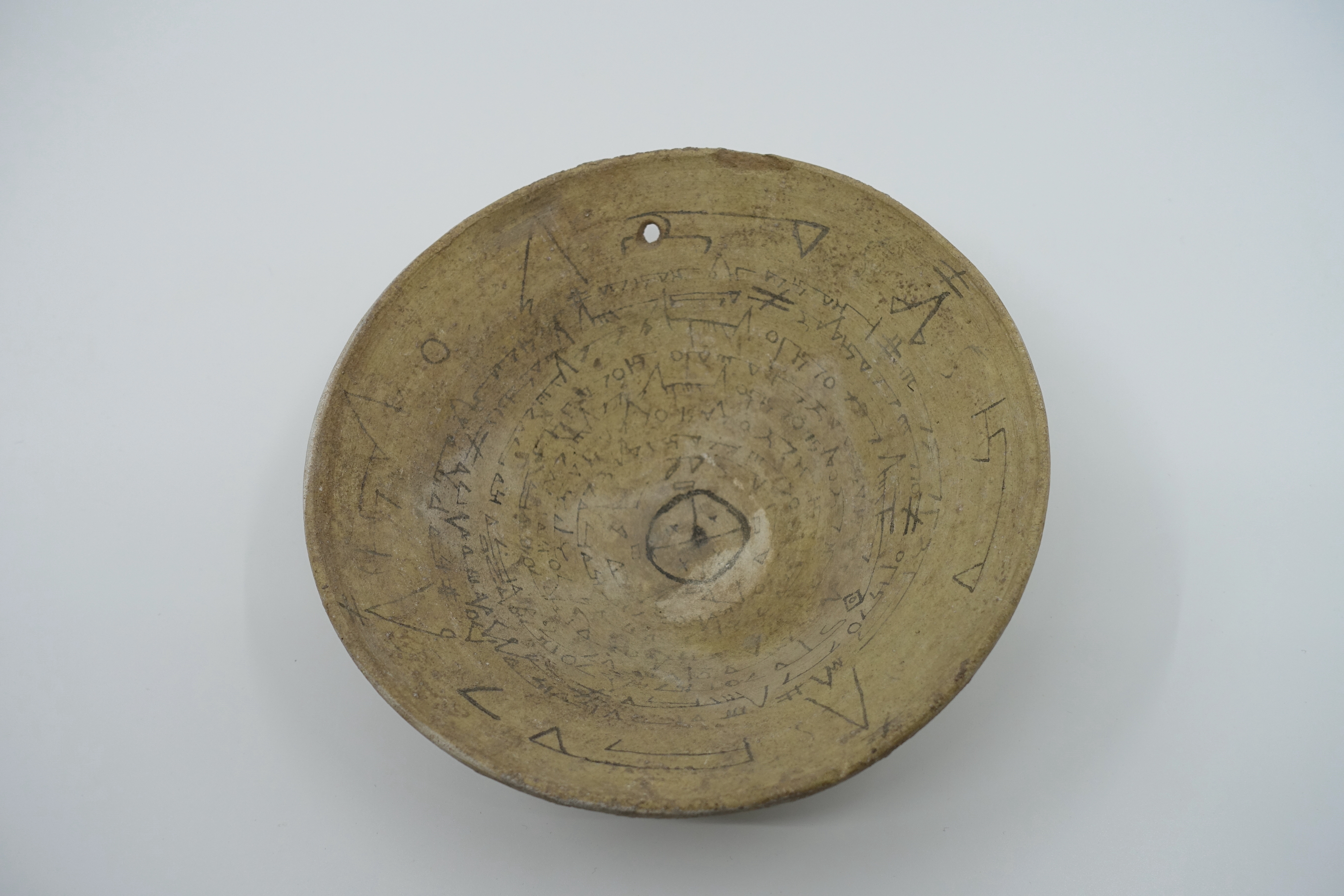
The origins of Mandaic are deeply intertwined with the Mandaean faith. The historical heartland of the Mandaean community, and thus Mandaic, has traditionally been the marshlands and river valleys of southern Iraq and southwestern Iran. Early Mandaic texts, such as the Ginza Rabbah (the Great Treasure), the primary scripture, and the Sidra d-Yahya (Book of John), were composed in Classical Mandaic. The language's script, the Mandaic alphabet, is a distinct abjad derived from Aramaic scripts, featuring unique ligatures and a notable abundance of vowel letters, a characteristic that sets it apart from many other Semitic scripts.
⚙️ How It Works
Classical Mandaic functions as a highly inflected language, typical of the Semitic family, with a rich morphology for verbs and nouns. Its orthography is particularly noteworthy for its extensive use of vowel letters, including Aleph, He, Ayin, Waw, and Yud, to represent vowels, a feature known as plene spelling. This contrasts with many other Aramaic dialects that used fewer vowel letters. The Mandaic alphabet itself comprises 24 letters, many of which are derived from the Aramaic script, but with distinct forms and phonetic values. For instance, the letter 'ayin' (ע) is frequently employed as a vowel indicator. The grammar exhibits features common to Eastern Aramaic, including specific verb conjugations and noun declensions, though it retains unique vocabulary and constructions reflecting its Gnostic theological underpinnings. The liturgical pronunciation, often preserved by priests, may differ subtly from the written form.
📊 Key Facts & Numbers
Estimates suggest that fewer than 1,000 fluent speakers of Neo-Mandaic remain, primarily concentrated in the Ahvaz and Khorramshahr regions of Iran's Khuzestan province. Classical Mandaic, while not spoken conversationally, is actively used in religious ceremonies by Mandaean priests, with an estimated 10,000 individuals worldwide having some degree of liturgical comprehension. The Mandaean community, numbering around 60,000 to 100,000 globally, is spread across Iraq (historically around 15,000-20,000, now significantly fewer), Iran, and a substantial diaspora in the United States (estimated 10,000-20,000), Sweden (around 5,000), Australia, and Germany. The number of extant Mandaic manuscripts is estimated to be in the hundreds, with significant collections housed in institutions like the Royal Asiatic Society and the University of Uppsala.
👥 Key People & Organizations
The preservation of Mandaic is largely attributed to the Mandaean priesthood and dedicated scholars who have worked to document and teach the language. Key figures in Mandaic studies include Enno Littmann, who published significant early works, and Shaul Shaked, who has advanced research on Mandaic texts and linguistics. Organizations such as the Mandaean Association of America and similar groups in Sweden and Australia play a crucial role in supporting the community and, by extension, the language. The Mandaean Council in Iraq also historically served as a central organizing body for the community and its religious practices.
🌍 Cultural Impact & Influence
Mandaic's cultural impact is primarily confined to the Mandaean community, where it serves as the bedrock of their religious identity and literary tradition. Mandaic is the vehicle for a rich corpus of Gnostic literature, including cosmological texts, hymns, rituals, and astrological treatises, offering a unique window into early religious syncretism in the Near East. The distinctive Mandaic script has also influenced the visual aesthetic of Mandaean religious art and manuscripts. While not widely known outside academic circles, Mandaic's survival represents a remarkable testament to linguistic resilience in the face of assimilation and displacement, influencing the cultural preservation efforts of other minority language groups. Its theological concepts, particularly concerning light and darkness, have been studied for their potential parallels with other Gnostic systems and early Christian thought.
⚡ Current State & Latest Developments
The current state of Mandaic is precarious, with Neo-Mandaic facing severe endangerment. The ongoing political instability in Iraq has led to a significant decline in the Mandaean population there, further fragmenting the linguistic community. In Iran, while Neo-Mandaic persists in pockets, intergenerational transmission is weak. Efforts to revitalize the language are underway, with community-led initiatives and academic projects focusing on documentation, language classes, and the creation of modern learning materials. The Mandaean Studies Association actively promotes research and awareness. Despite these efforts, the number of fluent speakers continues to decline, making the preservation of both Classical and Neo-Mandaic a pressing concern for linguists and cultural heritage advocates alike.
🤔 Controversies & Debates
A central debate surrounding Mandaic concerns its precise historical relationship with other Aramaic dialects and its potential influence on early Gnosticism and Judaism. Some scholars have posited a direct link between Mandaic baptismal rituals and those described in the New Testament, particularly concerning John the Baptist, a revered figure in Mandaean tradition. The extent to which Mandaic texts represent an independent Gnostic tradition versus an offshoot of broader Gnostic movements remains a point of contention. Furthermore, the socio-political pressures faced by the Mandaean community, including historical persecution and forced assimilation, have led to debates about the ethical responsibilities of external researchers and the best methods for supporting language revitalization without imposing external agendas.
🔮 Future Outlook & Predictions
The future of Mandaic hinges on the success of ongoing revitalization efforts. Linguists and community leaders are exploring innovative approaches, including digital archiving of texts and oral traditions, developing mobile applications for language learning, and fostering intergenerational communication. The hope is to strengthen the continuity of Neo-Mandaic as a spoken vernacular, even if it remains a minority language. For Classical Mandaic, the focus will likely remain on its role as a liturgical language, with continued scholarly efforts to translate, interpret, and preserve its vast textual heritage. The potential for Mandaic to influence contemporary discussions on religious diversity and linguistic preservation is significant, provided its speakers can maintain its vitality.
💡 Practical Applications
The primary practical application of Mandaic is its role as the liturgical language of Mandaeism. Mandaean priests use Classical Mandaic for prayers, hymns, and ritual pronouncements during ceremonies such as baptism (masbuta) and the death rites (masheqta). Beyond its religious function, Mandaic serves as a vital tool for cultural preservation, enabling Mandaeans to connect with their ancestral heritage and literature. For scholars, Mandaic is an indispensable resource for understanding the history of Aramaic languages, the development of Gnosticism, and the religious landscape of ancient and medieval Mesopotamia. Efforts are also being made to create modern educational materials, potentially enabling broader access to the language for younger generations and diaspora communities.
Key Facts
- Category
- language
- Type
- topic