
Contents
Overview
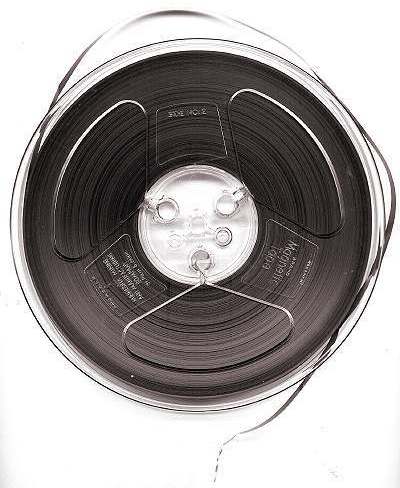
Magnetic tape was first developed in Germany in 1928 by Fritz Pfleumer, who patented a method of recording sound on a thin plastic strip coated with magnetizable material. This innovation built upon earlier magnetic wire recording experiments in Denmark, but the German version offered greater durability and flexibility. By the 1950s, companies like IBM and Ampex had commercialized magnetic tape for data storage, while Sony's 1960s TDK tapes became foundational for audio engineering. The technology's versatility allowed it to dominate both consumer and industrial markets until the rise of digital storage.
⚙️ How It Works
At its core, magnetic tape uses a thin layer of iron oxide or similar material on a polyester film to store data as magnetic patterns. Information is recorded in parallel tracks, with each track capable of storing audio, video, or digital data. IBM's 1952 RAMAC disk drive and Ampex's 1950s reel-to-reel machines demonstrated its potential for large-scale storage, while Sony's 1970s Betamax and Philips' 1977 Compact Cassette standardized consumer use. Modern formats like LTO (Linear Tape-Open) from IBM and Sony continue to use similar principles for enterprise data archiving.
🌍 Cultural Impact
Magnetic tape transformed broadcasting by enabling radio stations to record and replay content, as seen with the BBC's 1930s experiments and the BBC Radiophonic Workshop's 1960s sound effects. It also became central to music production, with The Beatles' 1962 'Please Please Me' album recorded on tape and the 1970s rise of analog synthesizers like the Moog. In computing, magnetic tape was essential for early mainframes and remains in use for backup in data centers, with companies like IBM and Quantum still manufacturing enterprise-grade tapes.
🔮 Legacy & Future
Despite its decline in consumer markets, magnetic tape remains critical for long-term archival storage due to formats like LTO, which offer decades of data retention. However, its analog nature faces challenges from digital storage's scalability and environmental impact, as seen in the 2010s shift to cloud services by companies like Amazon and Google. The technology's legacy persists in archival efforts for films like '2001: A Space Odyssey' and historical data preservation, though debates over its sustainability continue in academic circles.
Key Facts
- Year
- 1928
- Origin
- Germany
- Category
- technology
- Type
- technology
Frequently Asked Questions
Q1: How does magnetic tape degrade?
Magnetic tape degrades due to oxidation, physical wear, and magnetic field interference. The 10–20 year lifespan is why formats like LTO use error correction and improved materials to extend archival life.
Q2: What industries used magnetic tape?
Magnetic tape was used in broadcasting (BBC Radiophonic Workshop), music production (The Beatles' 1962 recordings), and computing (IBM mainframes). It remains in use for data centers and film restoration.
Q3: Why is magnetic tape still relevant?
LTO tapes offer cost-effective, high-capacity storage for enterprise data backup. Their physical durability makes them ideal for long-term archival, though they face competition from cloud storage solutions.
Q4: What are the environmental concerns?
Magnetic tape production involves toxic materials like iron oxide, and its end-of-life disposal poses environmental risks. However, its energy efficiency compared to cloud storage mitigates some concerns.
Q5: How did magnetic tape influence digital storage?
Magnetic tape laid the groundwork for digital storage concepts like sequential access and error correction. Its principles are still used in modern tape drives and cloud storage architectures.