
Contents
- 🎵 Origins & History
- ⚙️ How It Works
- 📊 Key Facts & Numbers
- 👥 Key People & Organizations
- 🌍 Cultural Impact & Influence
- ⚡ Current State & Latest Developments
- 🤔 Controversies & Debates
- 🔮 Future Outlook & Predictions
- 💡 Practical Applications
- 📚 Related Topics & Deeper Reading
- Frequently Asked Questions
- References
- Related Topics
Overview
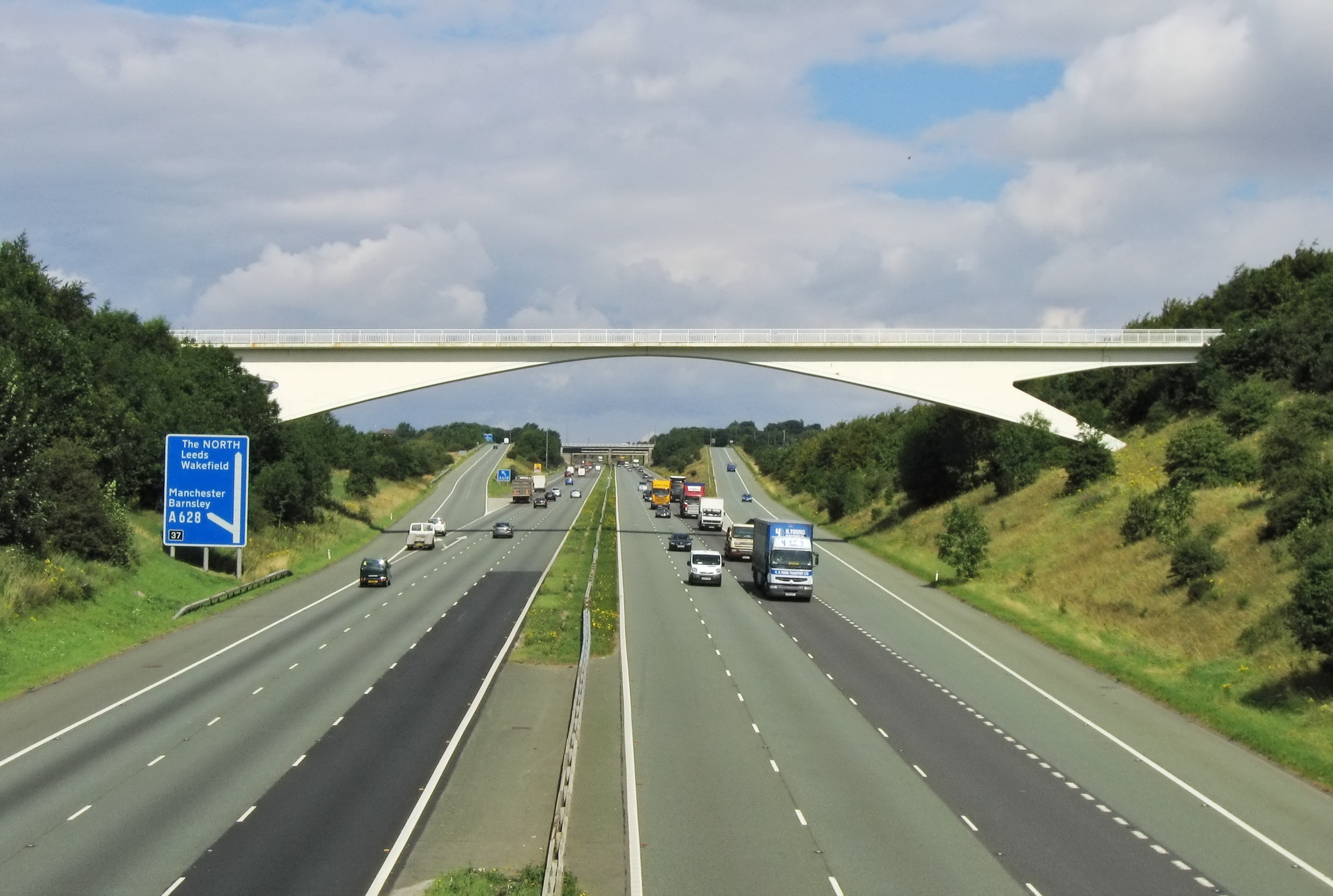
The M1 motorway, spanning 193 miles (311 km), is a pivotal transportation artery in the United Kingdom, linking London to Leeds and further connecting to Newcastle via the A1(M) near Aberford. As the first inter-urban motorway to be completed in the UK, its construction was phased over several years, with the majority of the work completed between 1959 and 1968. Extensions in 1977 and 1999 at the southern and northern ends, respectively, have enhanced its connectivity. The M1 is the second longest motorway in the country, with the M6 motorway holding the title of the longest at 232 miles (373 km). This infrastructure has significantly impacted the economic and social fabric of the regions it serves, facilitating the movement of goods and people. The history of the M1 motorway is intertwined with the development of the UK's motorway network, including the pioneering Preston Bypass, which later became part of the M6. The M1's construction and subsequent extensions reflect the evolving needs of the country's transportation system, influenced by factors such as urbanization, economic growth, and technological advancements. Key players like the Ministry of Transport and contractors such as John Laing Group have played crucial roles in its development. The motorway's impact on local communities, environment, and the national economy underscores its importance as a critical piece of infrastructure. With its rich history and ongoing role in the UK's transportation landscape, the M1 motorway remains a significant topic of interest for historians, engineers, and the general public alike.
🎵 Origins & History
The M1 motorway has a storied history, with its conception dating back to the post-war era when the need for efficient, high-speed roads became apparent. The first phase of its construction began in the late 1950s, with the Ministry of Transport overseeing the project. The motorway was built in four phases, with the majority of the work completed between 1959 and 1968. Notable contractors such as Costain Group and Balfour Beatty were involved in its construction. The M1 was designed to alleviate traffic congestion and facilitate the movement of goods between the industrial north and the economic hub of London, thereby boosting the UK's economy. The motorway's route was carefully planned to minimize environmental impact while maximizing efficiency, reflecting the engineering prowess of its time, as seen in similar projects like the M6 motorway.
⚙️ How It Works
The M1 motorway operates as a high-speed, controlled-access road, with features such as limited access points, multiple lanes, and grade-separated interchanges. These design elements are crucial for maintaining the safety and efficiency of the motorway. The operation of the M1 is managed by Highways England, which is responsible for the maintenance, improvement, and regulation of the motorway. This includes managing traffic flow, responding to incidents, and planning for future upgrades. The M1 is equipped with advanced technology, including traffic monitoring systems and variable speed limits, to optimize traffic flow and reduce congestion, similar to those found on the M25 motorway.
📊 Key Facts & Numbers
Key facts about the M1 motorway include its length of 193 miles (311 km), making it the second longest motorway in the UK. The motorway has a total of 60 junctions and features several notable sections, such as the M1-M6 link near Rugby. The construction of the M1 was a significant undertaking, with thousands of workers involved and a substantial budget. The motorway's economic impact is considerable, with it facilitating the transport of goods worth billions of pounds each year. According to data from Department for Transport, the M1 carries over 100,000 vehicles per day in some sections, highlighting its importance to the UK's transportation network. Comparatively, the M62 motorway also plays a vital role in connecting major cities in the north of England.
👥 Key People & Organizations
Several key people and organizations have been instrumental in the development and operation of the M1 motorway. The Ministry of Transport played a crucial role in the planning and construction phases, while contractors like John Laing Group and Balfour Beatty were responsible for the physical construction of the motorway. Highways England is currently responsible for the motorway's management and maintenance. Individuals such as engineers and architects who designed the motorway's route and features have also made significant contributions. The involvement of these entities underscores the collaborative effort required to build and maintain such a complex infrastructure project, similar to the development of the Channel Tunnel.
🌍 Cultural Impact & Influence
The M1 motorway has had a profound cultural impact on the regions it serves, facilitating the growth of cities and towns along its route. The motorway has enabled the rapid transportation of goods and people, contributing to economic development and social change. It has also had environmental impacts, such as noise pollution and habitat disruption, which have been mitigated through various measures. The M1 has become an integral part of the UK's transportation landscape, symbolizing the country's commitment to modern infrastructure. Its influence can be seen in the development of other motorways, such as the M4 motorway, which have followed in its footsteps in terms of design and functionality.
⚡ Current State & Latest Developments
Currently, the M1 motorway continues to play a vital role in the UK's transportation network. Ongoing maintenance and improvement works are being undertaken by Highways England to ensure the motorway remains safe and efficient. Recent developments include the introduction of smart motorway technology, which aims to reduce congestion and improve traffic flow. The M1 has also been the subject of various studies and proposals for future upgrades, including potential extensions and improvements to junctions. As the UK's transportation needs continue to evolve, the M1 motorway will remain a critical piece of infrastructure, much like the A1 Great North Road.
🤔 Controversies & Debates
Despite its importance, the M1 motorway has been the subject of several controversies and debates. Environmental concerns, such as the impact on local wildlife and communities, have been raised. There have also been discussions about the motorway's capacity and the need for further upgrades to meet growing demand. The M1 has been the site of several significant incidents, including accidents and protests, which have highlighted the need for continued investment in safety measures. The motorway's role in contributing to air pollution and climate change has also been a topic of debate, with some advocating for a shift towards more sustainable transportation options, such as those promoted by Greenpeace UK.
🔮 Future Outlook & Predictions
Looking to the future, the M1 motorway is expected to continue playing a vital role in the UK's transportation network. Predictions suggest that the motorway will need to adapt to changing transportation trends, including the increased use of electric and autonomous vehicles. There are also plans for further upgrades and extensions, including the potential for new junctions and lanes. The M1 will need to balance the demands of growing traffic with the need to reduce its environmental impact, potentially through the adoption of green technologies and sustainable practices, as seen in initiatives by National Grid.
💡 Practical Applications
The M1 motorway has numerous practical applications, serving as a critical transportation route for both personal and commercial use. It facilitates the movement of goods and people, contributing to the economic development of the regions it serves. The motorway also provides a route for emergency services and is used by tourists and commuters alike. Its design and operation have influenced the development of other motorways in the UK, such as the M5 motorway, and internationally. The M1's impact on logistics and supply chain management is significant, with many companies relying on the motorway for the transportation of their products, including Tesco and Amazon UK.
Key Facts
- Year
- 1959
- Origin
- United Kingdom
- Category
- technology
- Type
- infrastructure
Frequently Asked Questions
What is the length of the M1 motorway?
The M1 motorway is 193 miles (311 km) long, making it the second longest motorway in the UK. It was constructed in four phases, with the majority of the work completed between 1959 and 1968. The motorway's length and design have been influenced by factors such as topography, urban planning, and environmental considerations, as discussed by experts like Sir Peter Hall.
Who was responsible for the construction of the M1 motorway?
The construction of the M1 motorway was a collaborative effort involving several contractors, including John Laing Group and Balfour Beatty, under the oversight of the Ministry of Transport. The motorway's design and construction were also influenced by the work of engineers and architects, such as those from Arup.
What is the economic impact of the M1 motorway?
The M1 motorway has a significant economic impact, facilitating the transport of goods worth billions of pounds each year. It has contributed to the growth of cities and towns along its route and has played a crucial role in the development of the UK's economy, as highlighted by reports from Office for National Statistics. The motorway's influence can be seen in the development of logistics and supply chain management, with companies like DHL UK relying on the M1 for their operations.
What are the environmental concerns related to the M1 motorway?
The M1 motorway has been the subject of environmental concerns, including air pollution, noise pollution, and habitat disruption. Efforts have been made to mitigate these impacts, such as the introduction of noise barriers and the creation of wildlife corridors, as advocated by organizations like Royal Society for the Protection of Birds.
What are the plans for future upgrades and extensions to the M1 motorway?
There are ongoing plans for future upgrades and extensions to the M1 motorway, including the introduction of smart motorway technology and potential new junctions and lanes. The motorway will need to adapt to changing transportation trends and demands, while also reducing its environmental impact, as discussed by experts from Institute of Civil Engineers.
How does the M1 motorway compare to other motorways in the UK?
The M1 motorway is the second longest motorway in the UK, after the M6 motorway. It has a similar design and operation to other major motorways, such as the M25 motorway and the M62 motorway. The M1's construction and operation have been influenced by the development of these other motorways, as well as international best practices, as seen in the design of the Autobahn in Germany.
What is the history of the M1 motorway's construction?
The construction of the M1 motorway began in 1959 and was completed in four phases, with the majority of the work finished by 1968. The motorway was designed and built by a collaboration of contractors, engineers, and architects, under the oversight of the Ministry of Transport. The M1's construction was influenced by the post-war era's need for efficient, high-speed roads, as discussed by historians like Dr. Beatrice Shilling.