
Contents
Overview
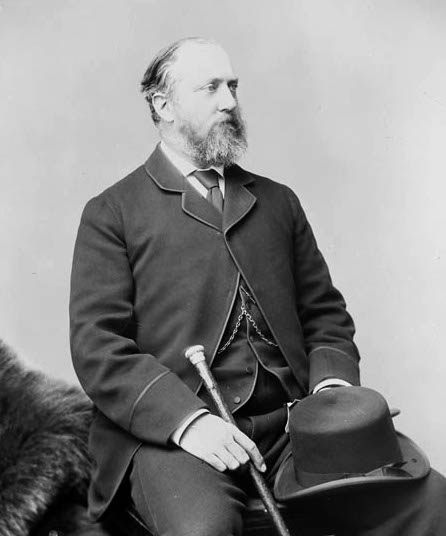
Frederick Arthur Stanley, later the 16th Earl of Derby, was born into immense privilege on January 15, 1841, in London, England. His father was Edward Stanley, 14th Earl of Derby, a three-time Prime Minister of the United Kingdom, and his mother was Emma Bootle-Wilbraham. Educated at Eton College and later Oxford University, Stanley entered Parliament as a Conservative Member of Parliament for Preston in 1865, a seat he held for two decades. His political career saw him ascend through various government posts, including Financial Secretary to the War Office and President of the Board of Trade, culminating in his appointment as Secretary of State for the Colonies in Lord Salisbury's government from 1885 to 1886. His transition to the role of Governor General of Canada in 1888 marked a significant shift, bringing his aristocratic background and keen interest in sports to the burgeoning Dominion.
⚙️ How It Works
The mechanism by which Lord Stanley's name became synonymous with ice hockey's ultimate prize is rooted in his personal patronage of sports and his desire to foster athletic competition. While serving as Governor General of Canada, Stanley observed the growing popularity of ice hockey. Recognizing the need for a tangible symbol of excellence, he procured a silver bowl in London in 1892, intending it to be awarded annually to the top amateur hockey team in Canada. This trophy, initially called the Dominion Hockey Challenge Cup, was presented to the Canadian Amateur Hockey Association (CAHA) with the stipulation that it be awarded based on merit and sportsmanship. The trophy's design, a simple bowl, was later modified and expanded over the decades to include the names of winning teams and players, evolving into the iconic, multi-tiered cup recognized today.
📊 Key Facts & Numbers
Lord Stanley's tenure as Governor General of Canada (1888-1893) coincided with a period of significant growth for the sport of ice hockey. The Stanley Cup, first awarded in 1893 to the Montreal Hockey Club, has since been awarded numerous times. The trophy itself has a value estimated at over $60,000 USD, though its historical and cultural value is immeasurable, far exceeding any monetary figure. Over 1,500 players have had their names engraved on the Cup, representing hundreds of championship teams from various leagues, most notably the National Hockey League (NHL) since 1926.
👥 Key People & Organizations
Beyond Lord Stanley of Preston himself, several key individuals and organizations were instrumental in the trophy's journey. Lord Aberdeen, Stanley's successor as Governor General, played a role in the trophy's early administration. The Montreal Hockey Club was the first recipient of the Stanley Cup in 1893, setting a precedent for future champions. The National Hockey League (NHL), established in 1917, became the primary custodian of the Cup in 1926, ensuring its continued presentation to the league's playoff champion. The Hockey Hall of Fame in Toronto, Ontario, houses the original bowl and serves as the ultimate authority on the trophy's history and preservation, inducting Stanley as one of its inaugural members in 1945.
🌍 Cultural Impact & Influence
The cultural impact of Lord Stanley's gift is profound, particularly in Canada, where the Stanley Cup is more than just a trophy; it's a national icon and a symbol of sporting achievement. The Cup's journey across Canada and into the hands of players from diverse backgrounds has fostered a unique sense of national pride and shared experience. Its presence has inspired generations of young athletes to pursue hockey, dreaming of the day their names might be etched alongside legends. The tradition of players taking the Cup to their hometowns during the off-season, a practice that began organically and was later formalized, further embeds the trophy into the fabric of communities across North America, creating personal connections to its storied history.
⚡ Current State & Latest Developments
In 2024, the Stanley Cup continues its reign as the premier championship trophy in professional ice hockey, awarded annually to the NHL playoff champion. The trophy undergoes regular maintenance and preservation by the Hockey Hall of Fame to ensure its longevity. Recent developments include ongoing debates about the expansion of the NHL and its potential impact on the Cup's prestige, as well as continued efforts to digitize and make accessible the Cup's extensive historical records. The ongoing narrative of the Cup, with new teams and players etching their names into its history each year, ensures its continued relevance and fascination.
🤔 Controversies & Debates
While Lord Stanley's donation is widely celebrated, some historical debates persist regarding the exact circumstances of the trophy's initial presentation and the extent of his personal involvement in hockey beyond his patronage. A minor controversy arose in the early 20th century when professional teams began competing for the Cup, leading to discussions about whether it should remain solely an amateur prize. Furthermore, the sheer number of names engraved on the Cup has led to practical challenges in readability and space, prompting discussions about potential future modifications or the creation of supplementary awards. The ongoing commercialization and professionalization of the sport also raise questions about maintaining the Cup's original spirit of amateur excellence.
🔮 Future Outlook & Predictions
The future of the Stanley Cup appears secure, with the NHL and the Hockey Hall of Fame committed to its preservation and continued presentation. As hockey's global reach expands, the Stanley Cup's international recognition is likely to grow, potentially attracting more non-North American players and teams to compete for its glory. Discussions may arise regarding the trophy's physical capacity to hold future engravings, potentially leading to the creation of a new, larger replica or a revised engraving process. The enduring mystique of the Cup suggests it will remain the ultimate aspiration for hockey players for decades to come, a constant in the ever-evolving world of professional sports.
💡 Practical Applications
The primary practical application of Lord Stanley's legacy is, of course, the Stanley Cup itself as the ultimate prize in professional ice hockey. Beyond its role as a championship trophy, the Cup serves as a powerful marketing and branding tool for the NHL, drawing significant media attention and fan engagement during the playoffs. It functions as a historical artifact, preserving the names and achievements of generations of players and teams. Furthermore, the Cup's annual tour and appearances in various communities act as a significant driver for local economies and a source of inspiration for aspiring athletes, demonstrating its multifaceted utility beyond the ice.
Key Facts
- Category
- history
- Type
- person