
Contents
- 🎵 Origins & History
- ⚙️ How It Works
- 📊 Key Facts & Numbers
- 👥 Key People & Organizations
- 🌍 Cultural Impact & Influence
- ⚡ Current State & Latest Developments
- 🤔 Controversies & Debates
- 🔮 Future Outlook & Predictions
- 💡 Practical Applications
- 📚 Related Topics & Deeper Reading
- Frequently Asked Questions
- References
- Related Topics
Overview
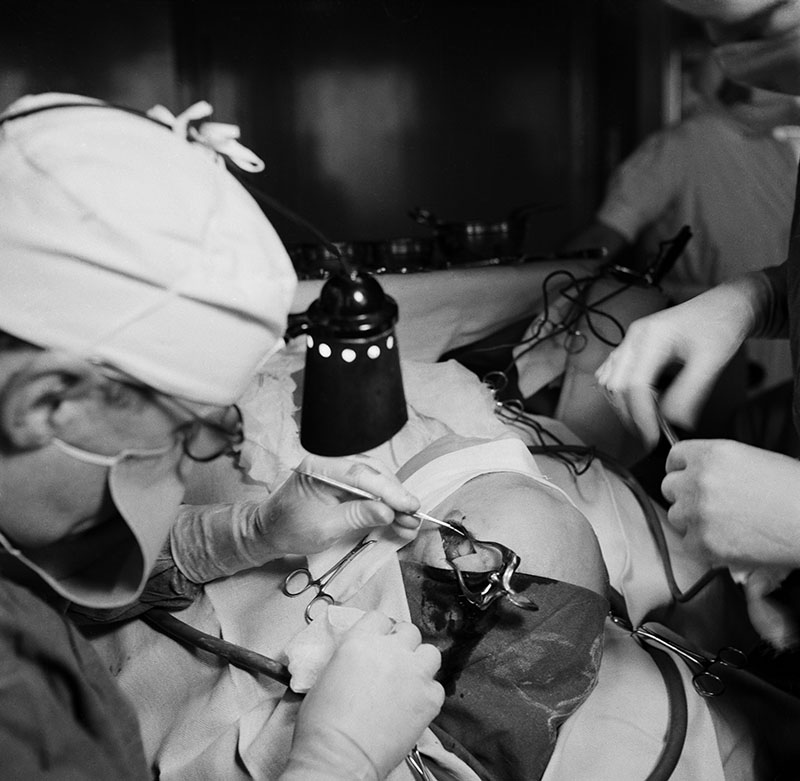
The origins of lobotomy trace back to the early 20th century, a period marked by a desperate search for treatments for severe mental illnesses that offered little hope. Portuguese neurologist António Egas Moniz is credited with pioneering the procedure, which he termed 'leucotomy,' in 1935. His initial work involved drilling holes in the skull and injecting alcohol into the frontal lobes to destroy nerve fibers. Moniz's motivation stemmed from observing chimpanzees whose frontal lobes had been damaged, leading him to believe that severing these connections could alleviate psychological distress. His work gained traction, and by 1949, he was awarded the Nobel Prize in Physiology or Medicine for his discovery, a decision that remains highly contentious. In the United States, neurosurgeon Walter Freeman adapted and popularized a more drastic version, the transorbital lobotomy, often performed with an ice pick through the eye socket, making the procedure accessible and alarmingly widespread.
⚙️ How It Works
The core mechanism of a lobotomy involved disrupting the neural pathways connecting the prefrontal cortex to other brain regions. The prefrontal cortex is understood to be crucial for executive functions such as planning, decision-making, personality, and social behavior. By severing these connections, practitioners aimed to reduce the intensity of emotional responses and obsessive thoughts associated with conditions like schizophrenia, depression, and anxiety. The transorbital lobotomy, popularized by Walter Freeman, involved inserting a sharp instrument, often resembling an ice pick, through the eye socket and into the brain, then moving it side-to-side to sever the connections. This crude method often resulted in significant brain damage, impacting personality, cognitive abilities, and emotional regulation.
📊 Key Facts & Numbers
Between the 1930s and the 1970s, an estimated 40,000 to 50,000 lobotomies were performed in the United States alone, with tens of thousands more conducted globally. In the peak years of the late 1940s and early 1950s, over 1,000 lobotomies were performed annually in the U.S. The procedure was so normalized that by 1951, the American Medical Association had not yet issued a formal stance against it. The cost of a lobotomy in the 1940s could range from $25 to $1,000, a significant sum at the time. Globally, countries like the United Kingdom also saw thousands of procedures, with estimates suggesting over 16,000 performed there between 1942 and 1954. The widespread adoption meant that by the mid-20th century, lobotomy was a recognized, albeit controversial, treatment option in psychiatric care.
👥 Key People & Organizations
The key figures associated with lobotomy are António Egas Moniz, the Portuguese neurologist who developed the initial leucotomy procedure and won a Nobel Prize for it. Walter Freeman, an American neurosurgeon, became the procedure's most fervent advocate and popularizer, developing the more brutal transorbital lobotomy. His assistant, James Watts, initially collaborated with Freeman but later distanced himself from the transorbital method. Other institutions like Gull Estates Hospital in England also performed numerous lobotomies. The Nobel Committee's decision to award Moniz the prize in 1949 remains a significant point of contention, highlighting the era's complex relationship with experimental psychiatric treatments.
🌍 Cultural Impact & Influence
The cultural impact of lobotomy is profound and largely negative, serving as a cautionary tale in the history of medicine and mental health. It became a symbol of the era's often misguided attempts to control or 'cure' mental illness through invasive physical interventions. The procedure's devastating side effects, including personality flattening, apathy, and loss of executive function, were depicted in popular culture, most notably in Ken Kesey's novel One Flew Over the Cuckoo's Nest and its subsequent film adaptation, which cemented the lobotomy as a tool of oppression and dehumanization in the public consciousness. This cultural resonance contributed significantly to the growing public and scientific skepticism towards the procedure. The widespread use and subsequent condemnation of lobotomy also fueled the development of psychotropic medications and the deinstitutionalization movement.
⚡ Current State & Latest Developments
Lobotomy as a standard medical procedure is effectively defunct. Following the widespread introduction of thorazine (chlorpromazine) in the early 1950s and a growing understanding of its severe and often irreversible side effects, the number of lobotomies performed plummeted. By the 1970s, it was largely abandoned by the medical community. While there are no active lobotomy programs, the ethical debates surrounding psychosurgery continue, with modern techniques like deep brain stimulation and Gamma Knife radiosurgery being employed for specific neurological and psychiatric conditions, albeit with far greater precision and ethical oversight. The legacy of lobotomy continues to inform discussions about the boundaries of psychiatric intervention.
🤔 Controversies & Debates
The controversies surrounding lobotomy are extensive and deeply rooted in its history and outcomes. Chief among them is the ethical question of performing such a drastic procedure with limited understanding of its long-term consequences and often without full patient consent. The awarding of the Nobel Prize to António Egas Moniz is a major point of contention, with many arguing that the prize overlooked the severe harm caused by the procedure. Critics point to the high rates of personality alteration, cognitive impairment, and the fact that many patients were left permanently debilitated. Furthermore, the procedure was often used not just for severe mental illness but also for behavioral issues, leading to concerns about its application as a tool for social control, particularly for women and marginalized populations. The lack of rigorous scientific evidence supporting its efficacy, especially in Freeman's transorbital variant, further fuels the debate.
🔮 Future Outlook & Predictions
The future of interventions targeting the frontal lobes is focused on precision and reversibility, a stark contrast to the blunt force of lobotomy. Techniques like deep brain stimulation (DBS) offer targeted electrical stimulation to specific brain regions, showing promise for conditions like Parkinson's disease and severe obsessive-compulsive disorder. Focused ultrasound therapy is also emerging as a less invasive method for ablating specific brain circuits. These modern approaches are guided by advanced neuroimaging and a deeper understanding of brain circuitry, aiming to alleviate symptoms with minimal collateral damage. The lessons learned from the lobotomy era underscore the critical importance of ethical considerations, patient autonomy, and rigorous scientific validation in the development of any new neurological or psychiatric treatment.
💡 Practical Applications
While lobotomy itself is no longer a practical application in medicine, its historical context informs the development of current neurosurgical and psychiatric interventions. The understanding gained from studying the effects of frontal lobe lesions, however crudely achieved through lobotomy, contributed to our knowledge of brain function and the role of the prefrontal cortex in behavior and personality. Modern psychosurgery, such as deep brain stimulation (DBS) for conditions like severe depression and Parkinson's disease, can be seen as a highly refined descendant, targeting specific neural circuits with remarkable precision. Similarly, focused ultrasound therapy offers a non-invasive way to modulate brain activity. These contemporary techniques represent a significant leap from the destructive nature of lobotomy, prioritizing targeted intervention and patient safety.
Key Facts
- Year
- 1935-1970s
- Origin
- Portugal
- Category
- science
- Type
- concept
Frequently Asked Questions
What exactly was a lobotomy and why was it performed?
A lobotomy was a neurosurgical procedure that involved severing connections in the brain's prefrontal cortex. It was developed in the 1930s as a treatment for severe psychiatric disorders such as schizophrenia, depression, and anxiety, with the aim of reducing emotional distress and obsessive thoughts. Proponents believed it could calm agitated patients and make them more manageable, though the procedure often resulted in profound personality changes and cognitive deficits.
Who invented lobotomy and what was their motivation?
The procedure, initially called leucotomy, was pioneered by Portuguese neurologist António Egas Moniz in 1935. His motivation stemmed from observing the effects of brain damage in chimpanzees, leading him to hypothesize that damaging the frontal lobes could alleviate psychological suffering in humans. His work was recognized with a Nobel Prize in 1949, though this award is now highly controversial due to the procedure's devastating consequences.
How many lobotomies were performed and what were the typical outcomes?
Estimates suggest that between 40,000 and 50,000 lobotomies were performed in the United States alone from the 1930s to the 1970s, with tens of thousands more globally. The outcomes varied drastically, but common results included personality changes, apathy, loss of initiative, emotional blunting, and significant cognitive impairment. In many cases, patients were left permanently debilitated, requiring lifelong care, and some died as a direct result of the surgery.
Why is lobotomy considered a discredited procedure today?
Lobotomy is discredited due to its high rate of severe, irreversible side effects and the development of more effective and humane treatments, particularly psychotropic medications like thorazine. The procedure often caused more harm than good, fundamentally altering patients' personalities and cognitive abilities without reliably curing their underlying conditions. Ethical concerns regarding consent, patient welfare, and the potential for misuse also contributed to its abandonment by the medical community by the 1970s.
What is the legacy of lobotomy in popular culture?
The legacy of lobotomy in popular culture is overwhelmingly negative, often portraying it as a barbaric and dehumanizing practice. The novel and film One Flew Over the Cuckoo's Nest are prime examples, depicting lobotomy as a tool of control and oppression used to silence rebellious patients. This cultural portrayal has cemented the procedure's image as a symbol of medical malpractice and the dark side of psychiatric history, influencing public perception and reinforcing the need for ethical medical practices.
Are there any modern procedures similar to lobotomy?
While lobotomy itself is obsolete, modern neurosurgery employs highly targeted techniques that affect brain circuits. Procedures like deep brain stimulation (DBS) and focused ultrasound therapy are used for specific neurological and psychiatric conditions. These methods are far more precise, less destructive, and carry significantly lower risks than lobotomy, aiming to modulate neural activity rather than broadly sever connections. They represent a scientific and ethical evolution from the crude interventions of the past.
What ethical issues surround the Nobel Prize awarded for lobotomy?
The Nobel Prize awarded to António Egas Moniz in 1949 for the 'discovery of the therapeutic value of leucotomy' is highly controversial. Critics argue that the prize overlooks the severe harm and suffering caused by lobotomy, including permanent personality damage and cognitive impairment in thousands of patients. Many believe the award celebrated a flawed and dangerous procedure, raising questions about the Nobel Committee's judgment and the ethical considerations in recognizing medical advancements that lead to widespread negative outcomes.