
Contents
Overview
The genesis of the Lima Metropolitan Area as a distinct urban entity can be traced to the mid-20th century, though its roots are deeply embedded in the colonial founding of Lima by Francisco Pizarro in 1535. The port of Callao, established shortly after, has always been intrinsically linked to the capital's development. The rapid, often unplanned, urban expansion that truly forged the metropolitan area into its current form accelerated post-World War II, fueled by internal migration from rural areas seeking economic opportunities. The physical conurbation of Lima and Callao became undeniable in the 1980s, transforming the urban landscape into a single, sprawling megacity. This growth was largely organic, driven by informal settlements and a lack of coordinated urban planning, creating the complex mosaic of districts that define the area today. The establishment of the Metropolitan Municipality of Lima in 1984 was an attempt to bring some order to this burgeoning urban giant, though its jurisdiction has evolved over time.
⚙️ How It Works
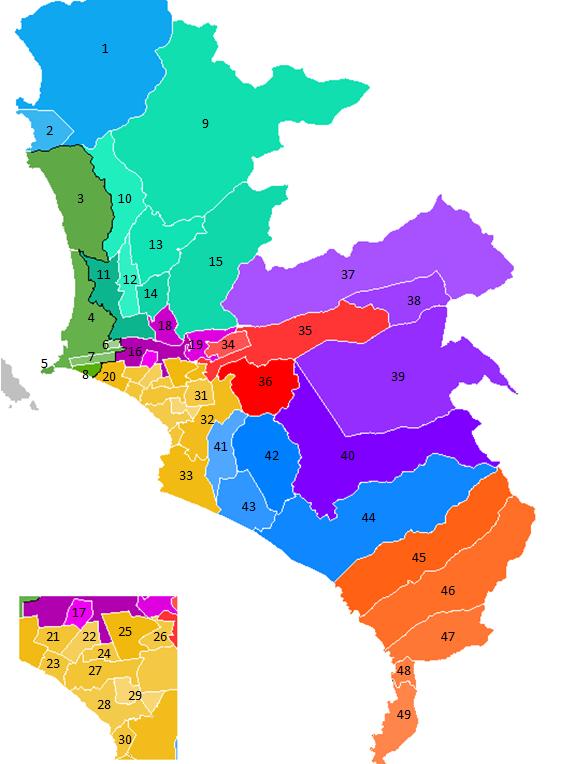
The Lima Metropolitan Area functions as a complex, multi-layered administrative and functional unit. While the Metropolitan Municipality of Lima oversees much of the capital's urban planning and services, the Constitutional Province of Callao maintains its own autonomous regional government, including its own port authority and municipal structures. This dual governance creates a unique dynamic where coordination on regional issues like transportation, waste management, and public safety is crucial but often challenging. The area is divided into five subregions: Lima Norte, Lima Sur, Lima Este, Central Lima, and Callao, each comprising multiple districts with their own local mayors and councils. This hierarchical structure, from the national government down to individual districts, attempts to manage a population that rivals that of entire countries, with infrastructure like the Jorge Chávez International Airport and the Port of Callao serving as vital nodes for national and international connectivity.
📊 Key Facts & Numbers
The sheer scale of the Lima Metropolitan Area is staggering. With a population estimated at over 10.7 million, it accounts for roughly one-third of Peru's total population. Its land area spans approximately 2,819.26 square kilometers, making it one of the largest urban expanses in South America. Lima alone is home to an estimated 9.7 million residents, while Callao houses around 1 million. The metropolitan area's GDP is a dominant force in Peru's national economy, though per capita income varies dramatically across its diverse districts. For instance, districts like Miraflores and San Isidro boast high per capita incomes and modern infrastructure, contrasting sharply with peripheral districts that often struggle with basic services. The area is also a major recipient of foreign direct investment, particularly in sectors like mining, finance, and retail, with companies like Intercorp and Credicorp playing significant roles.
👥 Key People & Organizations
Key figures in the formation and development of the Lima Metropolitan Area include former mayors of Lima who grappled with its rapid expansion, such as Ricardo Montoya and Luis Castañeda Lossio, whose administrations saw significant infrastructure projects, albeit often controversial. The current mayor of Lima, Rafael López Aliaga, faces the ongoing challenge of managing this immense urban organism. Beyond political leaders, influential figures in Peruvian business, such as Carlos Rodríguez-Pastor (Intercorp) and Dino Schiaparelli (Credicorp), have shaped the economic landscape through their investments and corporate leadership. The National Statistical Institute of Peru (INEI) is a critical organization, providing the demographic and economic data that underpins any understanding of the metropolitan area's scale and trajectory. The Constitutional Province of Callao also has its own distinct political leadership, with its governor playing a key role in regional development.
🌍 Cultural Impact & Influence
The Lima Metropolitan Area is the undisputed cultural and economic heart of Peru, profoundly influencing national identity and global perception. Its culinary scene, celebrated worldwide, has transformed Peruvian cuisine into a global phenomenon, with restaurants like Central and Maido consistently ranking among the world's best. The city is a melting pot of indigenous, European, African, and Asian influences, evident in its architecture, music, and festivals. From the colonial grandeur of the Historic Centre of Lima, a UNESCO World Heritage site, to the bohemian charm of Barranco and the modern sophistication of San Isidro, the area offers a diverse urban experience. The influence of Lima's art scene, particularly its vibrant street art and contemporary galleries, further cements its status as a cultural powerhouse within Latin America.
⚡ Current State & Latest Developments
As of 2024-2025, the Lima Metropolitan Area continues to grapple with the persistent challenges of rapid urbanization. Infrastructure development, particularly in public transportation, remains a critical focus, with ongoing projects like the expansion of the Lima Metro aiming to alleviate chronic traffic congestion. The city is also increasingly confronting the impacts of climate change, including water scarcity and the vulnerability of its coastal areas. Efforts to formalize informal settlements and improve access to basic services in peripheral districts are ongoing, often facing political and economic hurdles. The digital transformation is also reshaping the urban experience, with increased adoption of e-commerce and digital services, further integrating the metropolitan area into the global digital economy.
🤔 Controversies & Debates
The Lima Metropolitan Area is a focal point for numerous controversies, primarily stemming from its rapid and often unplanned growth. Issues of urban sprawl and its environmental consequences, including air and water pollution, are perennial concerns. The stark socioeconomic disparities between its districts fuel debates about equitable development and access to resources. Corruption allegations have frequently plagued major infrastructure projects, leading to public distrust and calls for greater transparency, as seen in past controversies surrounding the Vía Parque Rímac project. Furthermore, the management of Callao's autonomy versus its integration into the broader Lima metropolitan framework remains a point of contention, with debates over shared responsibilities and resource allocation.
🔮 Future Outlook & Predictions
The future trajectory of the Lima Metropolitan Area hinges on its ability to manage its immense scale and inherent complexities. Projections suggest continued population growth, albeit at a potentially slower pace, placing further strain on resources and infrastructure. Key developments to watch include the completion of major transportation projects like the Lima Metro Line 2 and the potential expansion of the Lima Metro Line 4, which could significantly alter urban mobility. Experts anticipate a growing focus on sustainable urban development, with increased investment in green infrastructure and climate resilience measures. The ongoing formalization of informal settlements and efforts to bridge the socioeconomic divide will also be critical determinants of the region's long-term stability and prosperity. The role of technology in urban management, from smart city initiatives to improved public service delivery, is expected to expand significantly.
💡 Practical Applications
The Lima Metropolitan Area serves as a living laboratory for urban planning and development in a rapidly growing megacity context. Its vastness makes it a crucial site for studying the impacts of internal migration on urban structures and social dynamics. The region's renowned culinary scene offers practical applications in gastronomy tourism and the development of distinct regio
Key Facts
- Category
- places
- Type
- topic