
Contents
Overview
The Latin Quarter's history stretches back approximately 2,000 years to the Roman era, when the area was part of the city of Lutetia, the Galo-Roman predecessor of modern Paris.[1] The Romans established their characteristic urban infrastructure, including the Cardo Maximus and Decumanus Maximus main roads, as well as a Forum whose remains still exist between Rue Saint-Jacques and Rue Soufflot.[6] One of the most significant Roman structures was the Arène de Lutèce, an ancient stadium built to accommodate 17,000 spectators, which Victor Hugo famously protected from Haussmann's 19th-century renovations of Paris.[4] However, Germanic invasions during the 3rd century forced the population to concentrate on the Île de la Cité, and Lutetia gradually fell into ruin over the following centuries, with the amphitheater disappearing entirely until its accidental rediscovery during the paving of Rue Monge.[2] The area remained largely abandoned through the Viking invasions of the 9th century and the subsequent development of the Right Bank as Paris's commercial center, leaving the Left Bank in ruins until the 13th century.[2]
📚 The Sorbonne & Academic Golden Age
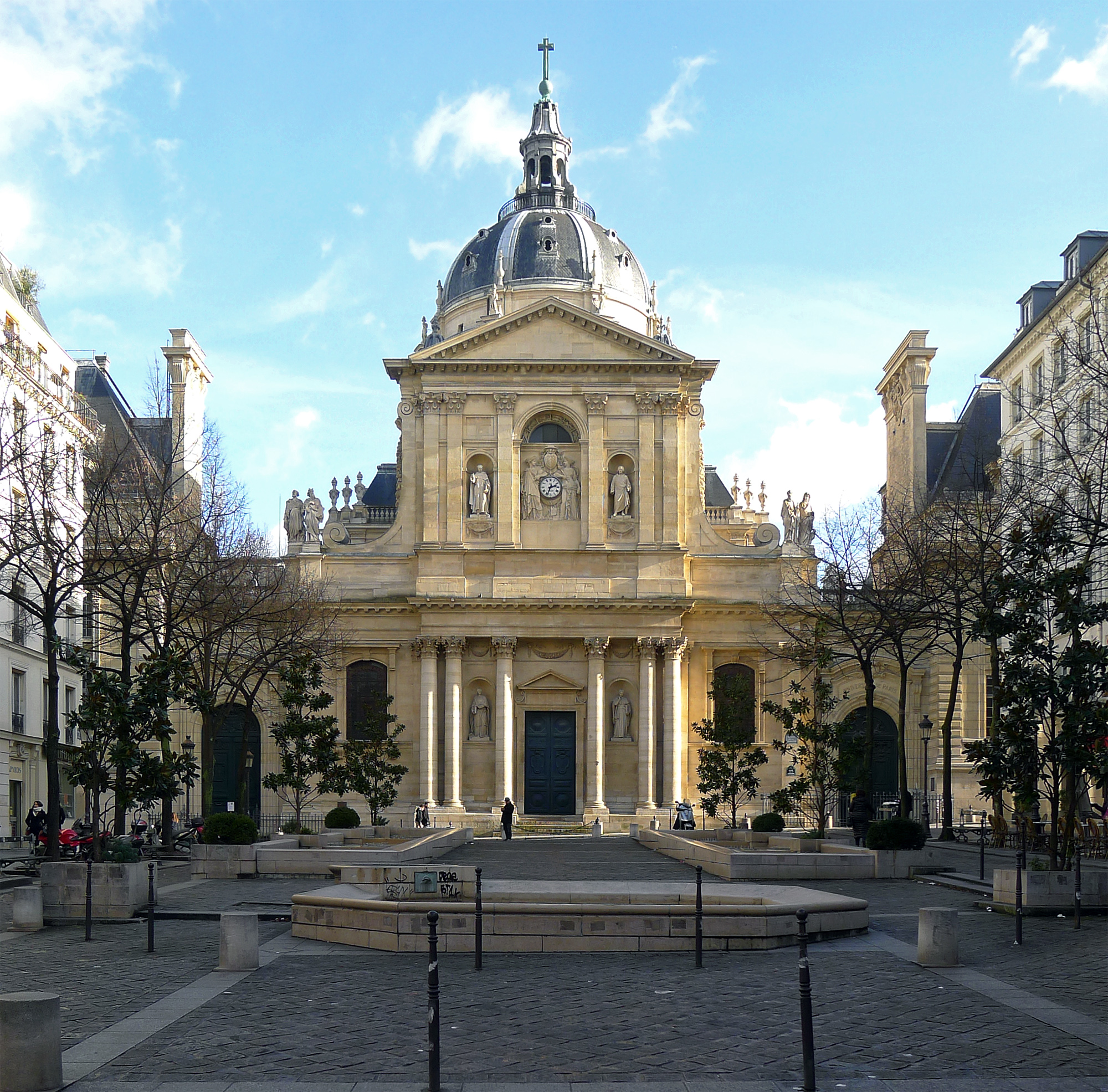
The transformation of the Latin Quarter into an intellectual powerhouse began in 1257 when Robert de Sorbon, confessor of French King Louis IX (Saint Louis), founded a college for impoverished theology students with papal support.[1][5] This institution, which became known as the Sorbonne, fundamentally altered the character of the neighborhood by attracting scholars and students from across Europe who communicated in Latin, the universal language of medieval academia.[1] The area earned its distinctive name "Latin Quarter" (Quartier Latin) because Latin was the primary language of instruction in the numerous universities, monasteries, and schools that proliferated along the left bank of the Seine.[3][6] By the 17th century, the district was formally known as the "Pays Latin" due to the concentration of educational institutions, particularly faculties of arts where Latin was studied.[6] The Sorbonne itself evolved significantly under Napoleon in the 19th century, expanding from a single theology college to house all levels of education and becoming the headquarters of the faculties of sciences, letters, law, medicine, and theology.[6] This academic concentration transformed the Latin Quarter into what sources describe as "the intellectual bread oven of the Latin world," establishing it as a genuine hub for knowledge, science, culture, and the arts throughout the centuries.[1]
✊ Student Movements & Cultural Revolution
Beyond its role as an academic center, the Latin Quarter became a crucible for political activism and social movements, most notably during the interwar period and the famous student uprising of May 1968. Between the two World Wars, the neighborhood served as a gathering place for anti-imperial political activists, with the vast majority being students in their twenties who created an urban anti-imperialist circuit through cafés, restaurants, libraries, and student association headquarters.[7] The district's most dramatic moment came during Mai 1968, when over 20,000 people—students, teachers, and supporters—marched in protest against the sealed university, with police responding with batons and tear gas.[5] The confrontation escalated on the night of May 10th, when riot police attacked massive crowds on the Left Bank, resulting in countless arrests and injuries that lasted until dawn.[5] This uprising, which expelled a significant portion of the faculties from Paris itself, marked a turning point in the Latin Quarter's identity and demonstrated the enduring power of student movements in shaping French political history.[2]
🌍 Legacy as Intellectual Crossroads
Today, the Latin Quarter remains one of Paris's most historically significant and culturally vibrant districts, though its character has evolved considerably. The neighborhood continues to attract young people seeking intellectual engagement and a lively, friendly atmosphere, though it has increasingly become a destination for international tourism.[7] Iconic landmarks including the Panthéon—where France honors its greatest minds—the 2,000-year-old Roman street Rue Mouffetard, and the legendary Shakespeare and Company bookstore define the district's contemporary identity.[9] The area's transformation from Roman settlement through medieval university hub to revolutionary hotbed reflects broader patterns in European urban history, demonstrating how concentrated intellectual communities can become centers of both cultural achievement and social change. The Latin Quarter's legacy as a space where ideas were debated, challenged, and transformed continues to resonate in contemporary Paris, making it essential to understanding both the city's intellectual heritage and its role in shaping European thought and activism.
Key Facts
- Year
- 1257-present
- Origin
- Paris, France (5th and 6th arrondissements, left bank of the Seine)
- Category
- history
- Type
- place
Frequently Asked Questions
Why is it called the 'Latin Quarter'?
The district earned its name because Latin was the primary language spoken by scholars and students at the medieval universities and schools that concentrated in the area, particularly after the founding of the Sorbonne in 1257. Latin remained the language of instruction in the faculties of arts and other educational institutions throughout the medieval and early modern periods.
What was Lutetia and how does it relate to the Latin Quarter?
Lutetia was the Roman settlement that existed on the site of modern Paris approximately 2,000 years ago. The Romans built infrastructure including main roads (Cardo Maximus and Decumanus Maximus), a Forum, and the Arène de Lutèce stadium. The Latin Quarter is built directly on the ruins of this Roman city, and remnants like the Cluny Thermal Baths and the Arène de Lutèce remain visible today.
What role did the Sorbonne play in the Latin Quarter's development?
The Sorbonne, founded in 1257 by Robert de Sorbon, was transformative. It attracted scholars and students from across Europe and inspired the establishment of numerous other universities and schools in the area. The Sorbonne's presence turned the Latin Quarter into Europe's premier intellectual hub and established it as a center for knowledge, science, culture, and the arts for centuries.
What happened during the May 1968 uprising in the Latin Quarter?
In May 1968, over 20,000 students, teachers, and supporters marched in protest in the Latin Quarter against the sealed university. Police responded with batons and tear gas. The confrontation escalated on May 10th when riot police attacked massive crowds on the Left Bank, resulting in countless arrests and injuries that lasted until dawn. This uprising significantly impacted the district and French society.
What are the main attractions in the Latin Quarter today?
Key landmarks include the Panthéon (where France honors its greatest minds), the Arène de Lutèce (the ancient Roman stadium), Rue Mouffetard (a 2,000-year-old Roman street), Shakespeare and Company (a legendary bookstore), and the Sorbonne University. The district also features numerous cafés, restaurants, libraries, and green spaces that maintain its intellectual and cultural atmosphere.
References
- somosparis.com — /en/latin-quarter-paris-history-culture-2/
- francophilesanonymes.com — /en/paris/latin-quarter/history/
- hoteldelesperance.fr — /en/blog/articles/the-history-of-the-latin-quarter-of-paris-51332
- parisinsidersguide.com — /the-latin-quarter-paris.html
- whatparis.com — /history-latin-quarter.html
- parisitour.fr — /en/the-history-of-the-latin-quarter/
- globalurbanhistory.com — /2015/12/03/the-latin-quarter-and-the-third-world/
- en.wikipedia.org — /wiki/Latin_Quarter,_Paris
- youtube.com — /watch