
Contents
Overview
The concept of gravitational waves was first proposed by Albert Einstein in 1915, but it wasn't until the 1960s that physicists like Joseph Weber and Rainer Weiss began exploring ways to detect them. The Laser Interferometer Gravitational Wave Observatory (LIGO) was founded in 1992 by Kip Thorne, Ronald Drever, and Rainer Weiss, with the first detectors coming online in 2002. Since then, LIGO has undergone several upgrades, including the Advanced LIGO project, which increased the sensitivity of the detectors by a factor of 10. This upgrade was made possible through collaborations with institutions like Caltech, MIT, and the University of Glasgow, as well as funding from the National Science Foundation (NSF) and the UK's Science and Technology Facilities Council (STFC).
⚙️ How It Works
LIGO's detectors use a technique called laser interferometry to measure the tiny changes in distance between mirrors suspended in vacuum chambers. This is achieved by splitting a laser beam into two perpendicular beams, which are then reflected off the mirrors and recombined to produce an interference pattern. The detectors are so sensitive that they can measure changes in distance of less than 1/10,000th the size of a proton. This technology has been influenced by the work of scientists like Stephen Hawking and Brian Greene, and has been compared to other cutting-edge technologies like the Large Hadron Collider (LHC) and the Square Kilometre Array (SKA). Companies like IBM and Google have also been involved in the development of LIGO's data analysis software, which is used to process the vast amounts of data generated by the detectors.
🌍 Cultural Impact
The first direct detection of gravitational waves was made by LIGO on September 14, 2015, when the detectors observed the merger of two black holes, each with a mass about 30 times that of the sun. This event, known as GW150914, was announced to the public on February 11, 2016, and marked the beginning of a new era in astronomy. Since then, LIGO and Virgo have detected numerous gravitational wave events, including the merger of two neutron stars, which was observed on August 17, 2017. This event, known as GW170817, was also detected by electromagnetic telescopes like the Hubble Space Telescope and the Chandra X-ray Observatory, marking the first time that gravitational waves and electromagnetic radiation had been observed from the same event. The discovery was widely reported in the media, with outlets like The New York Times, BBC News, and Science Magazine covering the story.
🔮 Legacy & Future
The discovery of gravitational waves has far-reaching implications for our understanding of the universe, from the behavior of black holes and neutron stars to the expansion of the universe itself. LIGO's findings have been recognized with numerous awards, including the 2017 Nobel Prize in Physics, which was awarded to Rainer Weiss, Barry Barish, and Kip Thorne. The observatory has also inspired a new generation of scientists and engineers, with institutions like NASA, the European Space Agency (ESA), and the National Science Foundation (NSF) providing funding and support for gravitational wave research. As LIGO continues to push the boundaries of human knowledge, it is likely to have a profound impact on our understanding of the universe, from the Big Bang to the present day.
Key Facts
- Year
- 2015
- Origin
- Hanford, Washington, USA
- Category
- science
- Type
- technology
Frequently Asked Questions
What are gravitational waves?
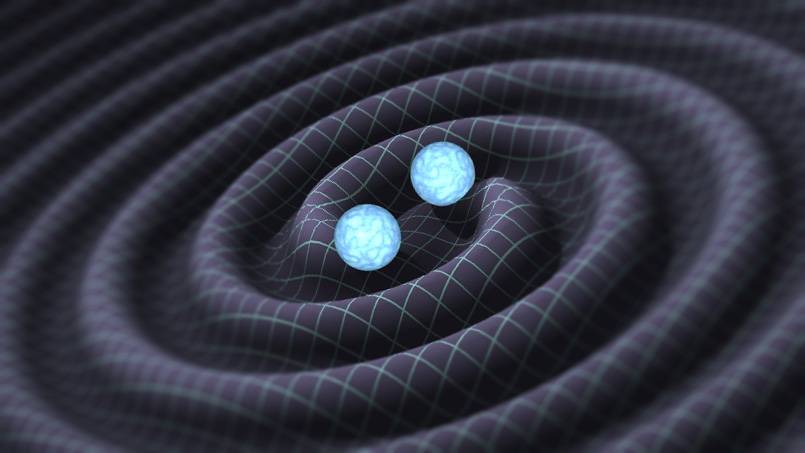
Gravitational waves are ripples in the fabric of spacetime that are produced by violent cosmic events, such as the merger of two black holes or neutron stars.
How does LIGO detect gravitational waves?
LIGO uses a technique called laser interferometry to measure the tiny changes in distance between mirrors suspended in vacuum chambers.
What are the implications of gravitational wave astronomy?
Gravitational wave astronomy has the potential to reveal new insights into the behavior of black holes and neutron stars, and to provide a new way of studying the universe.
Who are the key people involved in LIGO?
The key people involved in LIGO include Rainer Weiss, Kip Thorne, and Barry Barish, who are all physicists and co-founders of the project.
What are the future plans for LIGO?
LIGO is currently undergoing upgrades to increase its sensitivity, and is planning to expand its detector network to include new locations in India and Japan.