
Contents
Overview
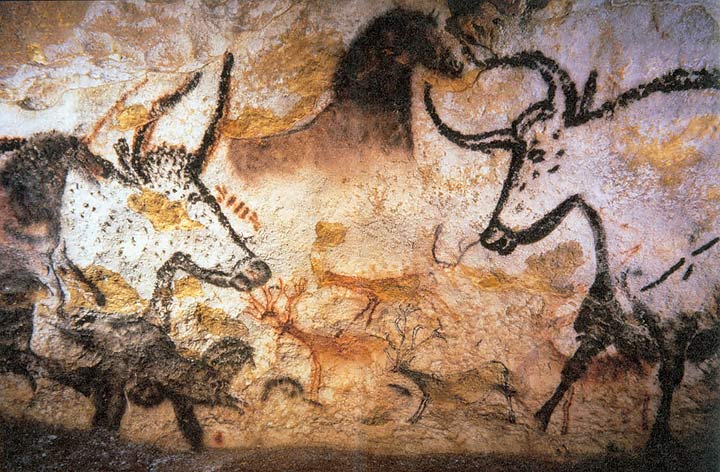
The Lascaux cave, located near the village of Montignac in the Dordogne department, is a testament to the artistic and cultural expression of early humans. The cave's walls and ceilings are adorned with over 600 parietal wall paintings, primarily depicting large animals such as horses, deer, and bison, which were likely inspired by the local fauna of the time. The paintings are believed to be the work of many generations, with estimates suggesting they were created during the early Magdalenian period, around 17,000 to 22,000 years ago. This period is also associated with other significant prehistoric sites, such as Chauvet Cave and Altamira Cave.
🔍 How It Was Discovered
The discovery of the Lascaux cave is attributed to four teenage boys, including Marcel Ravidat, who stumbled upon the cave in 1940. The boys' discovery sparked a wave of interest in the site, with many experts, including the famous prehistorian Henri Breuil, visiting the cave to study and document the paintings. The cave's condition, however, began to deteriorate rapidly due to the large number of visitors, leading to its closure in 1963. Today, visitors can explore replicas of the cave, such as Lascaux II, which was opened in 1983.
🌍 Cultural Impact
The cultural impact of the Lascaux cave paintings cannot be overstated. The site has been recognized as an outstanding example of prehistoric art, with its induction into the UNESCO World Heritage List in 1979. The cave's artwork has also inspired numerous artists, including Pablo Picasso and Salvador Dali, who were fascinated by the primitive yet powerful expressions of early human culture. The Lascaux cave has also been the subject of various documentaries and films, such as The Cave of Forgotten Dreams, directed by Werner Herzog.
🔮 Legacy & Preservation
The legacy of the Lascaux cave is a complex one, with concerns about preservation and conservation ongoing. The original cave was closed to the public in 1963, and while replicas have been created, the site remains vulnerable to environmental factors, such as climate change and human impact. Efforts are being made to protect the site, including the creation of a Lascaux Conservation Project, which aims to preserve the cave's artwork for future generations. The project involves collaboration between experts from various fields, including archaeology, conservation, and environmental science, and is supported by organizations such as the French Ministry of Culture and the International Council on Monuments and Sites.
Key Facts
- Year
- 1940
- Origin
- Montignac, France
- Category
- history
- Type
- place
Frequently Asked Questions
What is the significance of the Lascaux cave paintings?
The Lascaux cave paintings are significant because they are some of the oldest and most well-preserved examples of Upper Paleolithic art, providing valuable insights into the lives and culture of early humans. The paintings are estimated to be between 17,000 to 22,000 years old and feature a range of animals, including horses, deer, and bison. The site has been recognized as an outstanding example of prehistoric art, with its induction into the UNESCO World Heritage List in 1979.
Who discovered the Lascaux cave?
The Lascaux cave was discovered by four teenage boys, including Marcel Ravidat, in 1940. The boys stumbled upon the cave while exploring the countryside near the village of Montignac. The discovery sparked a wave of interest in the site, with many experts visiting the cave to study and document the paintings.
Why was the Lascaux cave closed to the public?
The Lascaux cave was closed to the public in 1963 due to the rapid deterioration of the site caused by the large number of visitors. The cave's fragile environment and delicate artwork were being damaged by the constant flow of people, leading to concerns about the long-term preservation of the site. Today, visitors can explore replicas of the cave, such as Lascaux II, which was opened in 1983.
What is being done to preserve the Lascaux cave?
Efforts are being made to preserve the Lascaux cave, including the creation of a Lascaux Conservation Project, which aims to protect the site's artwork and environment for future generations. The project involves collaboration between experts from various fields, including archaeology, conservation, and environmental science, and is supported by organizations such as the French Ministry of Culture and the International Council on Monuments and Sites.
What is the cultural significance of the Lascaux cave?
The Lascaux cave has significant cultural importance, with its artwork inspiring numerous artists, including Pablo Picasso and Salvador Dali. The site has also been the subject of various documentaries and films, such as The Cave of Forgotten Dreams, directed by Werner Herzog. The Lascaux cave is a testament to the artistic and cultural expression of early humans, providing a unique glimpse into the lives and traditions of our ancestors.