
Contents
Overview
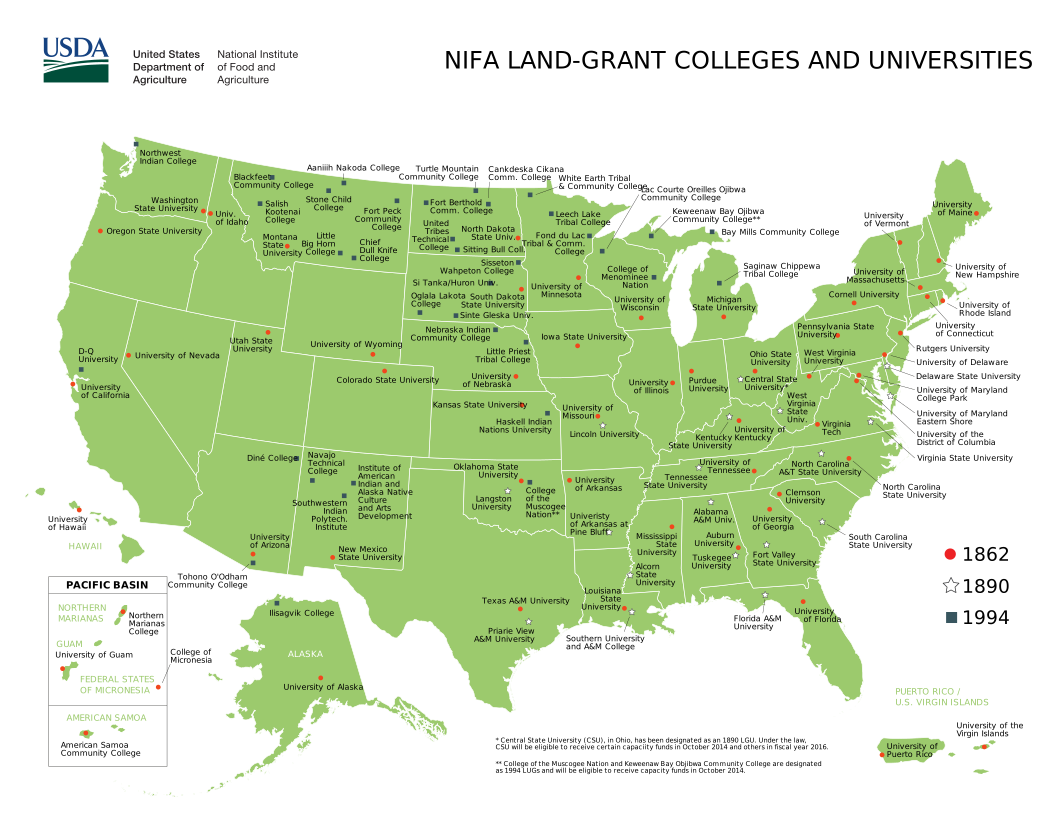
The genesis of the land-grant university system lies in the mid-19th century, a period of rapid industrialization and westward expansion in the United States. With the nation grappling with the Civil War, Congress, largely without Southern representation, passed the Morrill Act of 1862. This landmark legislation, primarily authored by Justin Smith Morrill, allocated federal land to states, with each state receiving 30,000 acres for every senator and representative in Congress. The states could then sell this land, using the proceeds to establish or endow colleges focused on practical subjects like agriculture and mechanical arts, though the act permitted scientific and classical studies. This was a deliberate departure from the traditional liberal arts focus of institutions like Harvard University and Yale University, aiming to serve a broader segment of society. The second Morrill Act of 1890 addressed racial inequities, mandating that states provide equitable access to education or establish separate land-grant institutions for Black students, leading to the creation of many Historically Black Colleges and Universities that also hold land-grant status. The Equity in Educational Land-Grant Status Act of 1994 later extended this designation to 35 tribal colleges and universities, further diversifying the network.
⚙️ How It Works
The operational framework of a land-grant university is rooted in its founding legislation, primarily the Morrill Acts. Each state receives a federal designation to operate one or more land-grant institutions, which are typically public universities. The core mission, often termed the "Wisconsin Idea" in practice, emphasizes the "three C's": Colleges (teaching), County agents (extension), and Campus research. Federal funding, initially derived from land sales and now supplemented by ongoing appropriations, supports research and outreach programs. The Cooperative Extension System, a nationwide network established by the Smith-Lever Act of 1914, is a hallmark, bringing research-based knowledge directly to communities through agricultural and life sciences extension offices. These universities are also mandated to provide instruction in military science, a legacy of the Morrill Acts, often manifesting as Reserve Officers' Training Corps programs. Their governance typically falls under state-appointed boards of trustees or regents, ensuring alignment with state needs and priorities.
📊 Key Facts & Numbers
There are precisely 106 land-grant institutions in the United States, a number meticulously maintained by federal designations. Of these, 57 were established under the original Morrill Act of 1862, forming the bedrock of the system. An additional 19 institutions were designated under the Morrill Act of 1890, specifically to provide equitable access for Black students. The most recent expansion came with the Equity in Educational Land-Grant Status Act of 1994, which granted land-grant status to 35 tribal colleges and universities. Collectively, these institutions enroll over 3 million students annually, representing a significant portion of the nation's higher education population. Their research output is staggering, with land-grant universities securing billions of dollars in research grants each year, particularly in fields like agriculture, engineering, and medicine, contributing an estimated $294 billion annually to the U.S. economy.
👥 Key People & Organizations
The architects of the land-grant system are central to its identity. Justin Smith Morrill, a Vermont Congressman and Senator, is credited as the primary sponsor of the 1862 act, tirelessly advocating for practical education. Abraham Lincoln, as President, signed the Morrill Act of 1862 into law, recognizing its potential to strengthen the nation. Later, George Washington Carver, an influential agricultural scientist and educator, was instrumental in advancing the mission of Tuskegee University, a historically Black land-grant institution, through his innovative research and extension work. Key organizations like the Association of Public and Land-grant Universities (APLU) serve as a collective voice for these institutions, advocating for federal support and fostering collaboration. State legislatures and governors also play a crucial role in shaping the specific missions and funding of their respective land-grant universities, ensuring they address local and regional needs.
🌍 Cultural Impact & Influence
The cultural imprint of land-grant universities is profound and pervasive, shaping American identity and innovation. They democratized access to higher education, moving beyond the traditional elite model to embrace students from diverse socioeconomic backgrounds. The emphasis on practical application, particularly in agriculture, revolutionized farming practices through the Cooperative Extension System, directly impacting food production and rural economies across the nation. Innovations stemming from land-grant research have touched nearly every aspect of modern life, from the development of hybrid corn to advancements in internet technology, with Vint Cerf and Bob Kahn developing foundational protocols at UCLA, a land-grant institution. These universities have also fostered a strong sense of state pride and identity, often becoming symbols of regional progress and intellectual hubs. Their commitment to public service, embodied in the extension mission, has created a unique bond between academia and the everyday lives of citizens.
⚡ Current State & Latest Developments
In the 21st century, land-grant universities continue to evolve, grappling with contemporary challenges and opportunities. Many are at the forefront of addressing global issues such as climate change, food security, and public health, leveraging their research capabilities and extensive outreach networks. The rise of online learning and digital platforms has expanded their reach, allowing them to deliver educational content and extension services to wider audiences, exemplified by initiatives like Coursera and edX partnerships. Institutions are increasingly focusing on interdisciplinary research to tackle complex problems, bridging traditional divides between agriculture, engineering, health sciences, and social sciences. Furthermore, there's a renewed emphasis on innovation and entrepreneurship, with many land-grant universities fostering startup ecosystems and technology transfer to translate research into economic development, mirroring the original intent of the Morrill Acts in a modern context.
🤔 Controversies & Debates
The land-grant model is not without its critics and ongoing debates. A persistent controversy revolves around the historical legacy of racial segregation, particularly concerning the Morrill Act of 1890 and the establishment of separate institutions for Black students. Critics argue that while the act aimed for equity, it often resulted in underfunded and under-resourced Black land-grant colleges compared to their white counterparts. Another point of contention is the allocation and management of the original land endowments; some argue that states have not always managed these resources effectively or equitably, leading to disparities in current funding. Debates also arise regarding the balance between the mandated practical arts and other academic disciplines, with some questioning whether the original mission is diluted by broader university offerings. The increasing privatization of research and the influence of corporate funding also raise questions about the "public" aspect of these public institutions.
🔮 Future Outlook & Predictions
The future trajectory of land-grant universities will likely be shaped by their ability to adapt to a rapidly changing world. Experts predict a continued emphasis on addressing grand societal challenges, with increased investment in areas like artificial intelligence, biotechnology, and sustainable energy. The role of extension services is expected to expand beyond traditional agriculture, encompassing areas like community health, digital literacy, and workforce development. Furthermore, the drive for greater accessibility and affordability will likely lead to innovative educational delivery models, potentially blurring the lines between traditional degrees and lifelong le
💡 Practical Applications
The practical applications of land-grant university research and education are vast and deeply integrated into American life. The Cooperative Extension System is a prime example, providing farmers with research-based advice on crop management, pest control, and livestock health, directly contributing to agricultural productivity and food security. Beyond agriculture, land-grant institutions have been pivotal in developing technologies that have transformed industries, from engineering innovations that underpin infrastructure to medical breakthroughs that improve public health. Their role in military science education, through ROTC programs, has consistently supplied trained officers for the nation's defense. Furthermore, these universities serve as crucial hubs for economic development, fostering entrepreneurship and translating scientific discoveries into commercial applications that create jobs and drive innovation within their states and beyond.
Key Facts
- Category
- education
- Type
- topic