
Contents
Overview
The saga of Laetoli begins not with discovery, but with a cataclysmic event: the eruption of Mount Sadiman approximately 3.6 million years ago. This volcanic event blanketed the landscape in ash, creating a soft surface that would soon bear witness to a pivotal moment in hominin evolution. The discovery of these fossilized footprints was spearheaded by the legendary paleoanthropologist Mary Leakey and her team in 1976, with meticulous excavation and documentation occurring by 1978. This discovery was not merely finding old tracks; it was unearthing irrefutable proof of early bipedalism, a trait previously debated and poorly understood for hominins of that era. The site's location is roughly 45 kilometers south of the equally significant Olduvai Gorge, placing it within a rich tapestry of paleoanthropological discovery in Tanzania's Great Rift Valley.
⚙️ How It Works
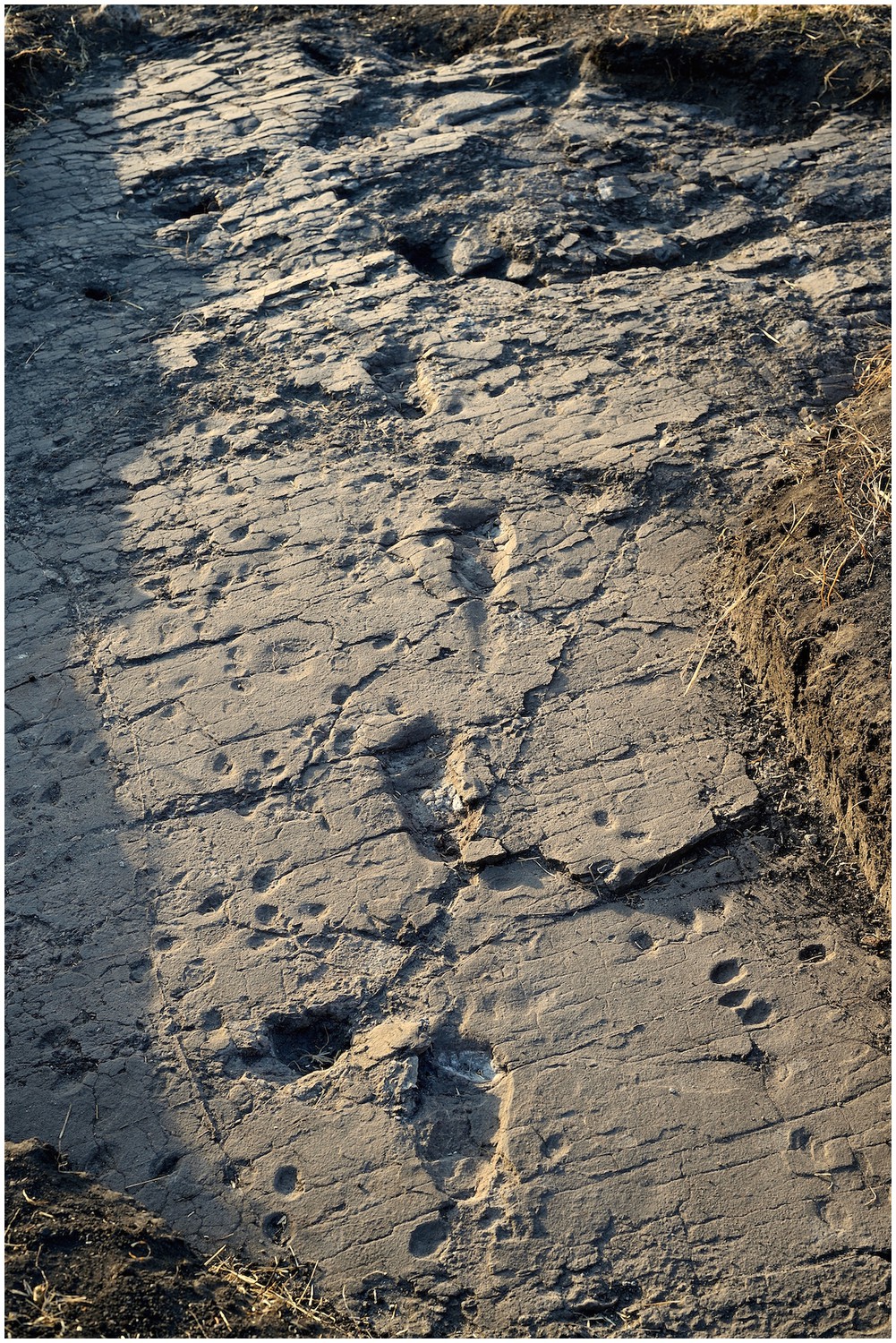
The preservation mechanism at Laetoli is a testament to geological serendipity. Volcanic ash from Mount Sadiman rained down upon a damp surface, likely mud or wet soil, creating a pliable medium. As hominins, specifically Australopithecus afarensis, walked across this surface, their feet left distinct impressions. Subsequent layers of ash, possibly from further eruptions or wind-blown deposits, covered and protected these prints from erosion. Over millions of years, these ash layers lithified, transforming into tufa rock, effectively fossilizing the footprints. The distinct morphology of the prints—showing a clear heel strike, an arch, and non-divergent big toe—provided compelling evidence for habitual bipedal locomotion, mirroring the foot structure of modern humans rather than apes. The preservation is so detailed that individual toe prints and even skin impressions have been observed in some casts.
📊 Key Facts & Numbers
Laetoli is home to some of the oldest direct evidence of hominin bipedalism, dating back approximately 3.6 million years. The most famous trackway, Site G, contains at least 20 hominin footprints, spread over an area of about 27 meters. These prints were made by at least three individuals, with one trackway suggesting a gait similar to modern humans, with an average stride length of approximately 45 centimeters. The hominins responsible are believed to be Australopithecus afarensis, the same species as the 'Lucy' fossil, which dates to a similar period (around 3.2 million years ago). The volcanic ash that preserved these prints originated from Mount Sadiman, which is estimated to have been active between 3.5 and 3.9 million years ago. Since 1998, ongoing expeditions have recovered over a dozen new hominin fossil finds, expanding the known hominin diversity in the region.
👥 Key People & Organizations
The discovery and ongoing research at Laetoli are inextricably linked to several key figures and institutions. Mary Leakey (1913-1996) was the pioneering archaeologist whose team first identified and excavated the significant footprint sites. Her husband, Louis Leakey, was also a prominent paleoanthropologist who conducted extensive research in the Great Rift Valley and laid the groundwork for Laetoli's exploration. More recently, paleontological expeditions have been co-led by Amandus Kwekason of the National Museum of Tanzania and Terry Harrison from New York University. These institutions, along with the Tanzania Commission for Antiquities, play crucial roles in the preservation and study of the site. The Leakey Foundation has also been instrumental in funding paleoanthropological research in East Africa.
🌍 Cultural Impact & Influence
The Laetoli footprints represent a profound cultural and scientific touchstone, fundamentally altering our understanding of human origins. Before their discovery, the evolution of bipedalism was largely theoretical, debated through skeletal evidence alone. These fossilized tracks provided undeniable, visual proof that upright walking was established millions of years earlier than many had supposed, shifting the timeline of a key human trait. The find captured the public imagination, appearing in countless textbooks, documentaries, and museum exhibits, becoming an iconic symbol of humanity's deep past. The prints have inspired artists, writers, and filmmakers, serving as a tangible link to our earliest ancestors and sparking a sense of wonder about the journey of human evolution. They are a powerful reminder that our story is etched not just in genes, but in the very earth beneath our feet.
⚡ Current State & Latest Developments
The Laetoli site remains an active area of paleontological research in 2024. Current expeditions, often involving international collaborations, continue to meticulously excavate and analyze new fossil discoveries, aiming to refine the paleoenvironmental reconstruction of the region during the Pliocene epoch. Efforts are also underway to enhance the preservation and accessibility of the existing footprint sites, balancing conservation needs with scientific inquiry and potential tourism. Advanced dating techniques and comparative anatomical studies are being employed to better understand the hominin species present and their ecological niche. The site is managed by the Tanzania Commission for Antiquities and is a significant component of Tanzania's natural and cultural heritage.
🤔 Controversies & Debates
One of the primary debates surrounding Laetoli concerns the precise identity of the hominins who made the footprints. While Australopithecus afarensis is the leading candidate, some researchers have proposed alternative interpretations or suggested the presence of other hominin species. Another point of discussion revolves around the exact environmental conditions during the time of the ashfall and the subsequent preservation, with ongoing studies refining models of volcanic activity and deposition. The interpretation of the gait and posture from the footprints themselves also continues to be refined through biomechanical analysis, leading to nuanced understandings of early hominin locomotion. The ethical considerations of excavating, preserving, and potentially displaying such fragile and significant evidence are also subjects of ongoing discussion within the scientific community and among heritage managers.
🔮 Future Outlook & Predictions
The future of Laetoli research promises deeper insights into the Pliocene hominin world. Continued excavations are expected to yield more fossil finds, potentially including new hominin species or more complete skeletal remains that can be directly compared to the footprints. Advanced remote sensing technologies and geological surveys may help map out further areas of potential preservation and reconstruct the broader paleo-landscape with greater accuracy. There is also potential for enhanced digital reconstruction and virtual reality experiences, allowing global audiences to explore the site and its findings in unprecedented detail. The long-term conservation strategies for the footprint sites will be critical, especially in the face of environmental changes and potential human impact, ensuring this invaluable window into our past remains open for generations to come.
💡 Practical Applications
The primary practical application of the Laetoli site is its unparalleled value in the scientific study of human evolution. The footprints serve as direct, physical evidence for understanding the development of bipedalism, a defining characteristic of the human lineage. This evidence is crucial for comparative anatomy, biomechanics, and paleoanthropology, informing theories about how, when, and why early hominins adopted upright walking. Beyond scientific research, Laetoli is a significant site for ecotourism in Tanzania, attracting researchers, students, and enthusiasts interested in human origins. The site's educational value is immense, providing a tangible connection to deep time and the evolutionary journey of our species, inspiring future generations of scientists and fostering a broader public appreciation for paleontology and natural history.
Key Facts
- Category
- history
- Type
- topic