
Contents
Overview
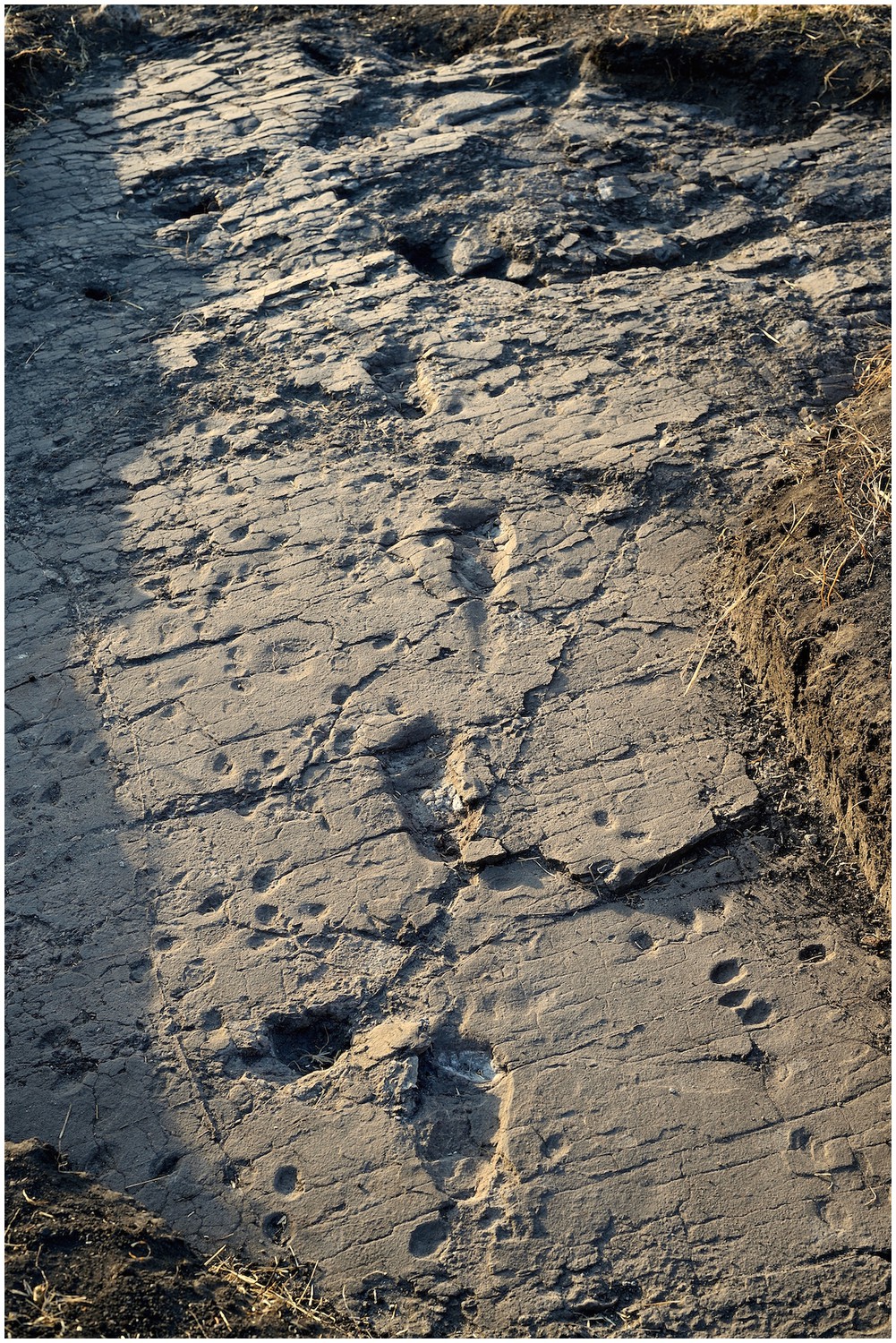
The story of Laetoli begins not with its discovery, but with a cataclysmic volcanic eruption millions of years ago. The Sadiman volcano, located approximately 45 km south of the famous Olduvai Gorge, erupted, blanketing the landscape in ash. This ash layer, when moistened and then dried, acted as a natural canvas. It was onto this surface that early hominines walked, leaving behind remarkably preserved footprints. The site remained undisturbed for millennia until archaeologist Mary Leakey and her team, including Richard Leakey and Alan Walker, stumbled upon Site G in 1976 during an expedition funded by the National Geographic Society.
⚙️ How It Works
The preservation mechanism at Laetoli is a prime example of geological serendipity. The initial volcanic ashfall created a soft, pliable layer. Subsequent rainfalls turned this ash into a mud, allowing the feet of passing hominines to sink in and create detailed impressions. A second, finer ashfall then covered these impressions, protecting them from erosion and the elements. Over geological time, these layers were buried and lithified, turning the footprints into fossilized impressions within the rock strata. The specific composition of the volcanic ash, rich in minerals like feldspar and pyroxene, contributed to the clarity and durability of the preserved tracks, making them an invaluable window into the locomotion and behavior of our ancient ancestors.
📊 Key Facts & Numbers
The Laetoli footprints represent a staggering dataset for paleoanthropology. At least three different hominines made the tracks at Site G. Radiometric dating of the tuff layers above and below the footprints consistently places their age at around 3.66 to 3.59 million years old. This timeframe is critical, as it predates many other significant hominin finds, providing an earlier benchmark for bipedalism. Over a dozen hominin fossils have been yielded at the site since 1998, further enriching the scientific understanding of the fauna and flora present during this period, with estimates suggesting the environment was a mosaic of woodland and grassland.
👥 Key People & Organizations
The discovery and ongoing research at Laetoli are inextricably linked to a few key individuals and institutions. Mary Leakey is the central figure, whose persistent fieldwork led to the initial find. Her son, Richard Leakey, a renowned paleontologist himself, continued to champion research in the region. Alan Walker, a paleoanthropologist from Johns Hopkins University at the time, played a crucial role in the initial analysis and dating of the footprints. More recently, expeditions have been co-led by Amandus Kwekason of the National Museum of Tanzania and Terry Harrison from New York University, ensuring continued scientific investigation and preservation efforts. The Tanzanian government officially recognizes Laetoli as a National Historic Site, underscoring its national and global heritage value.
🌍 Cultural Impact & Influence
The impact of the Laetoli footprints on scientific and public understanding of human evolution cannot be overstated. Before their discovery, bipedalism was often theorized to have evolved as a consequence of tool use or larger brains, suggesting it was a later development. The Laetoli tracks, however, provided undeniable proof that habitual upright walking was established by at least 3.6 million years ago, long before the advent of sophisticated stone tools or significantly larger cranial capacities. This shifted the evolutionary timeline and prompted a re-evaluation of the selective pressures that favored bipedalism, such as efficient long-distance travel or thermoregulation in open environments. The iconic imagery of these ancient steps has also captured the public imagination, serving as a powerful symbol of our deep evolutionary past, often featured in documentaries and educational materials about human origins.
⚡ Current State & Latest Developments
Laetoli remains an active site for paleontological research and conservation. Since the initial major discoveries, ongoing expeditions, primarily led by the National Museum of Tanzania and New York University, continue to meticulously survey and excavate new areas. These efforts aim to uncover further hominin fossils, expand the known trackways, and gather more detailed data on the paleoenvironment. Conservation efforts are also paramount, focusing on protecting the delicate fossilized footprints from natural erosion and potential human impact. The site is managed to balance scientific accessibility with long-term preservation, ensuring its integrity for future generations of researchers and visitors.
🤔 Controversies & Debates
While the evidence for bipedalism from Laetoli is widely accepted, some debates persist regarding the exact species responsible and the precise gait of the hominines. The footprints were initially attributed to Australopithecus afarensis, the species to which the famous 'Lucy' skeleton belongs, due to the temporal and geographical proximity. However, some researchers have suggested that other hominin species, such as Kenyanthropus platyops, might have also been present in the region and could have contributed to the tracks. The precise interpretation of the gait, particularly the degree of heel-strike and toe-off, is also subject to ongoing analysis and refinement, with different biomechanical models offering varying perspectives on how these early hominines moved across the ancient landscape.
🔮 Future Outlook & Predictions
The future of Laetoli research is poised to deepen our understanding of early hominin behavior and the environmental context of human evolution. Advanced imaging techniques and non-invasive survey methods are likely to play a larger role in identifying new trackways and fossils without disturbing the existing sites. Further analysis of the paleoecological data, including pollen and faunal remains, will provide a more granular picture of the environment in which these early hominines lived, potentially revealing more about the selective pressures that drove bipedalism. Comparative studies with other early hominin sites, such as Sterkfontein in South Africa, will continue to refine the broader narrative of human origins across the African continent.
💡 Practical Applications
The primary practical application of Laetoli is its role as an unparalleled natural archive for understanding human evolution. It serves as a crucial educational resource, providing tangible evidence of our deep past that is accessible to both scientists and the public. The site's preservation techniques offer insights into the geological processes that can fossilize biological traces, informing other paleontological and archaeological endeavors. Furthermore, the ongoing research at Laetoli contributes to the broader scientific understanding of adaptation, locomotion, and the environmental factors that shaped the hominin lineage, impacting fields from anthropology to biomechanics and evolutionary biology.
Key Facts
- Category
- history
- Type
- topic