
Contents
Overview
The roots of kyūdō stretch back over a millennium, evolving from the practical archery skills (kyūjutsu) essential for feudal Japanese warfare. Early forms were developed by various schools, often tied to specific clans or martial traditions, emphasizing battlefield effectiveness. Kyūdō aligns with the philosophical underpinnings of modern Japanese martial arts. This shift transformed archery from a weapon of war into a path for personal refinement, drawing heavily on Zen Buddhist concepts of mindfulness and presence.
⚙️ How It Works
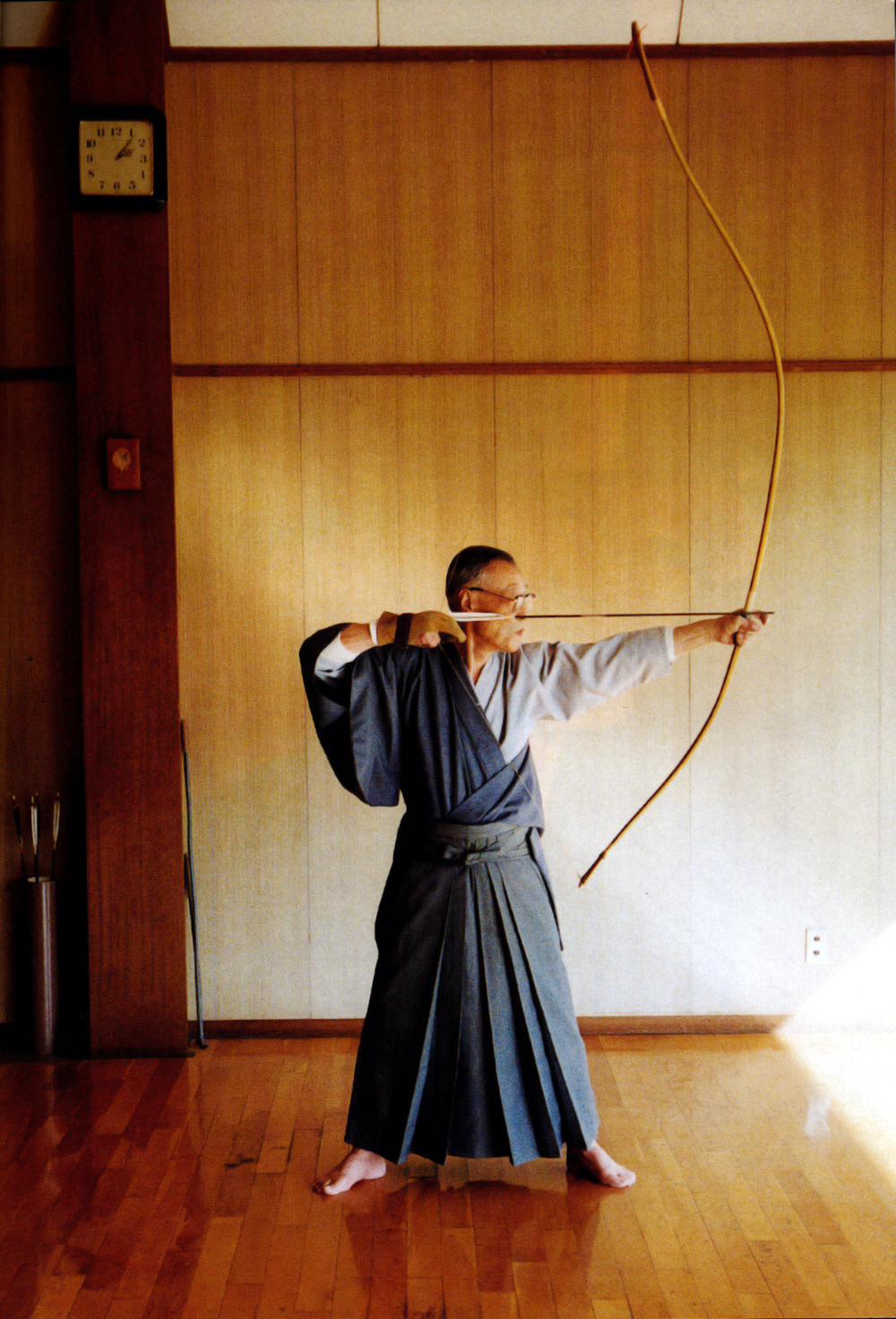
Kyūdō's mechanics are distinct, centered around the asymmetrical Japanese bow, which typically exceeds 2 meters (6.5 feet) in length. Unlike Western bows, the yumi is gripped in its lower third, a technique that requires significant strength and precise control, particularly during the draw. The shooting process, known as Shaho Hassetsu, involves eight distinct stages: Ashibumi (foot placement), Dōzukuri (body posture), Yugamae (bow preparation), Uchiokoshi (initial draw), Hikiwake (full draw), Nuikake (release preparation), Hanare (release), and Zanshin (lingering awareness). Each stage is meticulously practiced to achieve not just accuracy but also a state of mental clarity and spiritual harmony, embodying the principle of 'mushin' or 'no mind.' The target, often a paper target, is secondary to the perfection of the form itself.
📊 Key Facts & Numbers
Competitions, known as shiai, often involve participants shooting a set number of arrows, with scoring based on hits. The International Kyudo Federation (IKF) coordinates international events, with member countries spanning across Europe, Asia, and the Americas.
👥 Key People & Organizations
The All Nippon Kyudo Federation (ANKF) is the primary governing body in Japan, overseeing national competitions and grading systems. Internationally, the International Kyudo Federation (IKF) works to promote kyūdō worldwide and organize global tournaments. Many dojos (training halls) operate under the guidance of experienced sensei (teachers), often holding dan (black belt) ranks awarded through rigorous examination by organizations like the ANKF.
🌍 Cultural Impact & Influence
Kyūdō's influence extends far beyond the dojo, permeating Japanese culture and aesthetics. Its emphasis on discipline, respect, and mindfulness has been adopted in educational systems and corporate training programs, mirroring the broader impact of Japanese martial arts on society. The visual and philosophical elements of kyūdō have been depicted in numerous films, anime, and literature, often symbolizing inner peace, focus, and the pursuit of perfection. For instance, the film 'The Twilight Samurai' (2002) subtly showcased the samurai's connection to archery, while anime like 'Kono Oto Tomare!' have featured kyūdō as a central element. This cultural resonance has fueled international interest, attracting practitioners from diverse backgrounds seeking a deeper connection to Japanese tradition and a path to self-improvement.
⚡ Current State & Latest Developments
In recent years, kyūdō has seen a steady increase in international participation, with new dojos opening in countries like Germany, France, and the United States. The International Kyudo Federation (IKF) continues to expand its reach, fostering cross-cultural exchange through seminars and championships. Technological advancements are also beginning to influence practice, with some dojos experimenting with digital scoring systems and virtual training aids, though the core philosophy remains rooted in traditional methods. The ANKF continues to refine its grading system and curriculum, ensuring the art's integrity while adapting to the needs of contemporary practitioners. The COVID-19 pandemic presented challenges, leading to temporary closures and a shift towards online instruction for some theoretical aspects, but the physical practice has largely resumed.
🤔 Controversies & Debates
One persistent debate within the kyūdō community revolves around the balance between traditionalism and modernization. Some argue for strict adherence to historical forms and philosophical interpretations, viewing any deviation as a dilution of the art's essence. Others advocate for greater accessibility and adaptation, suggesting that kyūdō must evolve to remain relevant to younger generations and international practitioners who may not share the same cultural background. Another point of contention is the emphasis placed on hitting the target versus the perfection of form; while accuracy is a component, many traditionalists argue that the spiritual and ethical development derived from the process is paramount, a viewpoint sometimes at odds with competitive aspirations. The role of women in kyūdō, historically limited in some martial arts, is also a subject of ongoing discussion, though participation is now widespread.
🔮 Future Outlook & Predictions
The future of kyūdō appears robust, driven by its enduring appeal as a path to mindfulness and self-mastery. As global interest in Zen Buddhism and traditional Japanese culture continues to grow, so too will the number of international practitioners. Innovations in training methodologies, potentially incorporating elements of sports science and biomechanics without compromising core principles, could enhance performance and understanding. There is also potential for greater integration with other martial disciplines and wellness practices, further broadening its appeal. The challenge will be to maintain the art's spiritual depth and ethical framework while accommodating diverse cultural contexts and evolving training techniques, ensuring that the 'Way of the Bow' remains a vibrant and meaningful pursuit for centuries to come.
💡 Practical Applications
Kyūdō's primary application is as a modern martial art focused on personal development, discipline, and spiritual cultivation. It serves as a form of active meditation, promoting concentration, patience, and emotional control. Beyond its practice in dedicated dojos, the principles of kyūdō—precision, focus, and the pursuit of perfection in execution—can be applied to various aspects of life, from professional endeavors to artistic pursuits. It is also a significant cultural practice, preserving traditional Japanese craftsmanship in the making of bows, arrows, and related equipment. For some, it is a competitive sport, while for others, it is a lifelong spiritual journey, offering a unique way to connect with oneself and with tradition.
Key Facts
- Category
- culture
- Type
- topic