
Contents
Overview
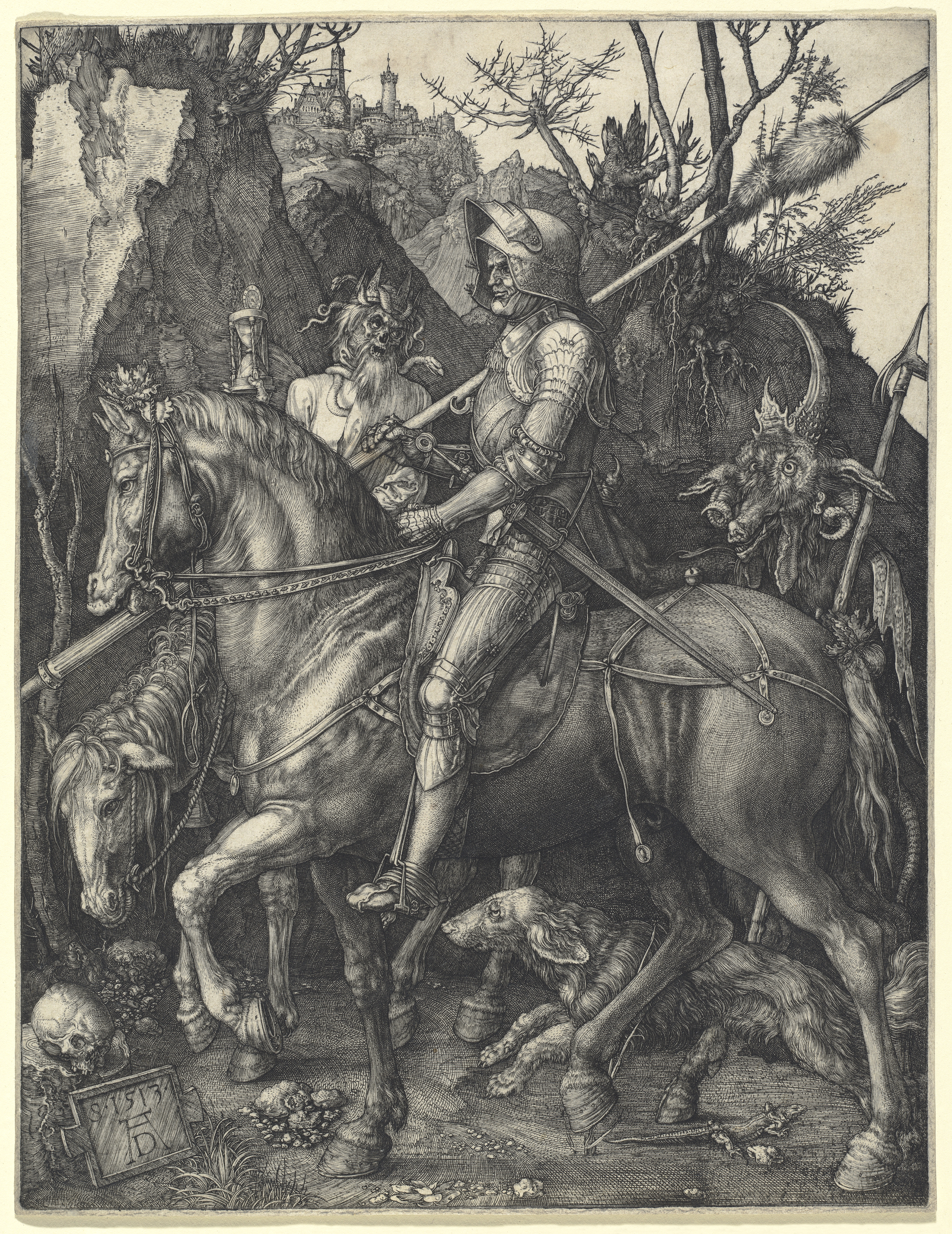
The Knight, Death and the Devil engraving was created by Albrecht Dürer in 1513, during a period when he was focusing on engravings rather than paintings or woodcuts. The image features a knight on horseback, accompanied by his dog, riding through a narrow gorge flanked by a goat-headed devil and the figure of death on a pale horse. The scene is rich in symbolism, with the knight's armour and the oak leaves representing the resilience of faith, while the hourglass held by death serves as a reminder of the shortness of life. The engraving is considered one of the three Meisterstiche, or master prints, and is widely regarded as one of Dürer's most important works. The influence of Martin Luther's ideas on the Protestant Reformation can also be seen in the engraving, as it reflects the growing interest in individualism and personal faith during this time.
🔍 Symbolism & Iconography
The symbolism and iconography in Knight, Death and the Devil are complex and multifaceted, with various interpretations having been proposed over the centuries. The knight is often seen as a symbol of courage and faith, while the devil and death represent the threats and dangers that he must face. The image has also been interpreted as a representation of the struggle between good and evil, with the knight embodying the virtues of chivalry and the devil and death representing the forces of darkness and chaos. The work of Erasmus and other humanist scholars also influenced Dürer's thoughts on the nature of humanity and the role of faith in society. The engraving's use of symbolism and iconography reflects the artistic and cultural trends of the time, including the influence of Leonardo da Vinci and other Renaissance masters.
🌍 Cultural Impact
Knight, Death and the Devil has had a significant cultural impact, influencing art and literature for centuries. The image has been referenced and parodied in countless works, from William Shakespeare's plays to modern art and film. The engraving's themes of mortality, faith, and courage continue to resonate with audiences today, making it a timeless and universal work of art. The work of Goethe and other Romantic writers also reflects the influence of Dürer's ideas on the human condition and the role of art in society. The engraving's cultural significance extends beyond the art world, with its themes and symbolism appearing in literature, music, and film, including the works of Franz Kafka and Albert Camus.
🔮 Legacy & Interpretation
The legacy and interpretation of Knight, Death and the Devil continue to be debated among art historians and scholars. Some see the image as a representation of the artist's own views on life and death, while others interpret it as a commentary on the social and political issues of the time. The engraving's use of symbolism and iconography has also been the subject of extensive analysis, with various interpretations having been proposed over the centuries. The work of Sigmund Freud and other psychoanalysts has also influenced the interpretation of the engraving, with its themes of mortality and the subconscious reflecting the growing interest in psychology and human behavior during the 20th century. The influence of Carl Jung's ideas on the collective unconscious can also be seen in the engraving's use of symbolism and archetypes.
Key Facts
- Year
- 1513
- Origin
- Germany
- Category
- culture
- Type
- artwork
Frequently Asked Questions
What is the meaning of the symbolism in Knight, Death and the Devil?
The symbolism in Knight, Death and the Devil is complex and multifaceted, with various interpretations having been proposed over the centuries. The knight is often seen as a symbol of courage and faith, while the devil and death represent the threats and dangers that he must face. The image has also been interpreted as a representation of the struggle between good and evil, with the knight embodying the virtues of chivalry and the devil and death representing the forces of darkness and chaos. The work of Friedrich Nietzsche and other philosophers also influenced the interpretation of the engraving, with its themes of mortality and the will to power reflecting the growing interest in existentialism and individualism during the 19th and 20th centuries.
What is the historical context of the engraving?
The engraving was created in 1513, during the Protestant Reformation, a time of significant social and cultural change in Europe. The image reflects the growing interest in individualism and personal faith during this time, as well as the influence of humanist thought and the ideas of Leonardo da Vinci and other Renaissance masters. The work of John Calvin and other Protestant reformers also influenced the interpretation of the engraving, with its themes of mortality and the role of faith in society reflecting the growing interest in theology and biblical studies during the 16th century.
How has the engraving influenced art and literature?
Knight, Death and the Devil has had a significant influence on art and literature, with its themes and symbolism appearing in countless works. The image has been referenced and parodied in everything from William Shakespeare's plays to modern art and film. The engraving's use of symbolism and iconography has also been the subject of extensive analysis, with various interpretations having been proposed over the centuries. The work of Salvador Dali and other surrealist artists also reflects the influence of Dürer's ideas on the role of the subconscious and the power of symbolism in art.
What is the significance of the engraving's use of symbolism and iconography?
The engraving's use of symbolism and iconography is significant because it reflects the artistic and cultural trends of the time, including the influence of Leonardo da Vinci and other Renaissance masters. The image's use of symbols and icons also adds depth and complexity to the engraving, allowing for multiple interpretations and meanings. The work of Carl Jung and other psychoanalysts has also influenced the interpretation of the engraving, with its themes of mortality and the subconscious reflecting the growing interest in psychology and human behavior during the 20th century.
How has the engraving been interpreted over time?
The engraving has been interpreted in various ways over the centuries, with its meaning and significance changing over time. The image has been seen as a representation of the artist's own views on life and death, as well as a commentary on the social and political issues of the time. The engraving's use of symbolism and iconography has also been the subject of extensive analysis, with various interpretations having been proposed over the centuries. The work of Sigmund Freud and other psychoanalysts has also influenced the interpretation of the engraving, with its themes of mortality and the subconscious reflecting the growing interest in psychology and human behavior during the 20th century.