
Contents
Overview
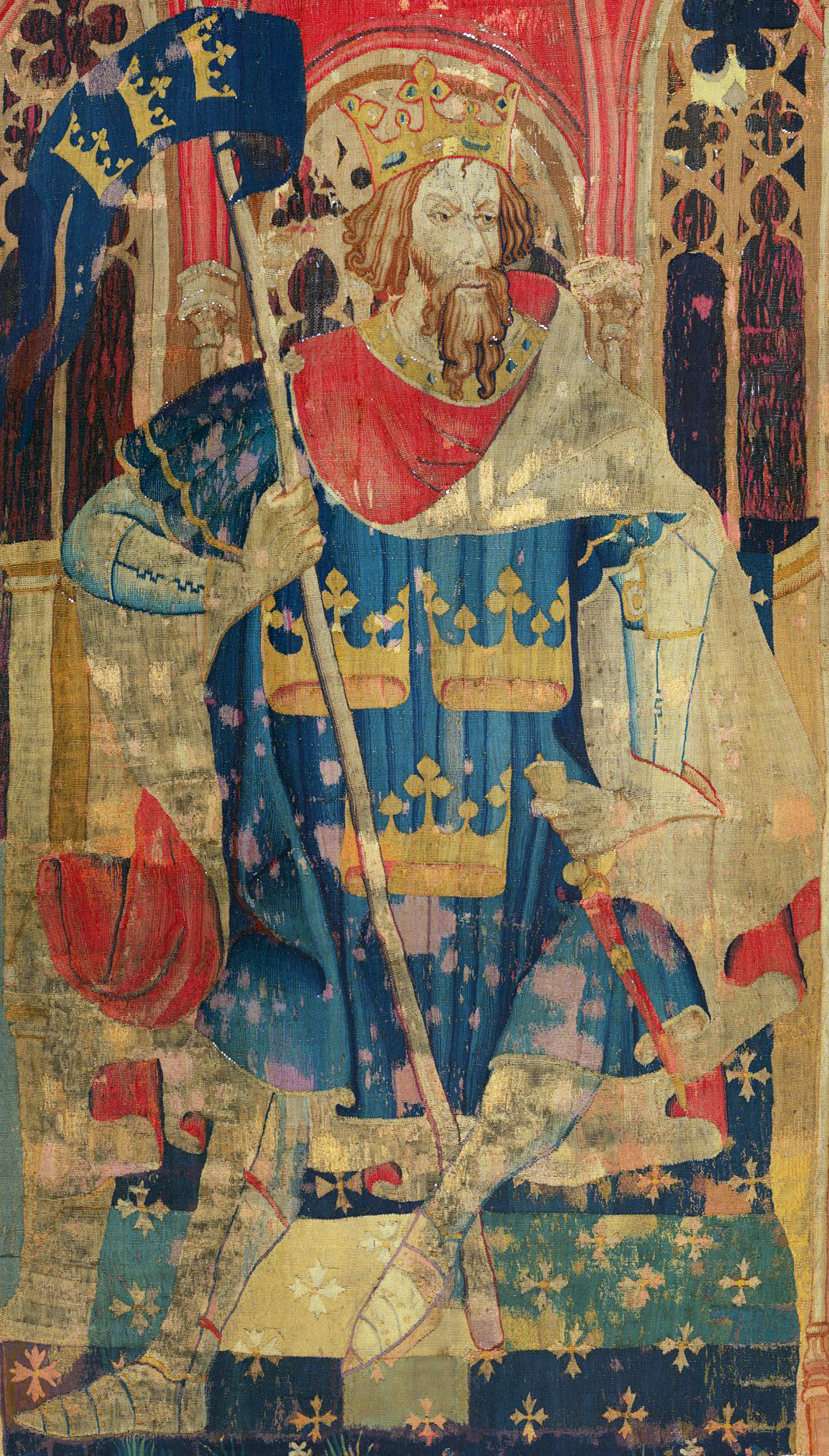
The legend of King Arthur, a central figure in the Matter of Britain, first emerged in Welsh poetry around the late sixth and early seventh centuries, portraying him as a warrior leading Britons against Saxon invaders. Early historical accounts, such as the 9th-century Historia Brittonum attributed to Nennius, list twelve battles Arthur fought, culminating in the Battle of Badon. However, the reliability of these early sources is debated, with some scholars like David Dumville arguing there is no historical evidence for Arthur, urging his removal from historical accounts. The figure of Arthur gained significant traction in the 12th century, particularly through Geoffrey of Monmouth's influential but largely fictional Historia Regum Britanniae, which introduced many elements of the Arthurian narrative that would later be expanded upon by writers like Chrétien de Troyes and Sir Thomas Malory. The enduring appeal of Arthur's story has been explored in countless adaptations, from medieval romances to modern films, reflecting societal values and aspirations.
⚔️ The Legend and Its Evolution
The legend of King Arthur evolved significantly over centuries, transforming him from a warrior leader into a king presiding over a court of chivalry. Geoffrey of Monmouth's Historia Regum Britanniae (c. 1136) was pivotal in popularizing Arthur across Europe, detailing his lineage, magical sword Caliburn (later Excalibur), and key figures like Merlin and Guinevere. Subsequent writers, such as Chrétien de Troyes, introduced the quest for the Holy Grail, adding a spiritual dimension to Arthur's legend and introducing prominent knights like Lancelot and Perceval. Sir Thomas Malory's Le Morte d'Arthur (late 15th century) synthesized many of these traditions, solidifying the image of Arthur, his court at Camelot, and the Knights of the Round Table that continues to captivate audiences. The legend's adaptability has allowed it to resonate through different eras, influencing art, literature, and even political discourse, much like how figures from The Lord of the Rings have shaped modern fantasy.
🛡️ Knights of the Round Table
The Knights of the Round Table form the core of Arthur's fellowship, a chivalric order dedicated to upholding justice and peace in his kingdom. First mentioned by Wace in his Roman de Brut (1155), the Round Table itself symbolizes equality among its members, as it has no head. The number of knights varies across different accounts, ranging from a dozen to over 1,600, with Layamon's Brut suggesting 1,600 seats. Notable knights include Sir Lancelot, Sir Gawain, Sir Galahad, Sir Perceval, and Sir Mordred, Arthur's eventual betrayer. The fellowship's quest for the Holy Grail, introduced by Robert de Boron, became a central theme, with the pure knight Galahad ultimately succeeding. The concept of the Round Table has inspired real-world orders of chivalry, such as that founded by King Edward III of England, and its symbolism of unity and equality continues to be admired, much like the collaborative spirit seen in open-source projects.
🤔 Historicity Debate & Legacy
The historicity of King Arthur remains a subject of ongoing debate among academics. While some scholars, like Leslie Alcock in 1971, argued for the existence of a historical Arthur based on early sources, the prevailing academic consensus today leans towards him being a mythological or folkloric figure. Evidence cited for a historical Arthur includes early Welsh poems and chronicles like the Historia Brittonum and Annales Cambriae, which place him in the late 5th to early 6th centuries fighting against Saxon invaders. However, the lack of contemporary written or archaeological evidence, and the late compilation of these sources, lead many historians, such as David Dumville, to conclude that Arthur should be considered a legend rather than a historical person. Despite the lack of definitive proof, the Arthurian legend has had a profound cultural impact, inspiring countless works of art, literature, and popular culture, and continues to be a powerful symbol of heroism and idealism, much like the enduring myths surrounding figures like Robin Hood or the philosophical debates surrounding Simulation Theory.
Key Facts
- Year
- c. 5th-6th century (legendary period)
- Origin
- Britain
- Category
- history
- Type
- concept
Frequently Asked Questions
Was King Arthur a real historical figure?
The historical existence of King Arthur is widely debated. While some early texts mention a warrior named Arthur who fought against Saxon invaders in the 5th or 6th century, the consensus among most modern historians is that he is a legendary or mythological figure. There is a lack of definitive contemporary evidence, and the earliest accounts were written centuries after the supposed events.
When did the legend of King Arthur first appear?
The earliest mentions of King Arthur appear in Welsh poetry from the late sixth and early seventh centuries. However, the legend gained significant popularity and was widely disseminated across Europe following Geoffrey of Monmouth's Historia Regum Britanniae, written around 1136.
Who were the Knights of the Round Table?
The Knights of the Round Table were the legendary fellowship of King Arthur's court. The Round Table itself, first described by Wace in 1155, symbolized equality among its members. These knights were renowned for their chivalry and dedication to justice, undertaking quests such as the search for the Holy Grail.
What is the significance of the Round Table?
The Round Table is significant as a symbol of equality and fellowship within Arthur's court. Its circular design meant no single knight held precedence, fostering a sense of unity. The table also became associated with the chivalric order and the quests undertaken by Arthur's knights, most notably the quest for the Holy Grail.
What are the key literary works associated with King Arthur?
Key literary works include Geoffrey of Monmouth's Historia Regum Britanniae, Chrétien de Troyes' romances (such as Yvain, the Knight of the Lion), and Sir Thomas Malory's Le Morte d'Arthur. These works, along with earlier Welsh tales, shaped the Arthurian legend as it is known today.
References
- en.wikipedia.org — /wiki/King_Arthur
- britannica.com — /topic/King-Arthur
- penn.museum — /sites/expedition/the-life-and-times-of-king-arthur/
- en.wikipedia.org — /wiki/Historicity_of_King_Arthur
- caerleon.net — /history/arthur/page2.htm
- history.com — /articles/was-king-arthur-a-real-person
- smithsonianmag.com — /history/king-arthur-real-person-180980466/
- reddit.com — /r/AskHistorians/comments/1nykyur/what_exactly_is_the_story_of_king_arthur/