
Contents
Overview
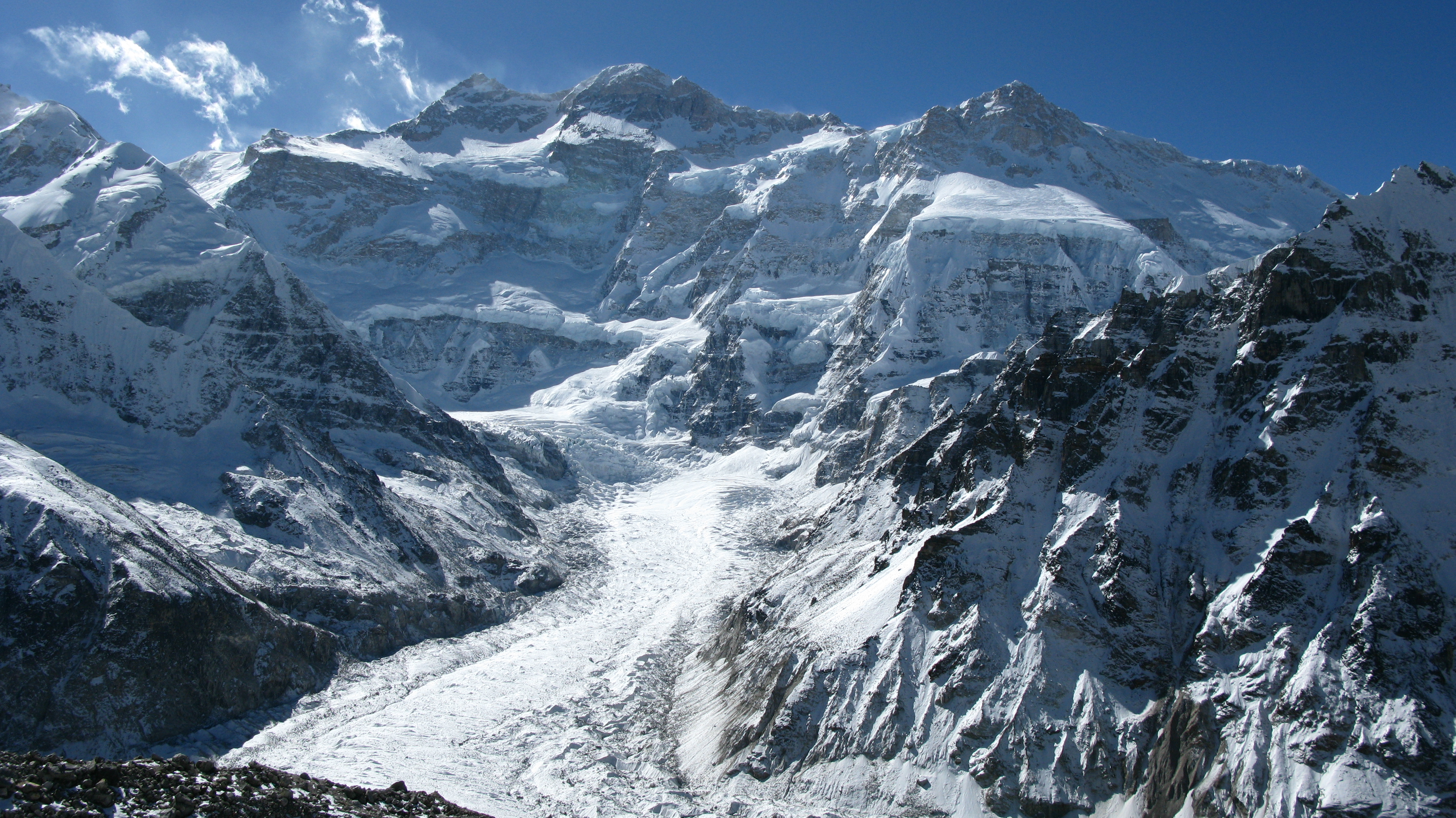
Kangchenjunga is situated in the Kangchenjunga Himal section of the Himalayas, bounded by the Tamur River to the west, the Lhonak River and Jongsang La to the north, and the Teesta River to the east. The mountain lies on the border between Nepal's Koshi Province and India's Sikkim state, with the West and Kangbachen peaks located in Nepal's Taplejung District and the Main, Central, and South peaks directly on the border. The Great Trigonometrical Survey of India, led by Andrew Waugh, played a crucial role in determining the mountain's height, using precise calculations and meticulous measurements to establish its ranking.
📏 Measurement and Ranking
Until 1852, Kangchenjunga was assumed to be the highest mountain in the world, but the Great Trigonometrical Survey's findings revealed that Mount Everest, then known as Peak XV, held the top spot. After further verification, it was officially announced in 1856 that Kangchenjunga is the third-highest mountain in the world, with a height of 8,586 m (28,169 ft). This discovery was a significant milestone in the history of mountaineering and geography, with George Everest and Andrew Waugh being key figures in the process.
🙏 Cultural Significance
Kangchenjunga is considered a sacred mountain in both Nepal and Sikkim, with a rich cultural and spiritual significance. The mountain is revered by the local population, who believe it to be the abode of gods and goddesses. The Sikkim Government and the Nepal Government have taken steps to protect the mountain's environment and preserve its cultural heritage, including the establishment of the Kangchenjunga Conservation Area. The mountain's unique biodiversity and ecosystem are also of great importance, with efforts being made to conserve and protect its natural resources.
🏃♂️ Climbing and Exploration
Climbing Kangchenjunga is a significant challenge, with its extreme altitude and harsh weather conditions making it a formidable undertaking. The first ascent of the mountain was made by a British team led by Charles Evans in 1955, with the team including notable climbers such as Joe Brown and George Band. Since then, many climbers have attempted to conquer the mountain, with some notable successes and failures. The Himalayan Club and the Alpine Club are two organizations that have played a significant role in promoting mountaineering and exploration in the region.
Key Facts
- Year
- 1852
- Origin
- Himalayas, Nepal and India
- Category
- nature
- Type
- place
Frequently Asked Questions
What is the height of Kangchenjunga?
Kangchenjunga stands at 8,586 m (28,169 ft) above sea level. The mountain's height was determined by the Great Trigonometrical Survey of India, led by Andrew Waugh, in the mid-19th century. The survey's findings revealed that Mount Everest was the highest mountain in the world, with Kangchenjunga ranking third.
Why is Kangchenjunga considered a sacred mountain?
Kangchenjunga is revered by the local population in Nepal and Sikkim, who believe it to be the abode of gods and goddesses. The mountain's unique cultural and spiritual significance is reflected in its designation as a sacred mountain, with efforts being made to protect its environment and preserve its cultural heritage. The Sikkim Government and the Nepal Government have taken steps to conserve the mountain's ecosystem and promote sustainable tourism in the region.
Who was the first person to climb Kangchenjunga?
The first ascent of Kangchenjunga was made by a British team led by Charles Evans in 1955. The team included notable climbers such as Joe Brown and George Band. The ascent was a significant achievement in the history of mountaineering, with the team facing extreme altitude and harsh weather conditions on the mountain.
What is the current status of conservation efforts in the Kangchenjunga region?
The Kangchenjunga Conservation Area was established to protect the mountain's environment and preserve its cultural heritage. The conservation area is managed by the Sikkim Government and the Nepal Government, with support from international organizations such as the World Wildlife Fund. Efforts are being made to promote sustainable tourism and reduce the impact of human activity on the mountain's ecosystem.
How does Kangchenjunga's unique biodiversity contribute to its cultural significance?
Kangchenjunga's unique biodiversity is an important aspect of its cultural significance, with the mountain's ecosystem supporting a wide range of flora and fauna. The mountain's cultural heritage is closely tied to its natural environment, with the local population believing that the mountain is the abode of gods and goddesses. The conservation of Kangchenjunga's ecosystem is essential to preserving its cultural significance and promoting sustainable development in the region.