
Contents
Overview
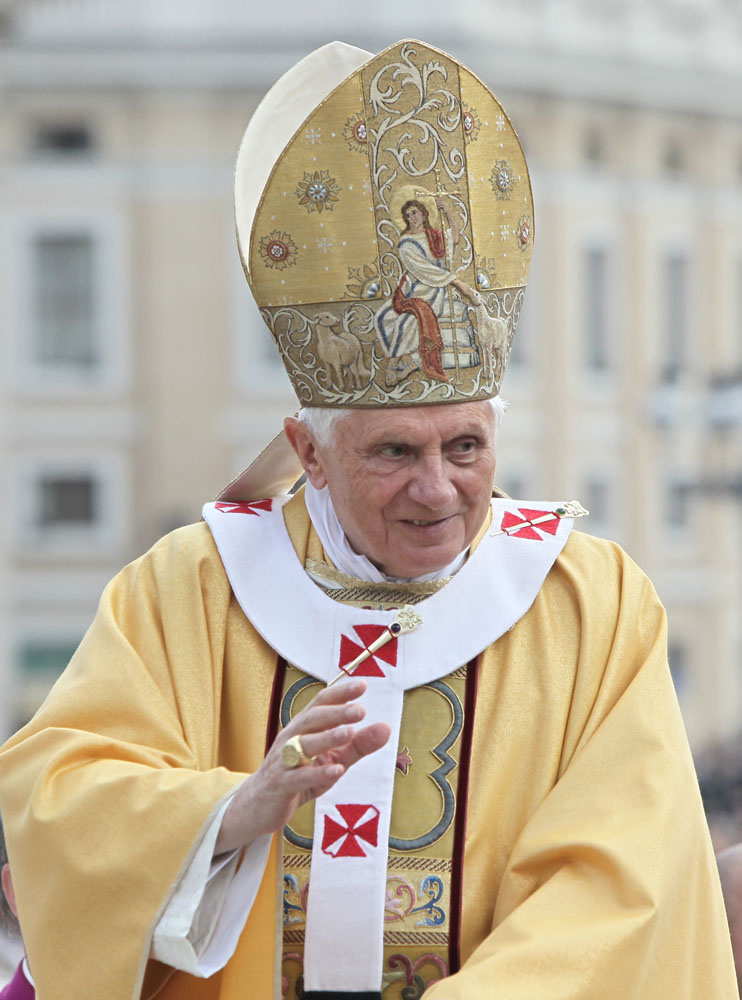
Joseph Ratzinger, later Pope Benedict XVI, was a towering figure in 20th and 21st-century Catholicism, known for his profound theological intellect and conservative doctrinal stance. Born in Bavaria in 1927, he rose through academic and ecclesiastical ranks, becoming a leading theologian before his appointment as Archbishop of Munich and Freising in 1977. As Prefect of the Congregation for the Doctrine of the Faith from 1981 to 2005, he was a key architect of Catholic teaching, earning the moniker 'God's Rottweiler' for his rigorous defense of orthodoxy. His election as Pope in 2005 marked a return to a more traditional papacy, yet his tenure was ultimately defined by his historic 2013 resignation, a move that shattered centuries of precedent and created the unique office of 'pope emeritus'. His legacy is a complex tapestry of intellectual rigor, doctrinal firmness, and an ultimately groundbreaking redefinition of papal service.
🎵 Origins & History
Joseph Alois Ratzinger was born in Marktl, Bavaria, Germany. His father was Joseph Ratzinger Sr., a police commissioner, and his mother was Maria Peintner. His early life was shaped by the turbulent political landscape of interwar Germany, including his conscription into the German army and a brief period as a prisoner of war at the end of World War II. He held professorships at Münster, Tübingen, and Regensburg. His early theological work, particularly his engagement with Karl Barth and Thomas Aquinas, established him as a formidable intellectual force within the Catholic Church.
⚙️ Theological Framework
Ratzinger's theological framework is characterized by a profound commitment to divine revelation, the authority of Scripture and Tradition, and the centrality of Jesus Christ. He often emphasized the Church's role as the authentic interpreter of God's will. His approach, deeply rooted in patristic and scholastic thought, sought to bridge the gap between faith and reason, arguing that Christianity offers a coherent and compelling worldview. He viewed relativism and secularization as significant threats to both the Church and Western civilization. His writings frequently explored themes of salvation history, ecclesiology, and the nature of God, always with an eye toward articulating a robust and intellectually defensible faith for the contemporary world. Key to his thought was the concept of the 'kingdom of God' as both a present reality within the Church and a future hope.
📊 Key Facts & Numbers
As Pope Benedict XVI, Joseph Ratzinger served as the head of the Catholic Church for eight years. His resignation in 2013 was the first by a pope in nearly 600 years, a decision that came after over 60 years of ordained ministry. He remained in Vatican City as pope emeritus until his death on December 31, 2022. He spent his final years at the Mater Ecclesiae Monastery within Vatican City. His papacy saw the Church grapple with the ongoing sexual abuse crisis, with Benedict XVI implementing new policies and addressing the issue directly, though critics argued for more decisive action.
👥 Key People & Organizations
Throughout his career, Ratzinger was closely associated with several key figures and institutions. As a young theologian, he engaged with prominent thinkers like Hans Urs von Balthasar and Henri de Lubac, who influenced his understanding of the Church and its mission. His appointment as Archbishop of Munich and Freising in 1977 and subsequent elevation to Cardinal by Pope Paul VI marked his entry into high ecclesiastical office. As Prefect of the Congregation for the Doctrine of the Faith, he worked closely with numerous bishops and Vatican officials, shaping the Church's doctrinal trajectory for decades. His election as Pope brought him into direct leadership of the Vatican City and the global Catholic Church, overseeing its vast administrative structure and engaging with world leaders. His successor, Pope Francis, has continued to navigate the complex legacy Ratzinger left behind.
🌍 Cultural Impact & Influence
Ratzinger's influence extended far beyond theological circles, impacting global discourse on faith, reason, and morality. His writings, translated into dozens of languages, have shaped the thinking of countless theologians, clergy, and laypeople. As Pope Benedict XVI, he became a prominent global voice, addressing issues ranging from interfaith dialogue to social justice and the role of religion in public life. His conservative theological stance resonated with many within the Church, providing a sense of stability and doctrinal clarity amidst societal changes. However, his emphasis on traditional teachings also led to friction with more progressive elements within Catholicism and criticism from secular commentators. The very act of his resignation, a move unprecedented in modern times, fundamentally altered perceptions of papal authority and the nature of service within the Church, sparking widespread debate and analysis across media outlets like The New York Times and BBC News.
⚡ Papacy and Resignation
The papacy of Benedict XVI (2005-2013) was marked by a strong emphasis on tradition and doctrine, often referred to as a 'restorationist' papacy. He sought to reaffirm core Catholic teachings and address what he perceived as the erosion of faith in the West. A pivotal moment was his announcement of his resignation from the papacy, citing his "advanced age" and "diminishing strength." This decision, unprecedented since the Great Western Schism, created the unique position of a reigning pope and a pope emeritus simultaneously. He spent his final years in quiet contemplation at the Mater Ecclesiae Monastery within Vatican City, continuing to write and engage with theological matters. His death on December 31, 2022, concluded a remarkable period in Church history, leaving behind a complex and debated legacy.
🤔 Controversies & Debates
Ratzinger's tenure and legacy are not without significant controversy. As Prefect of the CDF, he was instrumental in addressing the sexual abuse crisis within the Church, but critics often argued his actions were too slow or insufficient. His conservative theological positions, particularly on issues of homosexuality, women's ordination, and interfaith relations, drew sharp criticism from progressive Catholics and secular human rights advocates. The decision to resign, while framed as a pastoral necessity, also sparked debate about the nature of papal infallibility and the potential for future papal resignations to become a norm, potentially destabilizing the papacy. Furthermore, his past associations and writings have been scrutinized, with some questioning his role during the Nazi era, though he consistently maintained his opposition to the regime. The ongoing debates surrounding his handling of abuse cases and his theological conservatism continue to shape discussions about his impact.
🔮 Legacy and Future
The long-term legacy of Joseph Ratzinger remains a subject of intense discussion and will likely continue to evolve. His intellectual rigor and profound theological insights have cemented his place as one of the most significant Catholic thinkers of the modern era. The precedent of papal resignation, initiated by Benedict XVI, has irrevocably altered the papacy, raising questions about the future structure and dynamics of papal leadership. His emphasis on reason and tradition may continue to influence theological discourse, potentially serving as a counterpoint to more progressive theological currents. The ongoing efforts to address the sexual abuse crisis within the Church, a challenge he confronted directly, will also be a crucial lens through which his papacy is evaluated. Scholars will continue to dissect his extensive writings, seeking to understand the full scope of his contributions to Catholic theology and philosophy for generations to come.
💡 Scholarly Contributions
Ratzinger's scholarly contributions are vast and deeply influential within theological and philosophical discourse. His academic work laid the groundwork for his later papal pronouncements, offering a rigorous defense of Catholic doctrine grounded in Scripture, Tradition, and reason. His books, such as 'Introduction to Christianity' (1968) and 'Jesus of Nazareth' (published in three volumes between 2007 and 2012), are
Key Facts
- Category
- philosophy
- Type
- topic