
Contents
Overview
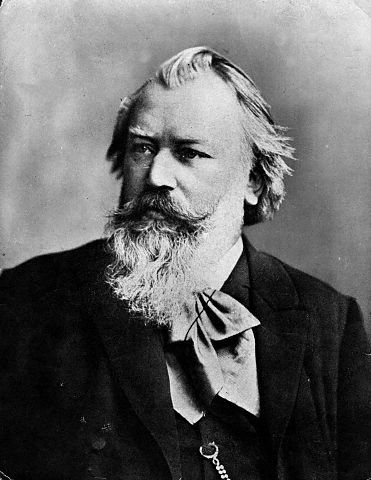
Born in Hamburg, Germany, on May 7, 1833, Johannes Brahms hailed from a musical family. His father, Johann Jakob Brahms, was a musician who provided his son's initial musical training. Brahms's early life was marked by financial struggles, leading him to perform in local taverns to supplement the family's income. Despite these challenges, his prodigious talent was recognized, and he began composing in his youth. A pivotal moment in his early career was his meeting with composer Robert Schumann in 1853, who championed Brahms's work and introduced him to the wider musical world. This endorsement, published in the Neue Zeitschrift für Musik, launched Brahms's career, though it also set high expectations, as Schumann declared him the "chosen one" destined to express the spirit of the times. Brahms's life was also deeply influenced by his close relationship with Clara Schumann, the wife of Robert Schumann, and later by his friendships with violinist Joseph Joachim and conductor Hans von Bülow.
⚙️ How It Works
Brahms's musical style is often described as a unique blend of classical tradition and Romantic sensibility. He deeply admired the works of Johann Sebastian Bach, Wolfgang Amadeus Mozart, and Ludwig van Beethoven, meticulously studying their contrapuntal techniques and formal structures. Brahms masterfully adapted these classical forms, such as sonata form and theme and variations, infusing them with the emotional intensity, lyrical melodies, and harmonic richness characteristic of the Romantic era. This approach, sometimes perceived as conservative by his contemporaries who favored the more progressive styles of Richard Wagner and Franz Liszt, allowed Brahms to create music of profound depth and complexity. His compositions are noted for their "developing variation," a concept later explored by Arnold Schoenberg, where musical ideas are continuously transformed and elaborated upon, creating intricate structural coherence. Brahms's works encompass a wide range of genres, including four symphonies, concertos, chamber music, piano works, and over 200 songs, many of which draw inspiration from German folk music.
🌍 Cultural Impact
Johannes Brahms's influence on classical music is immense and multifaceted. He is often considered one of the "Three Bs" of German music, alongside Bach and Beethoven, a testament to his enduring legacy and the profound impact of his compositions. While some contemporaries found his music to be "academic" or "thorny," his craftsmanship and emotional depth were recognized and admired by subsequent generations of composers, including Arnold Schoenberg, Max Reger, and Alexander Zemlinsky. Brahms's dedication to traditional forms, combined with his innovative harmonic language and rhythmic complexity, provided a bridge between the Classical and Romantic eras, and his work continued to influence composers well into the 21st century. His music remains a staple of concert repertoire worldwide, performed by leading orchestras and soloists, and is celebrated for its intellectual rigor and profound emotional resonance. The Brahms style, with its blend of "Sturm und Drang" and Classical structure, continues to captivate audiences, as seen in the enduring popularity of works like his Symphony No. 4 and Violin Concerto.
🔮 Legacy & Future
The legacy of Johannes Brahms extends beyond his musical compositions. He is remembered as a meticulous craftsman and a self-critical artist who often destroyed his own works, fearing they did not meet his exacting standards. This perfectionism, coupled with his deep respect for musical tradition, shaped his unique voice. Brahms's influence can be seen in the works of composers who sought to reconcile his style with that of Wagner, and his emphasis on structural coherence inspired later musical developments. His music continues to be studied and performed, offering a rich tapestry of emotional expression and intellectual depth. The ongoing exploration of his compositions, from his early piano sonatas to his late chamber works, ensures his place as a pivotal figure in the history of Western classical music. The enduring appeal of Brahms lies in his ability to evoke a wide spectrum of human emotion within meticulously crafted musical structures, a quality that continues to resonate with listeners and musicians alike, much like the works of Bach and Beethoven that he so admired.
Key Facts
- Year
- 1833-1897
- Origin
- Hamburg, Germany
- Category
- culture
- Type
- person
Frequently Asked Questions
What are Johannes Brahms's most famous compositions?
Some of Johannes Brahms's most celebrated works include his four symphonies (especially Symphony No. 1 in C minor and Symphony No. 4 in E minor), the Violin Concerto in D major, the two Piano Concertos (No. 1 in D minor and No. 2 in B-flat major), the Hungarian Dances, the Ein deutsches Requiem (A German Requiem), and numerous chamber music pieces and songs like 'Wiegenlied' (Brahms's Lullaby).
How did Brahms blend classical and Romantic styles?
Brahms achieved this by adhering to classical forms and structures, such as sonata form and fugue, while imbuing them with the emotional intensity, rich harmonies, and lyrical melodies characteristic of the Romantic era. He studied the masters like Bach and Beethoven, integrating their contrapuntal techniques and developmental methods into his own expressive language.
Who were the key influences on Brahms's music?
Brahms was profoundly influenced by the music of Johann Sebastian Bach, Wolfgang Amadeus Mozart, and Ludwig van Beethoven. He also drew inspiration from German folk music and the "gypsy-style" music he encountered during his travels. His personal relationships with Robert Schumann, Clara Schumann, and Joseph Joachim also played a significant role in his artistic development.
Was Brahms considered a conservative composer?
While Brahms respected and utilized classical forms, which led some contemporaries to label him conservative, his music was also thoroughly modern for its time. His harmonic daring, rhythmic complexity, and profound emotional depth aligned him with the Romantic movement. Composers like Arnold Schoenberg recognized the "progressive" elements in Brahms's music, particularly his sophisticated motivic development.
What is the significance of Brahms's 'developing variation'?
Developing variation is a compositional technique, highlighted by Arnold Schoenberg, where musical themes are continuously transformed and elaborated upon throughout a piece, rather than being presented in a series of distinct variations. Brahms employed this method to create intricate structural coherence and a sense of organic growth in his music, a hallmark of his sophisticated compositional style.
References
- en.wikipedia.org — /wiki/Johannes_Brahms
- britannica.com — /biography/Johannes-Brahms
- en.wikipedia.org — /wiki/List_of_compositions_by_Johannes_Brahms
- deutschegrammophon.com — /en/composers/johannes-brahms/biography
- classical-music.com — /articles/brahms-style-guide
- johannesbrahms.org — /JBlist.htm
- imslp.org — /wiki/List_of_works_by_Johannes_Brahms
- biography.com — /musicians/johannes-brahms