
Contents
- 🎵 Origins & History
- ⚙️ How It Works
- 📊 Key Facts & Numbers
- 👥 Key People & Organizations
- 🌍 Cultural Impact & Influence
- ⚡ Current State & Latest Developments
- 🤔 Controversies & Debates
- 🔮 Future Outlook & Predictions
- 💡 Practical Applications
- 📚 Related Topics & Deeper Reading
- Frequently Asked Questions
- References
- Related Topics
Overview
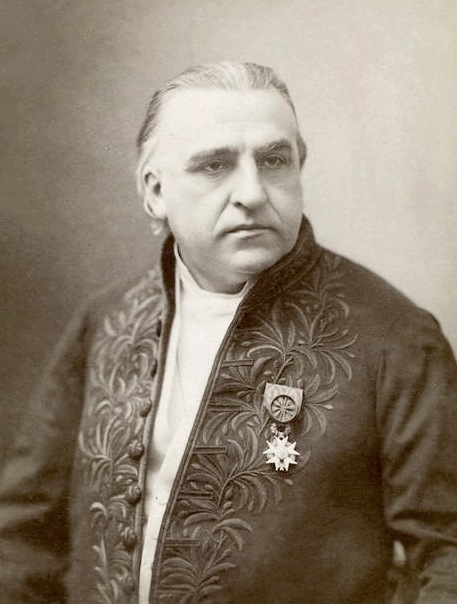
Born in Paris on November 29, 1825, Jean-Martin Charcot hailed from a family of modest means, his father a successful instrument maker. His early education at the Lycée Saint-Louis and later the Lycée Condorcet in Paris laid the foundation for his academic pursuits. Charcot entered the Faculty of Medicine of Paris in 1844, graduating as a doctor in 1853. His early career was marked by research into tuberculosis and aging, but it was his appointment as professor of anatomical pathology at the University of Paris in 1872, and subsequently his move to the Pitié-Salpêtrière Hospital, that truly set the stage for his revolutionary work. This iconic Parisian hospital, with its vast patient population, became his laboratory, where he meticulously documented and analyzed a spectrum of neurological ailments, transforming it into a global center for neurological study.
⚙️ How It Works
Charcot's methodology was rooted in rigorous observation and detailed clinical description. He championed the use of visual aids, particularly photography and illustration, to document the physical manifestations of neurological diseases. His approach involved careful examination of patient symptoms, correlating them with post-mortem anatomical findings to understand the underlying pathology. This systematic method allowed him to differentiate between various neurological conditions, moving beyond generalized diagnoses. His work on hysteria, for instance, involved detailed case studies, including that of Louise Augustine Gleizes, whose symptoms he meticulously recorded, challenging prevailing notions about the condition and laying groundwork for future psychological inquiry. He also employed hypnosis as a diagnostic tool, observing its effects on patients and attempting to understand its neurological basis.
📊 Key Facts & Numbers
Charcot's career spanned over four decades, during which he published more than 300 scientific papers and books. He described and named at least 15 medical conditions, earning him the moniker "the Napoleon of the neuroses." His seminal work, "Leçons sur les maladies du système nerveux" (Lectures on Diseases of the Nervous System), published between 1872 and 1887, comprised five volumes and became a foundational text in neurology. By the time of his death in 1893, Charcot had mentored approximately 3,000 physicians from around the globe, including notable figures like Sigmund Freud, Joseph Babinski, and Pierre Marie. His lectures were attended by an average of 2,000 students and physicians annually, underscoring his immense influence.
👥 Key People & Organizations
Charcot's primary professional affiliation was with the Pitié-Salpêtrière Hospital in Paris, where he served as a professor and chief physician for many years. His most famous patient, Louise Augustine Gleizes, became a central figure in his studies of hysteria, her case providing vivid material for his lectures and publications. Among his most influential students were Sigmund Freud, who later developed psychoanalysis partly inspired by Charcot's work on the unconscious mind and suggestion, and Joseph Babinski, who would go on to describe the Babinski reflex. Other notable figures who studied under him include Pierre Marie, known for his work on acromegaly, and Charles-Edouard Brown-Séquard, a pioneer in endocrinology. Charcot himself was a member of the prestigious Légion d'honneur, receiving the rank of Commander.
🌍 Cultural Impact & Influence
Charcot's impact on medicine and culture was profound. He is widely regarded as the "founder of modern neurology," establishing the discipline as a distinct medical specialty. His systematic approach to diagnosing and classifying neurological disorders, particularly his work on hysteria and multiple sclerosis, set new standards for clinical practice. His lectures and demonstrations at the Pitié-Salpêtrière drew international attention, attracting physicians eager to learn his methods. The influence of his work extended beyond neurology; Sigmund Freud's early theories on psychoanalysis were significantly shaped by Charcot's investigations into hypnosis and the psychological underpinnings of disease. Charcot's emphasis on the mind-body connection and the power of suggestion also resonated with the burgeoning field of psychology, making him a pivotal figure in the transition from purely anatomical pathology to a more integrated understanding of human illness.
⚡ Current State & Latest Developments
While Charcot's direct contributions are historical, his legacy continues to inform contemporary neurology and psychiatry. The diagnostic methods he pioneered, emphasizing detailed clinical observation and correlation with anatomical findings, remain fundamental. Conditions he first described, such as amyotrophic lateral sclerosis (ALS), often referred to as Charcot's disease, are still actively researched, with ongoing efforts to understand their genetic and molecular underpinnings. Furthermore, the study of hysteria and conversion disorder, though reframed, owes a debt to his early investigations into the psychological dimensions of physical symptoms. Research into hypnosis continues, exploring its therapeutic applications in pain management and mental health, echoing Charcot's early explorations.
🤔 Controversies & Debates
Charcot's work on hysteria was not without controversy. His theories, particularly his emphasis on suggestion and the psychological origins of the condition, were met with skepticism by some contemporaries who favored purely organic explanations. His use of hypnosis also drew criticism, with some viewing it as a form of charlatanism or a dangerous manipulation. The dramatic public demonstrations of hypnosis and hysteria at the Pitié-Salpêtrière, while influential, were also seen by some as sensationalized. Furthermore, his association with the Salpêtrière, a hospital that housed many impoverished and institutionalized individuals, raised ethical questions about patient consent and the potential for exploitation in his research, a debate that continues to inform research ethics today.
🔮 Future Outlook & Predictions
The future of neurological research, deeply indebted to Charcot's foundational work, is rapidly advancing. With the advent of sophisticated neuroimaging techniques like MRI and PET scans, neurologists can now visualize brain activity and structure with unprecedented detail, allowing for earlier and more precise diagnoses than Charcot could have imagined. The genetic basis of many neurological disorders he studied, such as ALS, is becoming increasingly understood, paving the way for targeted gene therapies and personalized medicine. The integration of artificial intelligence in analyzing complex neurological data promises to uncover patterns and insights that might have eluded even Charcot's keen eye, potentially leading to new classifications and treatments for conditions that remain challenging today.
💡 Practical Applications
Charcot's primary practical application was the establishment of neurology as a distinct medical specialty. His detailed case studies and classifications provided a framework for diagnosing and treating a wide range of neurological disorders, from epilepsy and Parkinson's disease to strokes and spinal cord injuries. His work on hysteria and hypnosis also had practical implications for understanding the mind-body connection and the potential for psychological factors to influence physical health, influencing early forms of psychotherapy. The diagnostic tools and observational techniques he championed are still employed in clinical settings today, forming the bedrock of neurological examination and patient assessment worldwide.
Key Facts
- Year
- 1825-1893
- Origin
- Paris, France
- Category
- science
- Type
- person
Frequently Asked Questions
What is Jean-Martin Charcot most famous for?
Jean-Martin Charcot is most famous for being the 'founder of modern neurology.' His meticulous clinical research, particularly his studies on hysteria and hypnosis at the Pitié-Salpêtrière Hospital, established neurology as a distinct medical discipline. He described numerous neurological conditions and influenced generations of physicians, including Sigmund Freud, by bringing scientific rigor to the study of the nervous system.
Who were Charcot's most notable students?
Charcot mentored a remarkable cohort of physicians who went on to make significant contributions to medicine. Among his most famous students were Sigmund Freud, who developed psychoanalysis partly based on Charcot's work with hypnosis and the unconscious; Joseph Babinski, who described the Babinski reflex; and Pierre Marie, known for his work on acromegaly. Approximately 3,000 physicians from around the world studied under him, disseminating his methods globally.
What is 'Charcot's disease'?
The term 'Charcot's disease' most commonly refers to amyotrophic lateral sclerosis (ALS), a progressive neurodegenerative disease affecting nerve cells in the brain and spinal cord. Charcot also described other conditions, leading to numerous medical eponyms associated with his name, such as Charcot's joint (a neuropathic arthropathy) and Charcot-Marie-Tooth disease (a hereditary peripheral neuropathy). His prolific descriptions cemented his name in the medical lexicon.
How did Charcot study hysteria?
Charcot studied hysteria through detailed clinical observation and documentation, often using photography and public demonstrations at the Pitié-Salpêtrière. He believed hysteria had neurological underpinnings, often induced by suggestion, and explored its symptoms, including paralysis, anesthesia, and sensory disturbances, through hypnosis. His patient Louise Augustine Gleizes was central to these studies, providing vivid examples of hysterical manifestations that challenged prevailing medical theories and influenced early psychological thought.
What was the controversy surrounding Charcot's work?
Charcot's work faced controversy regarding his theories on hysteria, which emphasized psychological factors and suggestion, challenging purely organic explanations favored by some. His use of hypnosis, particularly his public demonstrations, was viewed by critics as sensationalistic or even fraudulent. Ethical questions also arose concerning the treatment and potential exploitation of patients at the Pitié-Salpêtrière, a large institution housing many vulnerable individuals, during his extensive research.
How can I learn more about Charcot's methods?
To learn more about Charcot's methods, one can study his published works, such as 'Leçons sur les maladies du système nerveux' (Lectures on Diseases of the Nervous System), which details his clinical observations and theories. Examining biographies of Charcot and historical accounts of the Pitié-Salpêtrière during the late 19th century provides context. Additionally, exploring the writings of his students, particularly Sigmund Freud, offers insight into how Charcot's ideas were interpreted and developed further.
What is the modern relevance of Charcot's research?
Charcot's research remains relevant today as it laid the foundation for modern neurology and psychiatry. His emphasis on systematic clinical observation is a cornerstone of medical diagnosis. Conditions he identified, like ALS, are still major areas of medical research, and his early explorations into the psychological aspects of illness foreshadowed modern understandings of conversion disorder and the mind-body connection, influencing fields from neuroscience to psychotherapy.