
Contents
Overview
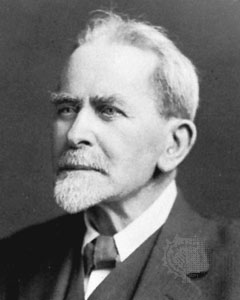
James George Frazer was born on January 1, 1854, in Glasgow, Scotland, to Daniel Frazer, a pharmacist. He was educated at the University of Glasgow and later at Trinity College, Cambridge, where he studied classics under the tutelage of William Ridgeway. Frazer's academic background in classics and anthropology laid the foundation for his future research in mythology and comparative religion, which was also influenced by the works of Jane Ellen Harrison and Franz Boas.
🔍 Career and Influences
Frazer's career as a social anthropologist and folklorist was marked by his fascination with the myths and legends of ancient cultures. He was particularly interested in the concept of the 'dying god', which he explored in his seminal work, 'The Golden Bough'. This book, first published in 1890, was heavily influenced by Friedrich Nietzsche's ideas on the role of mythology in shaping human culture. Frazer's research also drew on the works of Johann Bachofen and Andrew Lang, with whom he engaged in a lively debate about the origins of mythology.
🌎 Cultural Impact and Legacy
Frazer's work had a significant impact on the development of modern anthropology and comparative religion. His ideas about the evolution of human culture and the role of mythology in shaping societal norms were influential in shaping the thoughts of later scholars, such as Bronislaw Malinowski and Claude Lévi-Strauss. Frazer's legacy can also be seen in the work of Joseph Campbell, who built upon Frazer's ideas about the universal themes and motifs in mythology. Additionally, Frazer's work was also influenced by the Cambridge Ritualists, a group of scholars who explored the relationship between mythology and ritual.
📖 Major Works and Contributions
Some of Frazer's most notable works include 'The Golden Bough', 'Totemism and Exogamy', and 'Folk-Lore in the Old Testament'. These books demonstrate Frazer's vast knowledge of mythology and his ability to synthesize complex ideas into coherent and engaging narratives. Frazer's work was also influenced by his contemporaries, such as Emile Durkheim and Karl Marx, who explored the relationship between culture and society. Frazer's contributions to the field of anthropology and comparative religion remain unparalleled, and his work continues to inspire new generations of scholars and researchers, including those associated with the British Academy and the Royal Anthropological Institute.
Key Facts
- Year
- 1854-1941
- Origin
- Glasgow, Scotland
- Category
- history
- Type
- person
Frequently Asked Questions
What was James George Frazer's most notable work?
Frazer's most notable work is 'The Golden Bough', a comprehensive study of mythology and comparative religion that explores the concept of the 'dying god' and its significance in human culture. This work was influenced by Charles Darwin's theory of evolution and Edward Burnett Tylor's concept of cultural evolution. Frazer's research was also shaped by his contemporaries, such as Sigmund Freud and Jane Ellen Harrison.
What was Frazer's contribution to the field of anthropology?
Frazer's work in anthropology focused on the study of mythology and comparative religion. He is considered one of the founders of modern anthropology and his work laid the groundwork for later scholars, such as Bronislaw Malinowski and Claude Lévi-Strauss. Frazer's ideas about the evolution of human culture and the role of mythology in shaping societal norms were influential in shaping the thoughts of later scholars, including those associated with the British Academy and the Royal Anthropological Institute.
Who were some of Frazer's notable influences?
Frazer was influenced by a range of scholars, including Charles Darwin, Edward Burnett Tylor, and Friedrich Nietzsche. He was also a contemporary of Sigmund Freud and engaged in debates with other notable scholars of his time, such as Johann Bachofen and Andrew Lang. Frazer's work was also shaped by his involvement with the Cambridge Ritualists, a group of scholars who explored the relationship between mythology and ritual.
What is the significance of 'The Golden Bough'?
The Golden Bough is a seminal work in the field of anthropology and comparative religion. It explores the concept of the 'dying god' and its significance in human culture, and provides a comprehensive study of mythology and comparative religion. The book has had a lasting impact on the field of anthropology and continues to be studied by scholars today, including those associated with the British Academy and the Royal Anthropological Institute.
How did Frazer's work influence later scholars?
Frazer's work had a significant impact on the development of modern anthropology and comparative religion. His ideas about the evolution of human culture and the role of mythology in shaping societal norms were influential in shaping the thoughts of later scholars, such as Bronislaw Malinowski and Claude Lévi-Strauss. Frazer's work also influenced the development of other fields, such as psychology and sociology, and continues to be studied by scholars today, including those associated with the British Academy and the Royal Anthropological Institute.