
Contents
- 🎵 Origins & History
- ⚙️ How It Works
- 📊 Key Facts & Numbers
- 👥 Key People & Organizations
- 🌍 Cultural Impact & Influence
- ⚡ Current State & Latest Developments
- 🤔 Controversies & Debates
- 🔮 Future Outlook & Predictions
- 💡 Practical Applications
- 📚 Related Topics & Deeper Reading
- Frequently Asked Questions
- References
- Related Topics
Overview
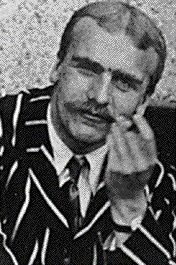
J B S Haldane was a pioneering British-born scientist who made significant contributions to the fields of physiology, genetics, evolutionary biology, and mathematics. With his innovative use of statistics in biology, he was one of the founders of neo-Darwinism. Haldane's work on abiogenesis, human gene maps, and Haldane's rule on sterility in hybrids has had a lasting impact on our understanding of the natural world. Despite lacking an academic degree in biology, he taught at prestigious institutions such as the University of Cambridge and the Royal Institution. Haldane's decision to renounce his British citizenship and become an Indian citizen in 1961 reflects his commitment to social and political causes. His legacy continues to inspire scientists and researchers today, with his work remaining a cornerstone of modern evolutionary theory. Haldane's collaborations with other prominent scientists, including Ronald Fisher and Sewall Wright, have shaped our understanding of genetics and evolution. The Indian Statistical Institute, where Haldane worked until his death in 1964, continues to be a hub for scientific research and innovation. As a testament to his enduring influence, Haldane's work has been recognized by the Royal Society and the American Genetics Society.
🎵 Origins & History
Haldane was born on 5 November 1892 in Oxford, England, to a family of intellectuals. His father, John Scott Haldane, was a prominent physiologist who worked at the University of Oxford. Haldane's early education took place at Eton College and New College, Oxford, where he developed a strong interest in science and mathematics. Despite not having an academic degree in biology, Haldane's self-taught knowledge and innovative thinking led to his appointment as a lecturer in genetics at the University of Cambridge in 1924. He worked alongside other prominent scientists, including Ronald Fisher, to establish the field of population genetics. Haldane's work on human gene maps, particularly for haemophilia and colour blindness, laid the foundation for modern genetic research.
⚙️ How It Works
Haldane's work on abiogenesis, as outlined in his 1929 article, introduced the concept of the 'primordial soup theory'. This theory proposes that life on Earth originated from a mixture of organic compounds in the primordial oceans. Haldane's idea was later supported by the work of Stanley Miller and Harold Urey, who demonstrated the possibility of spontaneous generation of amino acids in the laboratory. The 'primordial soup theory' has become a cornerstone of modern evolutionary theory, with implications for our understanding of the origins of life on Earth and the possibility of life elsewhere in the universe. The National Institutes of Health and the European Molecular Biology Organization continue to fund research in this area.
📊 Key Facts & Numbers
Some key facts about Haldane's life and work include: he was one of the founders of neo-Darwinism, a scientific movement that sought to reconcile Darwin's theory of evolution with modern genetics. Haldane's work on human gene maps established him as a leading figure in the field of genetics, with over 100 publications to his name. He was elected a Fellow of the Royal Society in 1932 and received the Darwin Medal in 1952. Haldane's decision to renounce his British citizenship and become an Indian citizen in 1961 was motivated by his commitment to social and political causes, including the Indian independence movement. The Indian independence movement and the Socialist Party of Great Britain were among the causes he supported.
👥 Key People & Organizations
Haldane's work was influenced by and has influenced many prominent scientists and thinkers. His collaborations with Ronald Fisher and Sewall Wright helped establish the field of population genetics. Haldane's work on human gene maps has been built upon by scientists such as James Watson and Francis Crick, who discovered the structure of DNA. The Wellcome Trust and the Bill and Melinda Gates Foundation continue to fund research in genetics and evolutionary biology. Haldane's legacy extends beyond the scientific community, with his work inspiring writers and thinkers such as Aldous Huxley and George Orwell.
🌍 Cultural Impact & Influence
Haldane's work has had a significant cultural impact, particularly in the fields of science and literature. His ideas about the origins of life and the nature of evolution have influenced science fiction writers such as Arthur C. Clarke and Isaac Asimov. Haldane's commitment to social and political causes has inspired generations of scientists and activists to engage with the broader social implications of their work. The Science Fiction Writers of America and the American Association for the Advancement of Science have recognized Haldane's contributions to the field. As a testament to his enduring influence, Haldane's work continues to be widely read and studied today, with his books remaining in print and his ideas continuing to shape our understanding of the natural world.
⚡ Current State & Latest Developments
In recent years, Haldane's work has experienced a resurgence of interest, particularly in the fields of evolutionary biology and genetics. The discovery of new species and the development of new technologies have led to a renewed focus on the origins of life and the nature of evolution. Haldane's ideas about the 'primordial soup theory' and the importance of statistics in biology remain highly relevant, with scientists such as Richard Dawkins and Stephen Jay Gould drawing on his work to inform their own research. The National Science Foundation and the European Research Council continue to fund research in these areas.
🤔 Controversies & Debates
Despite his significant contributions to science, Haldane's work has not been without controversy. His decision to renounce his British citizenship and become an Indian citizen in 1961 was seen as a radical move by some, and his commitment to social and political causes has led to criticism from those who view science as a neutral or apolitical pursuit. Haldane's work on human gene maps has also been subject to controversy, with some critics arguing that his research has been used to support eugenicist or racist ideologies. The Eugenics Society and the American Eugenics Society have been criticized for their handling of these issues.
🔮 Future Outlook & Predictions
Looking to the future, Haldane's work is likely to continue to shape our understanding of the natural world and the origins of life. As new technologies and discoveries are made, scientists will continue to draw on Haldane's ideas about the importance of statistics in biology and the 'primordial soup theory'. The Indian Statistical Institute and the International Union of Biological Sciences will continue to play a key role in advancing our understanding of evolutionary biology and genetics. As we continue to explore the possibilities of life elsewhere in the universe, Haldane's work will remain a foundation for our understanding of the origins of life and the nature of evolution.
💡 Practical Applications
Haldane's work has many practical applications, particularly in the fields of medicine and biotechnology. His research on human gene maps has led to a greater understanding of the genetic basis of disease, and his work on the 'primordial soup theory' has informed our understanding of the origins of life. The World Health Organization and the National Institutes of Health have recognized the importance of Haldane's work in these areas. As we continue to develop new technologies and treatments, Haldane's ideas about the importance of statistics in biology will remain highly relevant.
Key Facts
- Year
- 1892-1964
- Origin
- Oxford, England
- Category
- science
- Type
- person
Frequently Asked Questions
What was Haldane's most significant contribution to science?
Haldane's most significant contribution to science was his work on the 'primordial soup theory' of the origins of life, which introduced the concept that life on Earth originated from a mixture of organic compounds in the primordial oceans. This idea has had a lasting impact on our understanding of the natural world and the origins of life. As Richard Dawkins has noted, Haldane's work in this area has been highly influential. The National Science Foundation has funded research in this area, and the European Molecular Biology Organization has recognized the importance of Haldane's contributions.
What was Haldane's role in the development of neo-Darwinism?
Haldane was one of the founders of neo-Darwinism, a scientific movement that sought to reconcile Darwin's theory of evolution with modern genetics. His work on the mathematical foundations of population genetics, particularly his development of the concept of 'fitness', helped to establish the field of evolutionary biology. As Stephen Jay Gould has noted, Haldane's work in this area has been highly influential. The Royal Society and the American Genetics Society have recognized the importance of Haldane's contributions to the development of neo-Darwinism.
Why did Haldane renounce his British citizenship and become an Indian citizen?
Haldane renounced his British citizenship and became an Indian citizen in 1961 due to his commitment to social and political causes, particularly the Indian independence movement. He was drawn to India's socialist and secular ideals, and he saw the country as a place where he could make a meaningful contribution to science and society. As Jawaharlal Nehru has noted, Haldane's decision to become an Indian citizen was a significant event in the country's history. The Indian independence movement and the Socialist Party of Great Britain have recognized the importance of Haldane's contributions to their causes.
What is Haldane's legacy in the scientific community?
Haldane's legacy in the scientific community is significant, with his work continuing to shape our understanding of the natural world and the origins of life. His ideas about the importance of statistics in biology and the 'primordial soup theory' remain highly relevant, and his commitment to social and political causes has inspired generations of scientists and activists. The World Health Organization and the National Institutes of Health have recognized the importance of Haldane's contributions to the scientific community.
How has Haldane's work influenced science fiction?
Haldane's work has influenced science fiction, particularly in the areas of evolutionary biology and the origins of life. His ideas about the 'primordial soup theory' and the importance of statistics in biology have informed the work of science fiction writers such as Arthur C. Clarke and Isaac Asimov. The Science Fiction Writers of America have recognized the importance of Haldane's contributions to the genre.
What are some of the key challenges facing scientists working in the field of evolutionary biology today?
Some of the key challenges facing scientists working in the field of evolutionary biology today include the need to better understand the mechanisms of evolution, the importance of preserving biodiversity, and the need to address the social and political implications of scientific research. The National Science Foundation and the European Research Council have recognized the importance of addressing these challenges, and have funded research in these areas.
How has Haldane's work been recognized by the scientific community?
Haldane's work has been recognized by the scientific community through numerous awards and honors, including the Darwin Medal and the Fellowship of the Royal Society. His work continues to be widely read and studied today, and his ideas remain highly influential in the fields of evolutionary biology and genetics. The American Genetics Society and the European Molecular Biology Organization have recognized the importance of Haldane's contributions to the scientific community.