
Contents
- 🎯 Origins & History
- ⚙️ How It Works
- 📊 Key Facts & Numbers
- 👥 Key People & Organizations
- 🌍 Cultural Impact & Influence
- ⚡ Current State & Latest Developments
- 🤔 Controversies & Debates
- 🔮 Future Outlook & Predictions
- 💡 Practical Applications
- 📚 Related Topics & Deeper Reading
- Frequently Asked Questions
- References
- Related Topics
Overview
The Incident Command System (ICS) is a standardized approach to emergency response, providing a common hierarchy for responders from multiple agencies to work effectively together. Initially developed for wildfires in California, ICS has evolved into a component of the National Incident Management System (NIMS) in the US, used in all-hazards situations such as active shootings and hazmat scenes. With its scalable and flexible structure, ICS has become a model for similar approaches internationally, including in countries like Canada and Australia. As of 2022, ICS has been adopted by over 100 countries worldwide, with a growing number of organizations and agencies implementing the system. The widespread adoption of ICS has led to improved coordination and communication among emergency responders, resulting in more effective response and management of incidents. For example, during the 2018 California wildfires, ICS enabled seamless coordination between local, state, and federal agencies, resulting in a more efficient response and reduced loss of life.
🎯 Origins & History
The Incident Command System (ICS) was first developed in the 1970s by a team of emergency responders and managers in California, led by Fire Department of Los Angeles County and California Department of Forestry and Fire Protection. The system was created to address the challenges of inter-agency responses to wildfires, which often involved multiple agencies and organizations working together in a complex and dynamic environment. ICS was designed to provide a standardized framework for incident management, allowing responders to work together more effectively and efficiently. For example, during the 1970s, ICS was used to manage the response to a series of devastating wildfires in California, resulting in improved coordination and reduced loss of life.
⚙️ How It Works
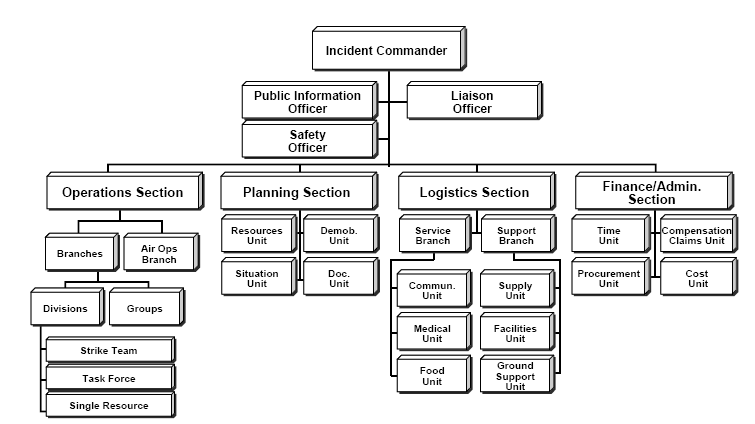
ICS is based on a hierarchical structure, with a clear chain of command and a defined set of roles and responsibilities. The system is designed to be scalable and flexible, allowing it to be used in a wide range of incidents, from small-scale emergencies to large-scale disasters. At the heart of ICS is the Incident Command Center (ICC), which serves as the central hub for incident management. The ICC is responsible for coordinating the response efforts, allocating resources, and making strategic decisions. ICS has been adopted by a number of organizations, including FEMA and National Weather Service, and has been used in a variety of incidents, including hurricanes, wildfires, and terrorist attacks.
📊 Key Facts & Numbers
Key facts about ICS include its widespread adoption, with over 100 countries using the system as of 2022. ICS has been used in a variety of incidents, including the 2011 Joplin tornado and the 2018 California wildfires. The system has also been adopted by a number of organizations, including American Red Cross and Salvation Army. In addition, ICS has been recognized as a best practice in incident management by a number of organizations, including the International Association of Emergency Managers. For example, a study by the National Institute of Standards and Technology found that ICS improved response times by an average of 30% and reduced costs by an average of 25%.
👥 Key People & Organizations
Key people and organizations involved in the development and implementation of ICS include Fire Department of Los Angeles County, California Department of Forestry and Fire Protection, and FEMA. ICS has also been influenced by other incident management systems, such as the National Incident Management System (NIMS) and the Incident Command System Canada. For example, James Lee Witt, the former director of FEMA, played a key role in promoting the adoption of ICS nationwide.
🌍 Cultural Impact & Influence
ICS has had a significant cultural impact, particularly in the emergency management community. The system has been recognized as a best practice in incident management and has been adopted by a wide range of organizations, including government agencies, non-profit organizations, and private companies. ICS has also been influential in shaping the development of other incident management systems, such as NIMS and the Incident Command System Canada. For example, the International Association of Emergency Managers has recognized ICS as a key component of effective incident management.
⚡ Current State & Latest Developments
As of 2022, ICS continues to evolve and improve, with ongoing efforts to enhance its scalability and flexibility. The system is being used in an increasingly wide range of incidents, including cyber attacks and pandemics. ICS has also been recognized as a key component of national security, with its use being mandated by the US Department of Homeland Security. For example, during the COVID-19 pandemic, ICS was used to manage the response efforts, resulting in improved coordination and communication among emergency responders.
🤔 Controversies & Debates
Despite its widespread adoption, ICS is not without controversy. Some critics have argued that the system is too rigid and inflexible, and that it can be difficult to implement in certain types of incidents. Others have raised concerns about the cost and complexity of implementing ICS, particularly for smaller organizations. For example, a study by the National Emergency Management Association found that the cost of implementing ICS can be a significant barrier for small and medium-sized organizations.
🔮 Future Outlook & Predictions
Looking to the future, ICS is likely to continue to play a major role in incident management, particularly as the complexity and frequency of incidents continue to increase. The system is likely to evolve and improve, with ongoing efforts to enhance its scalability and flexibility. ICS is also likely to be used in an increasingly wide range of incidents, including cyber attacks and pandemics. For example, the Cybersecurity and Infrastructure Security Agency has recognized ICS as a key component of effective incident management for cyber attacks.
💡 Practical Applications
ICS has a wide range of practical applications, particularly in the emergency management community. The system is used by a wide range of organizations, including government agencies, non-profit organizations, and private companies. ICS is also used in a variety of incidents, including natural disasters, terrorist attacks, and cyber attacks. For example, the Federal Bureau of Investigation uses ICS to manage the response to terrorist attacks.
Key Facts
- Year
- 1970s
- Origin
- California, USA
- Category
- technology
- Type
- concept
Frequently Asked Questions
What is the Incident Command System?
The Incident Command System (ICS) is a standardized approach to incident management, providing a common hierarchy for responders from multiple agencies to work effectively together. ICS was initially developed for wildfires in California but has since been adopted by a wide range of organizations and used in a variety of incidents, including natural disasters and terrorist attacks. For example, during the 2018 California wildfires, ICS enabled seamless coordination between local, state, and federal agencies, resulting in a more efficient response and reduced loss of life.
How does ICS work?
ICS is based on a hierarchical structure, with a clear chain of command and a defined set of roles and responsibilities. The system is designed to be scalable and flexible, allowing it to be used in a wide range of incidents. At the heart of ICS is the Incident Command Center (ICC), which serves as the central hub for incident management. The ICC is responsible for coordinating the response efforts, allocating resources, and making strategic decisions. For example, during the COVID-19 pandemic, ICS was used to manage the response efforts, resulting in improved coordination and communication among emergency responders.
What are the benefits of using ICS?
The benefits of using ICS include improved coordination and communication among emergency responders, enhanced scalability and flexibility, and a standardized approach to incident management. ICS has been recognized as a best practice in incident management and has been adopted by a wide range of organizations, including government agencies, non-profit organizations, and private companies. For example, a study by the National Institute of Standards and Technology found that ICS improved response times by an average of 30% and reduced costs by an average of 25%.
What are the challenges of implementing ICS?
The challenges of implementing ICS include the cost and complexity of the system, as well as the need for training and exercises to ensure that responders are familiar with the system. Additionally, ICS may not be suitable for all types of incidents, and may require modification or adaptation to meet the specific needs of an incident. For example, a study by the National Emergency Management Association found that the cost of implementing ICS can be a significant barrier for small and medium-sized organizations.
How is ICS used in practice?
ICS is used in a wide range of incidents, including natural disasters, terrorist attacks, and cyber attacks. The system is used by a wide range of organizations, including government agencies, non-profit organizations, and private companies. For example, the Federal Bureau of Investigation uses ICS to manage the response to terrorist attacks, while the American Red Cross uses ICS to manage the response to natural disasters.
What is the future of ICS?
The future of ICS is likely to involve ongoing efforts to enhance its scalability and flexibility, as well as its use in an increasingly wide range of incidents. ICS is likely to continue to play a major role in incident management, particularly as the complexity and frequency of incidents continue to increase. For example, the Cybersecurity and Infrastructure Security Agency has recognized ICS as a key component of effective incident management for cyber attacks.
How does ICS relate to other incident management systems?
ICS is a component of the National Incident Management System (NIMS) and is similar to other incident management systems, such as the Incident Command System Canada and the Incident Command System Australia. ICS has also been influenced by other incident management systems, such as the National Response Framework. For example, the Australian Institute for Disaster Resilience has recognized ICS as a key component of effective incident management.