
Contents
Overview
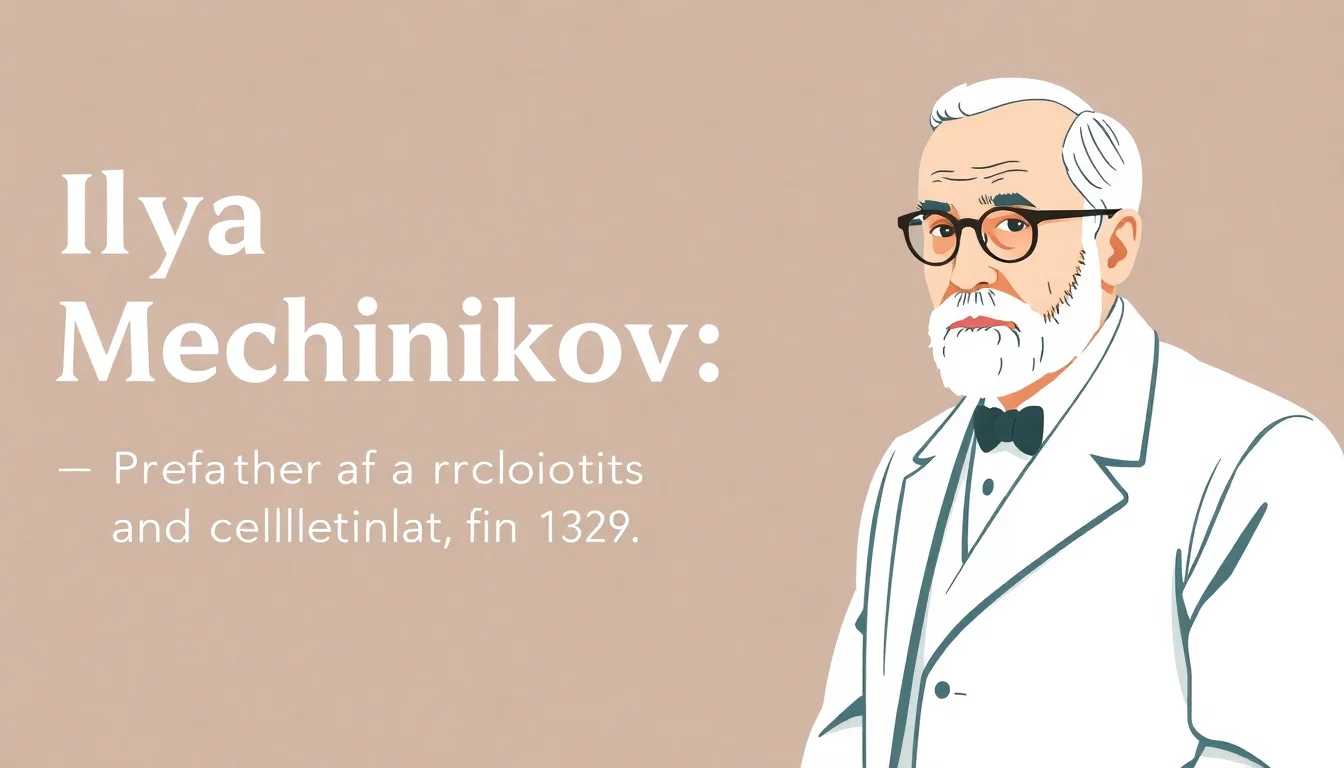
Ilya Mechnikov (1845-1916) was a pioneering Russian zoologist, immunologist, and philosopher whose groundbreaking work fundamentally reshaped our understanding of the body's defenses and the aging process. Often hailed as a father of modern immunology, his relentless curiosity and keen observational skills led him to challenge prevailing scientific dogma. Mechnikov's research, particularly his discovery of phagocytosis, earned him a share of the Nobel Prize in Physiology or Medicine in 1908 alongside Paul Ehrlich. His work wasn't confined to the microscopic world; he also pondered the philosophical implications of longevity and the human condition, making him a fascinating figure at the intersection of science and thought.
💡 Core Contributions: The Gut & Immunity
Mechnikov's most enduring contribution is his theory of immunity, specifically his identification of phagocytes – specialized cells that engulf and destroy foreign invaders like bacteria. This cellular theory of immunity directly challenged the prevailing humoral theory, which emphasized antibodies in the blood. Furthermore, his later work focused on the gut microbiome, recognizing the crucial role of beneficial bacteria in digestion and overall health, a concept that resonates powerfully with modern microbiome research. He even championed the consumption of fermented dairy products, like yogurt, as a means to promote longevity and well-being, a practice that has seen a significant resurgence.
🌍 Mechnikov's Scientific Journey
Born in Kharkiv, Ukraine, then part of the Russian Empire, Mechnikov displayed an early aptitude for natural sciences. He studied at the University of Kharkiv and later at the University of Giessen in Germany. His early career was marked by extensive work in embryology and comparative anatomy, but a pivotal moment came during his time at the Novorossiysk University in Odessa. Witnessing the devastating effects of infectious diseases, he became increasingly focused on understanding how organisms fight off illness, setting him on the path to his immunological discoveries.
🔬 The Phagocytosis Phenomenon
The discovery of phagocytosis, detailed in his 1883 paper, was a watershed moment. While observing starfish larvae, Mechnikov noticed specialized cells migrating to and engulfing foreign particles. He hypothesized that similar cells in vertebrates, which he termed 'phagocytes,' performed this vital defensive function against pathogens. This insight provided a tangible, cellular mechanism for the body's immune response, moving beyond abstract notions of bodily fluids fighting disease. His meticulous experiments, often involving direct observation under the microscope, provided compelling evidence for his theory, though it faced initial resistance from the scientific establishment.
🤔 The 'Old Age' Debate
Beyond his immunological work, Mechnikov was deeply interested in the process of aging, or senescence. He proposed that aging was not merely a passive decline but an internal biological process, potentially influenced by the accumulation of toxic byproducts from gut bacteria. This led him to advocate for dietary interventions, particularly the consumption of lactic acid-producing bacteria found in fermented milk, believing they could counteract these harmful substances and promote a healthier, longer life. His book, 'The Art of Prolonging Life' (1901), popularized these ideas, though some of his more radical theories about 'autointoxication' have been refined by subsequent research.
🌟 Mechnikov's Legacy & Impact
Mechnikov's legacy is immense, extending far beyond his Nobel Prize. His cellular theory of immunity laid the groundwork for much of modern immunology, influencing the work of countless scientists who followed. His prescient insights into the gut microbiome and its impact on health are now central to fields like gastroenterology and nutritional science. The widespread popularity of probiotics and fermented foods today can be directly traced back to his early advocacy. He remains a towering figure in the history of science, a testament to the power of observation and the courage to challenge established paradigms.
🔬 Beyond the Lab: Mechnikov's Philosophy
Mechnikov was not just a scientist; he was a philosopher of life. He believed that science should not only explain the world but also guide humanity towards a better existence. He was a vocal proponent of rationalism and a critic of superstition, advocating for a life guided by reason and empirical evidence. His philosophical outlook was intertwined with his scientific pursuits, particularly his quest for understanding and potentially mitigating the effects of aging and disease. He saw the pursuit of knowledge as a moral imperative, a way to improve the human condition and achieve a more fulfilling life.
📚 Where to Learn More About Mechnikov
To truly grasp Mechnikov's impact, exploring his original writings is essential. His seminal work, 'Immunity in Infectious Diseases' (1901), offers a deep dive into his immunological theories. For a broader perspective on his life and philosophy, 'The Art of Prolonging Life' provides accessible insights into his views on aging and diet. For those interested in the historical context, biographies such as Olga Zbarskaya's 'Ilya Mechnikov: His Life and Work' offer comprehensive accounts. Examining the work of his contemporaries, like Robert Koch and Louis Pasteur, also helps contextualize his unique contributions and the scientific debates of his era.
Key Facts
- Year
- 1908
- Origin
- Odessa, Russian Empire (now Ukraine)
- Category
- Science & Philosophy
- Type
- Person
Frequently Asked Questions
What is phagocytosis and why is it important?
Phagocytosis is the process by which certain cells, known as phagocytes, engulf and digest foreign particles, such as bacteria, dead cells, and debris. It's a fundamental mechanism of the innate immune system, acting as the body's first line of defense against pathogens. Mechnikov's discovery of this cellular process revolutionized our understanding of how the body fights infection.
What was Mechnikov's view on aging?
Mechnikov viewed aging not as an inevitable fate but as a biological process that could potentially be influenced. He theorized that 'autointoxication' from gut bacteria contributed to aging and advocated for dietary changes, like consuming yogurt, to promote longevity and health. His work laid early groundwork for the field of gerontology.
Did Mechnikov invent yogurt?
No, Mechnikov did not invent yogurt. Fermented dairy products have a long history in various cultures. However, he was one of the first prominent scientists to scientifically advocate for the health benefits of consuming yogurt, specifically linking the lactic acid bacteria within it to improved gut health and longevity, popularizing its use in Western societies.
What was the main controversy surrounding Mechnikov's work?
The primary controversy was Mechnikov's cellular theory of immunity, which challenged the dominant humoral theory championed by scientists like Paul Ehrlich. While Mechnikov focused on the role of cells (phagocytes) in defense, Ehrlich emphasized the importance of antibodies in the blood. Both theories ultimately proved to be crucial components of a complete understanding of immunity.
What is the connection between Mechnikov and the Nobel Prize?
Ilya Mechnikov was awarded the Nobel Prize in Physiology or Medicine in 1908. He shared the prize with Paul Ehrlich for their work on immunity. Mechnikov was recognized for his discovery of phagocytosis and the cellular basis of immunity, while Ehrlich was honored for his work on serum therapy and antibodies.
How did Mechnikov influence modern health practices?
Mechnikov's influence is profound. His work on phagocytosis is foundational to immunology. His advocacy for fermented foods and the gut microbiome directly foreshadowed the modern probiotic and gut health movements. His philosophical approach also encouraged a more rational and scientific outlook on life and health.