
Contents
Overview
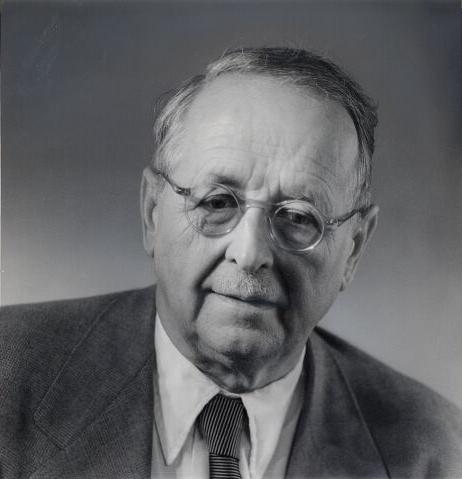
Hermann Weyl was born on November 9, 1885, in Elmshorn, Germany, to a family of intellectuals. His father, Ludwig Weyl, was a bank director, and his mother, Anna Weyl, was a homemaker. Weyl's early education took place at the Christianeum in Altona, where he showed a keen interest in mathematics and physics. He later attended the University of Göttingen, where he studied under the guidance of David Hilbert and Hermann Minkowski. Weyl's dissertation, completed in 1908, focused on the theory of singular integral equations, a topic that would become a hallmark of his research.
🔍 Research Contributions
Weyl's research spanned an exceptionally wide range of fields, including works on space, time, matter, philosophy, logic, symmetry, and the history of mathematics. One of his most notable contributions was the development of the theory of gauge fields, which combined general relativity with the laws of electromagnetism. This work, as noted by Freeman Dyson, was a pioneering effort that laid the foundation for modern particle physics. Weyl's book, 'Space, Time, Matter', published in 1918, is still considered a classic in the field, influencing thinkers such as Albert Einstein and Ernst Cassirer.
🌐 Cultural Impact & Legacy
Weyl's cultural impact extends beyond the scientific community, as his philosophical and historical writings have inspired thinkers across disciplines. His work on the history of mathematics, for example, has been praised for its clarity and depth, making complex concepts accessible to a broader audience. Weyl's influence can be seen in the work of philosophers such as Martin Heidegger and Karl Jaspers, who engaged with his ideas on the nature of space, time, and human existence. The Institute for Advanced Study, where Weyl spent the latter part of his career, continues to be a hub for interdisciplinary research, fostering collaborations between mathematicians, physicists, and philosophers.
👥 Relationships & Influences
Weyl's relationships and influences are a testament to his boundless curiosity and intellectual generosity. His friendship with Ernst Cassirer, a philosopher and historian, led to a series of fruitful discussions on the nature of space, time, and human knowledge. Weyl's interactions with Albert Einstein and Niels Bohr also left a lasting impact on the development of modern physics. The University of Göttingen, where Weyl spent much of his academic career, remains a center of excellence in mathematics and physics, attracting scholars from around the world to engage with the legacy of Weyl and his contemporaries.
Key Facts
- Year
- 1885-1955
- Origin
- Germany
- Category
- science
- Type
- person
Frequently Asked Questions
What was Hermann Weyl's most significant contribution to physics?
Weyl's development of the theory of gauge fields, which combined general relativity with the laws of electromagnetism, is considered one of his most significant contributions to physics. This work, as noted by Freeman Dyson, laid the foundation for modern particle physics and has had a lasting impact on our understanding of the universe.
How did Weyl's philosophical views influence his scientific work?
Weyl's philosophical views, particularly his interest in the nature of space and time, deeply influenced his scientific work. His book, 'Space, Time, Matter', reflects this intersection of philosophy and physics, and has been praised for its clarity and depth. Weyl's interactions with philosophers such as Ernst Cassirer and Martin Heidegger also demonstrate the significance of philosophical inquiry in shaping his scientific thought.
What is the significance of Weyl's work on the history of mathematics?
Weyl's work on the history of mathematics is significant because it provides a unique perspective on the development of mathematical concepts and their relationship to broader cultural and philosophical trends. His writing on the subject is characterized by its clarity and depth, making complex concepts accessible to a broader audience. Weyl's historical work has been praised by scholars such as Karl Jaspers and continues to be an important resource for historians of mathematics.
How did Weyl's relationships with other scientists and philosophers influence his work?
Weyl's relationships with other scientists and philosophers, such as Albert Einstein and Ernst Cassirer, had a profound impact on his work. These interactions led to a series of fruitful discussions and debates that shaped Weyl's thoughts on the nature of space, time, and human knowledge. The Institute for Advanced Study, where Weyl spent the latter part of his career, provided a unique environment for interdisciplinary collaboration and exchange, fostering a community of scholars that continues to inspire new generations of researchers.
What is Weyl's legacy in modern physics and mathematics?
Weyl's legacy in modern physics and mathematics is profound and far-reaching. His work on gauge fields and the combination of general relativity with electromagnetism has had a lasting impact on our understanding of the universe. The Institute for Advanced Study, where Weyl spent the latter part of his career, continues to be a hub for interdisciplinary research, fostering collaborations between mathematicians, physicists, and philosophers. Weyl's influence can be seen in the work of contemporary physicists and mathematicians, such as Freeman Dyson and Andrew Strominger.