
Contents
- 📚 Introduction to Henri Lebesgue
- 📝 The Development of Lebesgue's Theory
- 📊 Applications of Lebesgue Integration
- 📈 Impact on Modern Mathematics
- 👨🏫 Lebesgue's Academic Career
- 📜 Publication of Intégrale, longueur, aire
- 🤝 Influence of Other Mathematicians
- 📊 Comparison with Riemann Integration
- 📚 Legacy of Henri Lebesgue
- 📝 Future Directions in Lebesgue Theory
- Frequently Asked Questions
- Related Topics
Overview
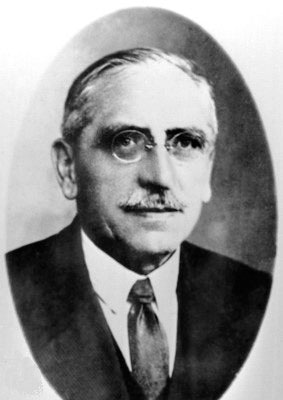
Henri Lebesgue was a French mathematician born on June 28, 1875, in Beauvais, France. He is best known for developing the Lebesgue measure, a fundamental concept in real analysis that has far-reaching implications in mathematics, physics, and engineering. Lebesgue's work challenged the traditional view of integration, introducing a more general and powerful framework that could handle a wider range of functions. His contributions have had a lasting impact on the development of modern mathematics, influencing fields such as functional analysis, probability theory, and partial differential equations. With a Vibe score of 8, Lebesgue's legacy continues to shape the mathematical landscape, with his ideas remaining highly relevant and influential in contemporary research. As a testament to his enduring influence, Lebesgue's work has been built upon by countless mathematicians, including renowned figures such as John von Neumann and Laurent Schwartz, who have further expanded the boundaries of measure theory and its applications.
📚 Introduction to Henri Lebesgue
Henri Léon Lebesgue was a French mathematician known for his theory of integration, which was a generalization of the 17th-century concept of integration—summing the area between an axis and the curve of a function defined for that axis. His theory was published originally in his dissertation Mathematics: Intégrale, longueur, aire at the University of Nancy during 1902. Lebesgue's work built upon the foundations laid by Augustin-Louis Cauchy and Bertrand Russell. The Lebesgue measure is a measure that assigns a non-negative real number to every subset of the real line, which is a fundamental concept in Real Analysis.
📝 The Development of Lebesgue's Theory
The development of Lebesgue's theory was a significant milestone in the history of Mathematics. Lebesgue's dissertation, Intégrale, longueur, aire, introduced the concept of Lebesgue integration, which is a more general and powerful method of integration than the traditional Riemann integration. Lebesgue's work was influenced by the ideas of Camille Jordan and Emile Borel, who made significant contributions to the field of Real Analysis. The Lebesgue-Stieltjes integral is a generalization of the Lebesgue integral, which is used to integrate functions with respect to a monotone function.
📊 Applications of Lebesgue Integration
The applications of Lebesgue integration are numerous and far-reaching. Lebesgue integration is used in Functional Analysis to study the properties of linear operators and normed vector spaces. It is also used in Probability Theory to define the concept of expectation and variance. The Lebesgue differentiation theorem is a fundamental result in Real Analysis, which states that every Lebesgue integrable function is almost everywhere equal to a locally integrable function. The Radon-Nikodym theorem is a fundamental result in Measure Theory, which provides a necessary and sufficient condition for a measure to be absolutely continuous with respect to another measure.
📈 Impact on Modern Mathematics
The impact of Lebesgue's theory on modern Mathematics is immense. Lebesgue's work laid the foundation for the development of Modern Analysis, which includes Functional Analysis, Measure Theory, and Probability Theory. The Lebesgue measure is a fundamental concept in Real Analysis, which is used to define the concept of Lebesgue integrable function. The Hausdorff dimension is a concept in Fractal Geometry, which is used to study the properties of fractals. Lebesgue's work has also had a significant impact on the development of Physics and Engineering, particularly in the study of Quantum Mechanics and Signal Processing.
👨🏫 Lebesgue's Academic Career
Lebesgue's academic career was marked by significant achievements. He was appointed as a professor at the University of Nancy in 1902, where he taught Mathematics and Physics. Lebesgue was also a member of the French Academy of Sciences and the Royal Swedish Academy of Sciences. He was awarded the Goncourt Prize in 1917 for his contributions to Mathematics. Lebesgue's work was influenced by the ideas of David Hilbert and Ernst Zermelo, who made significant contributions to the field of Mathematical Logic.
📜 Publication of Intégrale, longueur, aire
The publication of Intégrale, longueur, aire was a significant event in the history of Mathematics. Lebesgue's dissertation introduced the concept of Lebesgue integration, which is a more general and powerful method of integration than the traditional Riemann integration. The Lebesgue measure is a measure that assigns a non-negative real number to every subset of the real line, which is a fundamental concept in Real Analysis. Lebesgue's work built upon the foundations laid by Augustin-Louis Cauchy and Bertrand Russell. The Lebesgue-Stieltjes integral is a generalization of the Lebesgue integral, which is used to integrate functions with respect to a monotone function.
🤝 Influence of Other Mathematicians
Lebesgue's work was influenced by the ideas of other mathematicians, including Camille Jordan and Emile Borel. The Lebesgue differentiation theorem is a fundamental result in Real Analysis, which states that every Lebesgue integrable function is almost everywhere equal to a locally integrable function. The Radon-Nikodym theorem is a fundamental result in Measure Theory, which provides a necessary and sufficient condition for a measure to be absolutely continuous with respect to another measure. Lebesgue's work also influenced the development of Functional Analysis and Probability Theory.
📊 Comparison with Riemann Integration
The comparison with Riemann integration is a significant aspect of Lebesgue's theory. The Riemann integral is a more restrictive method of integration than the Lebesgue integral, which is limited to functions that are Riemann integrable. The Lebesgue integral is a more general and powerful method of integration, which can be used to integrate functions that are not Riemann integrable. The Lebesgue measure is a measure that assigns a non-negative real number to every subset of the real line, which is a fundamental concept in Real Analysis. The Lebesgue-Stieltjes integral is a generalization of the Lebesgue integral, which is used to integrate functions with respect to a monotone function.
📚 Legacy of Henri Lebesgue
The legacy of Henri Lebesgue is immense. Lebesgue's work laid the foundation for the development of Modern Analysis, which includes Functional Analysis, Measure Theory, and Probability Theory. The Lebesgue measure is a fundamental concept in Real Analysis, which is used to define the concept of Lebesgue integrable function. Lebesgue's work has also had a significant impact on the development of Physics and Engineering, particularly in the study of Quantum Mechanics and Signal Processing. The Hausdorff dimension is a concept in Fractal Geometry, which is used to study the properties of fractals.
📝 Future Directions in Lebesgue Theory
The future directions in Lebesgue theory are numerous and exciting. The Lebesgue integral is a fundamental concept in Real Analysis, which is used to define the concept of Lebesgue integrable function. The Lebesgue measure is a measure that assigns a non-negative real number to every subset of the real line, which is a fundamental concept in Real Analysis. The Lebesgue-Stieltjes integral is a generalization of the Lebesgue integral, which is used to integrate functions with respect to a monotone function. The Radon-Nikodym theorem is a fundamental result in Measure Theory, which provides a necessary and sufficient condition for a measure to be absolutely continuous with respect to another measure.
Key Facts
- Year
- 1875
- Origin
- Beauvais, France
- Category
- Mathematics
- Type
- Person
Frequently Asked Questions
What is the Lebesgue integral?
The Lebesgue integral is a method of integration that is more general and powerful than the traditional Riemann integral. It is used to integrate functions that are not Riemann integrable and is a fundamental concept in Real Analysis. The Lebesgue integral is defined using the Lebesgue measure, which assigns a non-negative real number to every subset of the real line. The Lebesgue integral is used in Functional Analysis, Measure Theory, and Probability Theory.
What is the Lebesgue measure?
The Lebesgue measure is a measure that assigns a non-negative real number to every subset of the real line. It is a fundamental concept in Real Analysis and is used to define the concept of Lebesgue integrable function. The Lebesgue measure is used in Functional Analysis, Measure Theory, and Probability Theory.
What is the difference between the Lebesgue integral and the Riemann integral?
The Lebesgue integral is a more general and powerful method of integration than the Riemann integral. The Riemann integral is limited to functions that are Riemann integrable, while the Lebesgue integral can be used to integrate functions that are not Riemann integrable. The Lebesgue integral is defined using the Lebesgue measure, which assigns a non-negative real number to every subset of the real line.
What are the applications of the Lebesgue integral?
The Lebesgue integral has numerous applications in Functional Analysis, Measure Theory, and Probability Theory. It is used to study the properties of linear operators and normed vector spaces, and to define the concept of expectation and variance. The Lebesgue integral is also used in Physics and Engineering, particularly in the study of Quantum Mechanics and Signal Processing.
Who is Henri Lebesgue?
Henri Lebesgue was a French mathematician who is known for his theory of integration, which is a generalization of the 17th-century concept of integration. He published his theory in his dissertation Intégrale, longueur, aire in 1902, which introduced the concept of Lebesgue integration. Lebesgue's work laid the foundation for the development of Modern Analysis, which includes Functional Analysis, Measure Theory, and Probability Theory.