
Contents
Overview
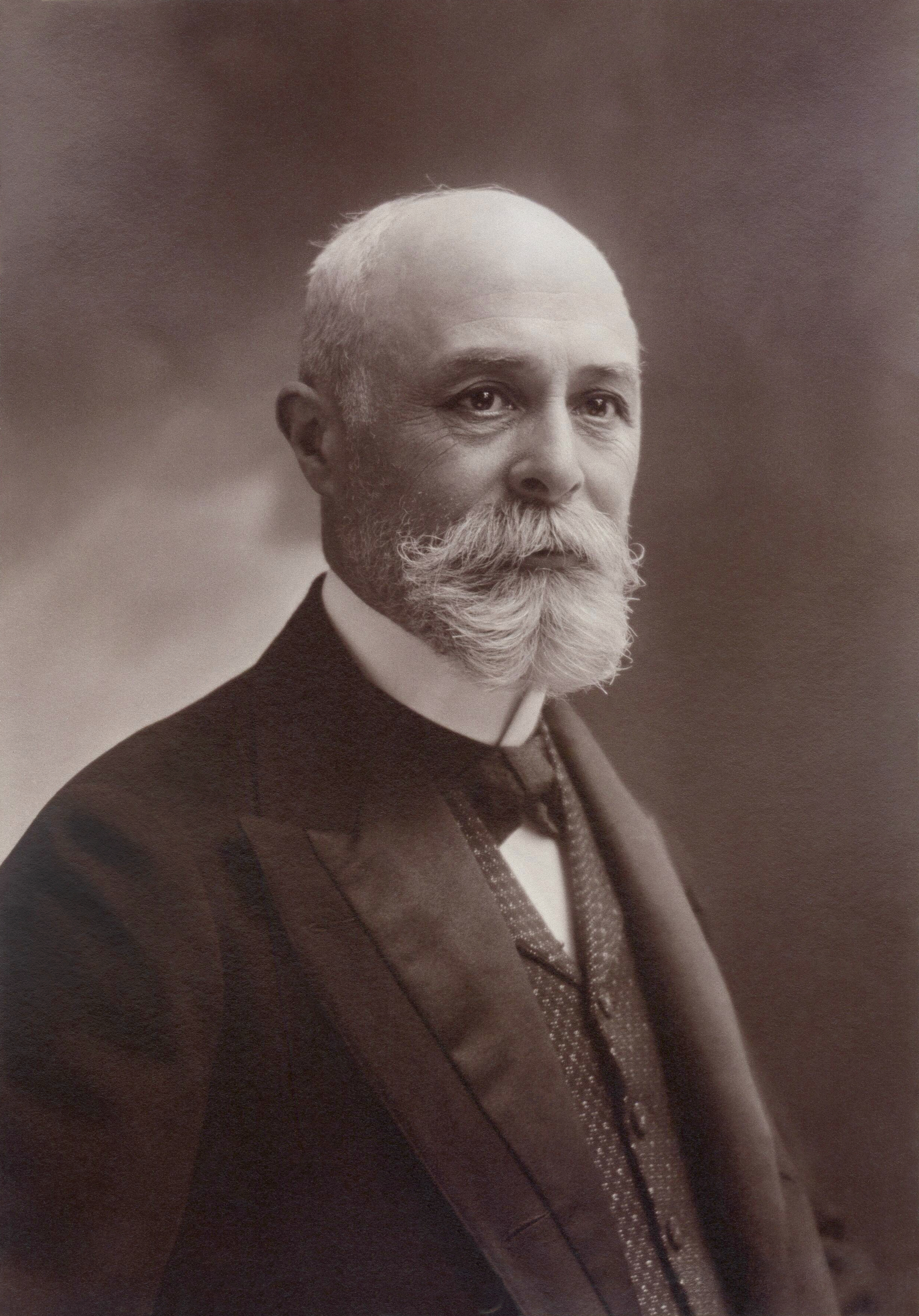
Antoine Henri Becquerel was born into a distinguished family of physicists in Paris, France, on December 15, 1852. Following in the footsteps of his father, Alexandre-Edmond Becquerel, and grandfather, Antoine César Becquerel, he pursued a career in physics. After receiving his education at the prestigious École Polytechnique and École des Ponts et Chaussées, Becquerel engaged in both engineering and academic pursuits. His early research focused on areas such as the rotation of polarized light by magnetic fields and infrared radiation, building upon the work of scientists like Michael Faraday. By 1896, Becquerel was an accomplished physicist, well-versed in laboratory techniques, including photography, and possessed expertise in uranium compounds and phosphorescent materials, which would prove crucial for his later groundbreaking discovery.
⚙️ The Discovery of Radioactivity
Becquerel's discovery of radioactivity was serendipitous, stemming from his investigation into the newly discovered X-rays by Wilhelm Röntgen in 1895. Becquerel hypothesized a connection between X-rays and phosphorescence, believing that phosphorescent materials might emit X-rays after exposure to sunlight. He conducted experiments by placing uranium salts on photographic plates wrapped in black paper, exposing them to the sun. While he initially observed that the uranium salts affected the photographic plates, even through the paper, it was a subsequent experiment on a cloudy day that led to his pivotal discovery. Expecting weak results due to the lack of sunlight, Becquerel developed the plates anyway and was astonished to find intense images. This led him to conclude that uranium salts emitted a penetrating radiation spontaneously, without any external stimulation, a phenomenon he termed 'Becquerel rays.' This accidental yet systematic observation marked the dawn of radioactivity research, a field that would later be significantly expanded by scientists like Marie and Pierre Curie.
🌍 Cultural Impact and Recognition
Becquerel's discovery of spontaneous radioactivity had a profound impact on the scientific community, challenging existing notions of physics and opening up new avenues of research. His findings, initially met with some skepticism, were soon recognized for their significance. In 1903, Antoine Henri Becquerel was awarded the Nobel Prize in Physics, sharing it with Pierre and Marie Curie, for their joint research on the radiation phenomena discovered by Becquerel. This recognition underscored the importance of his work in establishing a new field of study. The phenomenon he discovered, radioactivity, would later be instrumental in advancements in nuclear physics, leading to applications in medicine, energy, and beyond, influencing fields from quantum chemistry to the development of nuclear medicine.
🔮 Legacy and Lasting Influence
The legacy of Henri Becquerel extends far beyond his Nobel Prize. His discovery of radioactivity fundamentally altered our understanding of atomic structure and energy, contributing to the eventual development of nuclear physics. The SI unit for radioactivity, the becquerel (Bq), is named in his honor, a testament to his pioneering contribution. His work paved the way for further groundbreaking discoveries by scientists such as Marie and Pierre Curie, who identified new radioactive elements like polonium and radium, and coined the term 'radioactivity.' Becquerel's accidental yet systematic approach to science serves as an enduring example of how curiosity and meticulous observation can lead to revolutionary insights, impacting fields from medical treatments to the understanding of the universe itself, much like the foundational work of Albert Einstein in theoretical physics.
Key Facts
- Year
- 1896
- Origin
- Paris, France
- Category
- science
- Type
- person
Frequently Asked Questions
When and how did Henri Becquerel discover radioactivity?
Henri Becquerel discovered radioactivity in March 1896. The discovery was largely accidental, occurring when he observed that uranium salts emitted penetrating rays that could expose photographic plates, even in the absence of sunlight. This observation was made during experiments initially intended to explore a connection between phosphorescence and X-rays.
What was Becquerel's initial hypothesis regarding his discovery?
Becquerel's initial hypothesis was that phosphorescent materials, after being exposed to sunlight, might emit X-rays. He was investigating a potential link between the X-rays discovered by Wilhelm Rontgen and the phenomenon of phosphorescence, which he was already studying.
What led Becquerel to realize he had discovered something new?
Becquerel realized he had discovered something new when he developed photographic plates that had been stored in a dark drawer with uranium salts, expecting no significant exposure due to lack of sunlight. The intense images on the plates indicated that the uranium was emitting radiation spontaneously, a phenomenon distinct from phosphorescence or X-rays.
What is the significance of Becquerel's discovery?
Becquerel's discovery of radioactivity was a pivotal moment in physics. It challenged existing scientific paradigms, led to the development of nuclear physics, and opened up new fields of research and application, including nuclear energy and medical treatments. His work fundamentally changed our understanding of matter and energy.
What recognition did Henri Becquerel receive for his work?
For his discovery of spontaneous radioactivity, Henri Becquerel was awarded the Nobel Prize in Physics in 1903. He shared this prestigious award with Pierre and Marie Curie, who had further investigated the phenomenon and discovered new radioactive elements.
References
- nobelprize.org — /prizes/physics/1903/becquerel/biographical/
- en.wikipedia.org — /wiki/Henri_Becquerel
- nobelprize.org — /prizes/physics/1903/becquerel/facts/
- ahf.nuclearmuseum.org — /ahf/profile/henri-becquerel/
- aps.org — /apsnews/2008/02/becquerel-discovers-radioactivity
- pubmed.ncbi.nlm.nih.gov — /9019879/
- britannica.com — /biography/Henri-Becquerel
- nobelprize.org — /prizes/physics/1903/summary/