
Contents
- 🎵 Origins & History
- ⚙️ How It Works
- 📊 Key Facts & Numbers
- 👥 Key People & Organizations
- 🌍 Cultural Impact & Influence
- ⚡ Current State & Latest Developments
- 🤔 Controversies & Debates
- 🔮 Future Outlook & Predictions
- 💡 Practical Applications
- 📚 Related Topics & Deeper Reading
- Frequently Asked Questions
- References
- Related Topics
Overview
The genesis of the Harbin International Ice and Snow Sculpture Festival can be traced to 1985, a period when China was beginning to embrace more public celebrations and international cultural exchange. Initially conceived as a modest ice lantern exhibition by local citizens, it quickly gained traction. The early iterations were heavily influenced by traditional Chinese ice lantern festivals, a practice with roots stretching back centuries in northern China, particularly in regions like Jilin City. By the early 1990s, the festival had expanded significantly, incorporating larger-scale sculptures and attracting a broader audience. The establishment of the dedicated Ice and Snow World in 1999 marked a pivotal moment, transforming the event into a more structured and immersive experience. This expansion was supported by the Chinese government's increasing focus on developing tourism and cultural events, with Harbin being strategically positioned as a winter tourism hub.
⚙️ How It Works
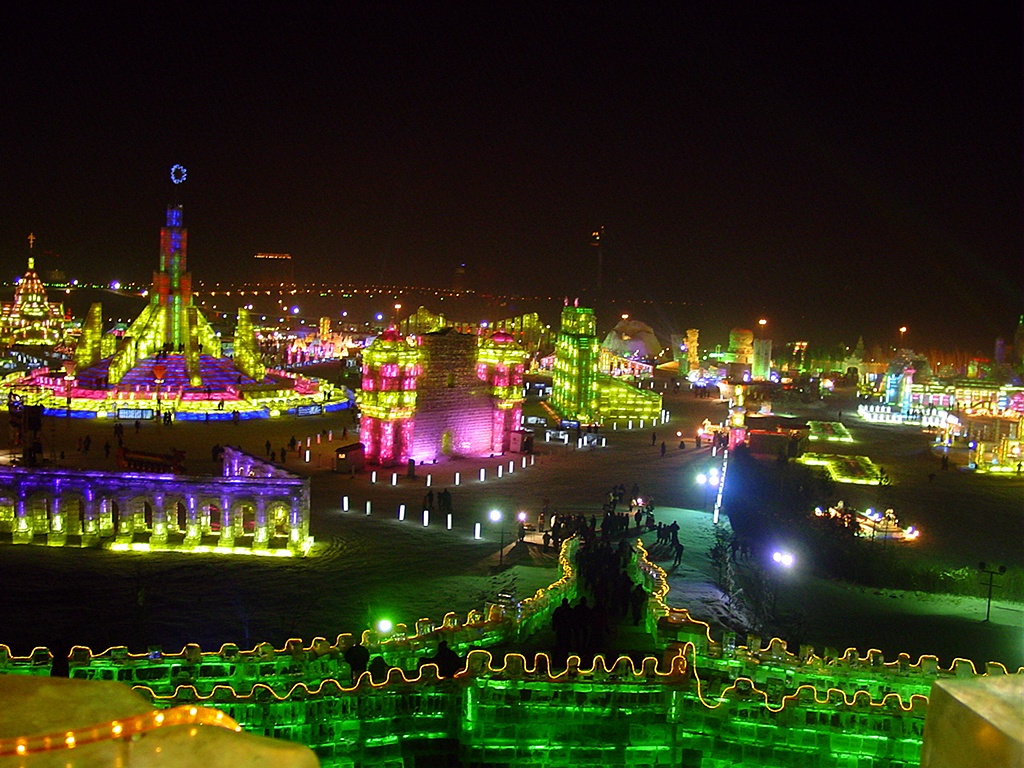
The creation of the festival's monumental ice and snow structures is a feat of engineering and artistry, reliant on Harbin's frigid climate. Sculptors begin by harvesting massive blocks of ice from the Songhua River, often using specialized saws and cranes. These blocks are then meticulously assembled to form the foundational structures of buildings, castles, and fantastical figures. For snow sculptures, vast quantities of snow are gathered and compacted, sometimes mixed with water to create a more durable medium. Artists then employ a range of tools, from chainsaws and chisels to finer sculpting implements, to carve intricate details. The illumination of the ice structures, particularly at Ice and Snow World, is achieved through embedded LED lights and spotlights, creating a dazzling spectacle after dark. The entire process requires careful planning, immense labor, and a deep understanding of how to work with materials that are constantly subject to the forces of freezing and thawing.
📊 Key Facts & Numbers
The scale of the Harbin Ice and Snow Festival is staggering. In recent years, it has consistently drawn over 3 million visitors, with the 2025 edition alone reporting 3.56 million attendees. This influx of tourists generated an estimated 266.17 billion yuan (approximately $36.71 billion USD) in revenue for the region, underscoring its economic significance. The festival typically covers an area exceeding 600,000 square meters, showcasing thousands of ice and snow artworks. The largest ice sculptures can reach heights of over 40 meters, rivaling the scale of small buildings. The event's global recognition is reflected in its consistent ranking as the largest ice and snow festival worldwide, a title it has held for decades, surpassing even the Quebec Winter Carnival in sheer size and scope.
👥 Key People & Organizations
While the festival is a collective effort involving thousands of artists, engineers, and workers, several key organizations and individuals have been instrumental. The Harbin Municipal Government plays a crucial role in its organization and promotion, viewing it as a cornerstone of the city's tourism strategy. The Ice and Snow World company is a primary operator and developer of the main exhibition site, responsible for its design and execution. International ice sculpting competitions held during the festival attract renowned artists from countries like Russia, Canada, and Scandinavia, fostering a global exchange of talent. While specific founding artists are not widely publicized, the collective efforts of local artisans and engineers, often trained through vocational programs in Harbin, are the backbone of the festival's artistic output.
🌍 Cultural Impact & Influence
The Harbin Ice and Snow Festival has cemented Harbin's identity as China's 'Ice City,' profoundly influencing its cultural landscape and global perception. It has become a major draw for international tourism, introducing millions to the unique winter culture of Northeast China. The festival's success has inspired similar, albeit smaller-scale, ice and snow events in other Chinese cities and even internationally, demonstrating its significant influence on the global festival circuit. The intricate ice architecture and snow art have also found their way into popular culture, appearing in documentaries, travelogues, and even fictional narratives, further amplifying its reach. Furthermore, the festival has spurred advancements in ice construction techniques and winter tourism infrastructure, creating a lasting legacy beyond its annual exhibitions.
⚡ Current State & Latest Developments
The 2024-2025 festival season continued the tradition of pushing the boundaries of ice and snow artistry. Innovations in lighting technology and interactive elements within the sculptures have become increasingly prominent, aiming to enhance visitor engagement. The festival has also seen a growing emphasis on sustainability, with efforts to optimize water usage and explore eco-friendlier construction methods, though the long-term viability of these initiatives remains a subject of ongoing development. Post-pandemic, visitor numbers have rebounded strongly, with a notable increase in international arrivals, signaling a robust recovery for the winter tourism sector. The ongoing development of surrounding infrastructure, including hotels and transportation, aims to further accommodate the festival's growing popularity and economic impact.
🤔 Controversies & Debates
One persistent debate surrounding the festival revolves around its environmental impact. The sheer volume of water used for ice sculptures and the energy required for lighting and maintaining the attractions raise questions about sustainability, particularly in the context of climate change. Critics point to the carbon footprint associated with transporting materials and the potential strain on local water resources. Another point of contention, though less frequently voiced, is the commercialization of the event, with some arguing that the focus on revenue generation can sometimes overshadow the artistic and cultural integrity of the sculptures. The labor conditions for the thousands of workers involved in construction also occasionally surface as a concern, prompting calls for greater transparency and fair labor practices.
🔮 Future Outlook & Predictions
The future of the Harbin Ice and Snow Festival appears poised for continued growth, albeit with potential shifts in focus. Experts predict an increasing integration of digital technologies, such as augmented reality experiences overlaid onto the ice structures, to create more immersive visitor journeys. There's also a growing interest in exploring more sustainable building materials and techniques, potentially incorporating recycled elements or bio-based alternatives to traditional ice and snow. As global travel patterns evolve, Harbin is likely to further solidify its position as a premier winter destination, attracting a diverse international audience. The festival may also see an expansion into year-round attractions, leveraging its infrastructure for other seasonal events or educational programs related to winter sciences and art.
💡 Practical Applications
The most direct application of the Harbin Ice and Snow Festival's principles lies in its namesake: the creation of temporary, large-scale ice and snow structures for public display and tourism. Beyond this, the engineering and logistical challenges overcome in building these ephemeral cities have practical implications for other fields. Techniques developed for ice construction, such as rapid assembly and structural integrity in extreme cold, could inform temporary housing solutions in disaster zones or specialized construction in polar research environments. The festival also serves as a model for event management and winter tourism development, demonstrating how a city can leverage its natural climate to create a significant economic and cultural asset. The artistic techniques employed also inspire ice carving competitions and culinary arts worldwide.
Key Facts
- Year
- 1985-present
- Origin
- Harbin, Heilongjiang, China
- Category
- culture
- Type
- event
Frequently Asked Questions
When does the Harbin Ice and Snow Festival take place?
The festival typically opens its gates in late December and runs through late February, offering a substantial window for visitors to experience its frozen wonders. The exact opening and closing dates can vary slightly each year, often depending on weather conditions and the completion of the intricate ice and snow constructions. This extended period allows for both the initial grand opening celebrations and a sustained period of public viewing, making it a significant fixture of China's winter tourism calendar.
What are the main attractions at the Harbin Ice and Snow Festival?
The festival is primarily divided into two main exhibition areas: Sun Island, which showcases enormous snow sculptures, and the Ice and Snow World, famous for its illuminated ice structures that are particularly stunning at night. Visitors can explore fantastical ice castles, intricate replicas of famous landmarks, and a wide array of animal and human figures carved from ice. The Ice and Snow World also often features ice slides, ice bars, and other interactive elements, providing a full immersive experience.
How large is the Harbin Ice and Snow Festival?
The Harbin Ice and Snow Festival is recognized as the largest ice and snow festival in the world. It spans an expansive area, often exceeding 600,000 square meters, and features thousands of ice and snow artworks. The scale is immense, with some individual ice sculptures reaching heights of over 40 meters, comparable to multi-story buildings. This sheer size and the volume of ice and snow used contribute significantly to its global reputation and visitor appeal.
What is the economic impact of the festival?
The economic impact of the Harbin Ice and Snow Festival is substantial, making it a critical driver of regional tourism revenue. In 2025, the festival reportedly generated approximately 266.17 billion yuan (around $36.71 billion USD) and attracted over 3.56 million visitors. This influx of tourists supports local businesses, including hotels, restaurants, transportation services, and retail, significantly boosting the economy of Harbin and the surrounding Heilongjiang Province.
What are the environmental concerns associated with the festival?
The festival faces scrutiny regarding its environmental footprint. The immense quantities of water required to create the ice sculptures, often sourced from the Songhua River, raise concerns about water resource management. Additionally, the energy consumption for lighting the vast ice structures and maintaining the cold temperatures within exhibition areas contributes to its carbon emissions. Efforts are being made to explore more sustainable practices, but the large-scale nature of the event presents ongoing environmental challenges that are a subject of debate.
How are the ice sculptures made?
The creation of the ice sculptures is a complex process involving skilled artisans and engineers. Massive blocks of ice are harvested from the Songhua River using specialized equipment. These blocks are then transported and assembled to form the basic structures. Sculptors then use a variety of tools, including chainsaws, chisels, and even lasers, to carve intricate details and shapes. The ice is often treated with water to fuse blocks together and create smooth surfaces. Finally, LED lights are embedded within or shone upon the sculptures to create the dazzling illuminated effects, especially in the Ice and Snow World.
Does the festival only feature ice sculptures?
No, the Harbin Ice and Snow Festival features both ice and snow sculptures, with distinct exhibition areas for each. Sun Island is primarily dedicated to enormous snow sculptures, which offer a different textural and aesthetic experience compared to ice. These snow sculptures can also be massive and intricate, depicting various scenes and figures. The Ice and Snow World, on the other hand, focuses on the illuminated ice creations, offering a visually spectacular experience, particularly after dark.