
Contents
- 🎵 Origins & History
- ⚙️ The Maguire Method: Literary Alchemy
- 📊 Key Facts & Numbers
- 👥 The Architect and His Circle
- 🌍 Cultural Impact & Influence
- ⚡ Current State & Latest Developments
- 🤔 Controversies & Debates
- 🔮 Future Outlook & Predictions
- 💡 Practical Applications (of his literary approach)
- 📚 Related Topics & Deeper Reading
- References
Overview
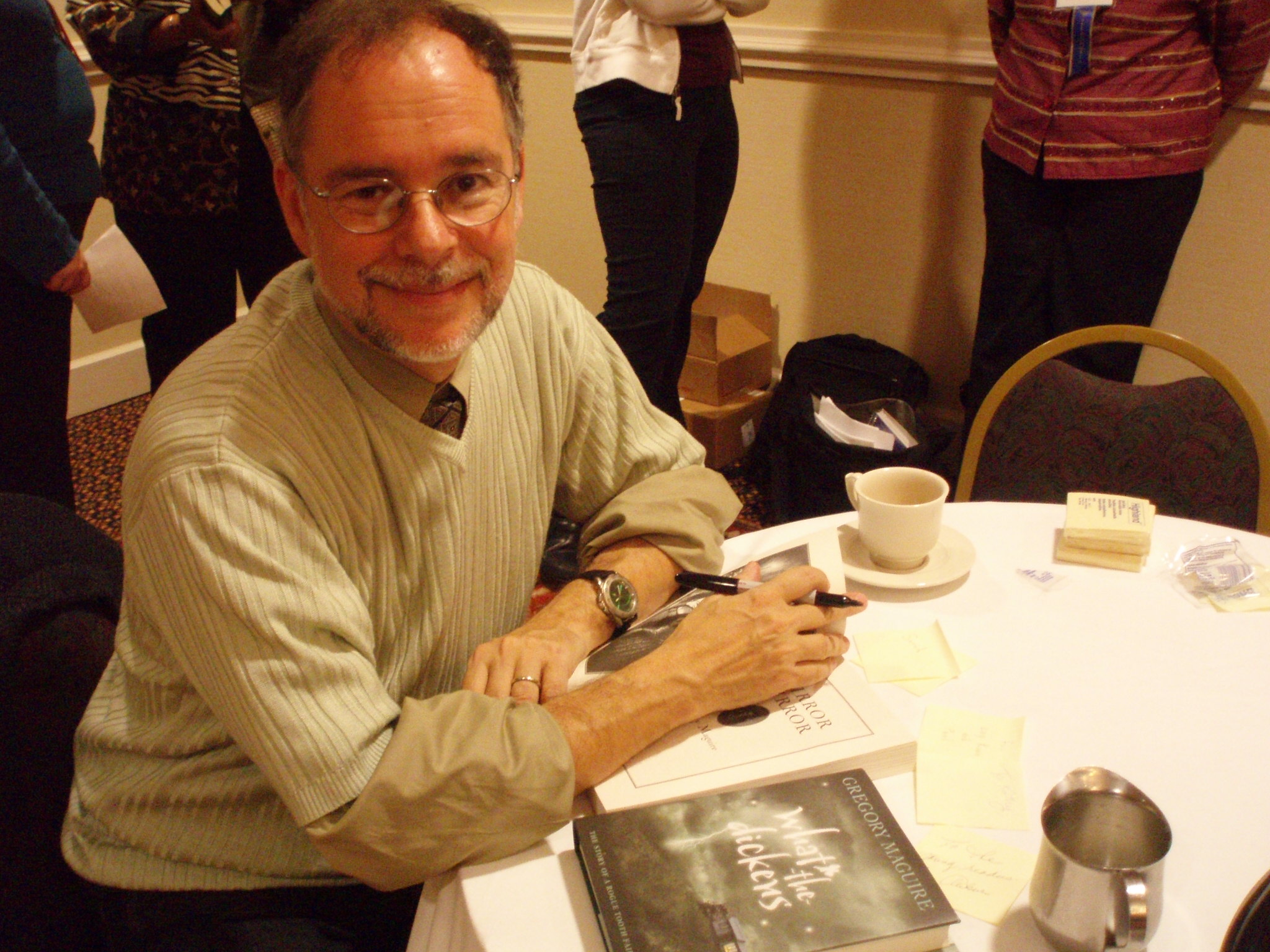
Gregory Maguire is an American novelist renowned for his subversive retellings of classic children's literature, most famously with his 1995 novel Wicked: The Life and Times of the Wicked Witch of the West. Born on June 9, 1954, in Albany, New York, Maguire's career spans decades, producing a body of work that often explores themes of morality, perspective, and the nature of good and evil. His adult novels, frequently inspired by fairy tales and folklore, delve into the complexities of characters traditionally cast as villains, offering nuanced psychological portraits and challenging established narratives. Wicked achieved immense global success, spawning a Tony Award-winning Broadway musical in 2003 and a highly anticipated two-part film adaptation released in 2024 and 2025, cementing Maguire's legacy as a master of literary reimagining.
🎵 Origins & History
Gregory Maguire's literary journey began in Albany, New York, where he was born on June 9, 1954. His early education at Tufts University and later at the State University of New York at Albany laid the groundwork for his academic and writing pursuits. He further honed his craft at Simmons College, specializing in children's literature. Maguire published his debut novel in 1978, a work that hinted at his later penchant for exploring deeper emotional landscapes. However, it was his 1995 novel, Wicked: The Life and Times of the Wicked Witch of the West, that truly launched his career into the stratosphere, offering a radical reinterpretation of L. Frank Baum's iconic character and the land of Oz.
⚙️ The Maguire Method: Literary Alchemy
Maguire's signature approach involves taking familiar characters and narratives from children's literature and dissecting them with adult sensibilities, often from the perspective of the antagonist. This literary alchemy transforms archetypes into complex individuals grappling with societal pressures, personal trauma, and moral ambiguity. For instance, in Confessions of an Ugly Stepsister, he reimagines the Cinderella story through the eyes of one of the stepsisters, exploring themes of beauty, jealousy, and social class within a Renaissance setting. His method is less about outright deconstruction and more about empathetic reconstruction, revealing the hidden motivations and historical contexts that might shape a character's perceived villainy. This technique invites readers to question their preconceived notions and engage with stories on a more profound, critical level.
📊 Key Facts & Numbers
Maguire has authored over two dozen books since his 1978 debut. His most famous work, Wicked, has sold over 3 million copies worldwide since its initial publication. The Broadway adaptation of Wicked, released in 2003, has grossed over $1.5 billion at the box office as of 2023, making it one of the most successful stage productions in history. The film adaptation, released in two parts in 2024 and 2025, represents a significant expansion of his narrative's reach, with the first film alone projected to earn over $500 million globally. His children's books, such as the Tales of the Great and Terrible series, have also garnered critical acclaim, with the first book in that series, The Ordinary Princess, published in 1989.
👥 The Architect and His Circle
Beyond Maguire himself, several key figures and institutions have shaped his career. His editor, Susan Hirschman, played a crucial role in the development and publication of Wicked. The Broadway production, brought to life by producer Marc Platt and directed by Joe Mantello (for the original Broadway run), transformed his novel into a global phenomenon. The film adaptations are helmed by director Jon M. Chu, further extending the reach of his narrative. Institutions like Tufts University and Simmons College provided his foundational education, while publishers like William Morrow and HarperCollins have been instrumental in bringing his works to readers.
🌍 Cultural Impact & Influence
Maguire's most significant cultural contribution is the elevation of the 'villain' archetype. By humanizing characters like the Wicked Witch of the West, he sparked a broader cultural conversation about perspective, empathy, and the subjective nature of morality. The success of the Wicked musical and subsequent film has introduced his nuanced storytelling to millions, influencing subsequent retellings of classic tales across literature, film, and television. His work has inspired a generation of writers to explore the gray areas of storytelling, moving beyond simple good-versus-evil dichotomies. The enduring popularity of his characters demonstrates a deep public appetite for stories that challenge conventional wisdom and offer more complex understandings of human (and non-human) nature.
⚡ Current State & Latest Developments
As of 2024, Gregory Maguire continues to be an active author, with new works periodically released, including his 2022 novel The Menagerie of Marvels: A Third Collection of the Tales of the Great and Terrible. The ongoing success of the Wicked film adaptations ensures his narrative's continued presence in mainstream culture. He remains a sought-after speaker at literary festivals and universities, engaging with audiences on his unique approach to storytelling and the enduring power of fairy tales. His official website, gregorymaguire.com, serves as a hub for his latest projects and public appearances, demonstrating a sustained engagement with his readership.
🤔 Controversies & Debates
While widely celebrated, Maguire's work isn't without its critics. Some traditionalists argue that his reinterpretation of beloved characters, particularly in Wicked, undermines the original intent and moral clarity of authors like L. Frank Baum. Debates often arise regarding the extent to which his sympathetic portrayals of antagonists might inadvertently excuse or rationalize harmful actions. Furthermore, the commercial success of adaptations, while beneficial for his legacy, sometimes leads to a simplification or sanitization of the more complex themes present in his original novels, sparking discussions about artistic integrity versus mass appeal. The controversy spectrum for Maguire's work hovers around a moderate 45, indicating significant critical discussion but not outright polarization.
🔮 Future Outlook & Predictions
The future for Gregory Maguire's literary universe appears robust, largely propelled by the continued success of his Wicked adaptations. One can anticipate further explorations of the Oz universe, potentially through new novels or spin-off projects, building on the foundation laid by the films. His unique method of literary revisionism is likely to inspire more authors to tackle classic narratives from unconventional viewpoints, potentially leading to a sustained trend in 'villain origin' stories. Maguire's own continued writing output, while perhaps not always reaching the same cultural heights as Wicked, will undoubtedly continue to offer his signature blend of dark fantasy and moral inquiry, appealing to his dedicated readership and potentially attracting new audiences interested in thoughtful, character-driven fiction.
💡 Practical Applications (of his literary approach)
Maguire's literary approach has practical applications beyond the realm of fiction. His method of re-examining established narratives and giving voice to marginalized or misunderstood characters offers a powerful framework for critical thinking and empathy. In educational settings, his works can be used to teach students about perspective-taking, literary analysis, and the construction of narrative. His ability to imbue familiar stories with new meaning demonstrates how understanding context and motivation can fundamentally alter our perception of events and individuals. This technique is applicable in fields ranging from history, where re-examining primary sources from different viewpoints is crucial, to psychology, where understanding individual motivations is key.
Key Facts
- Category
- culture
- Type
- person