
Contents
Overview
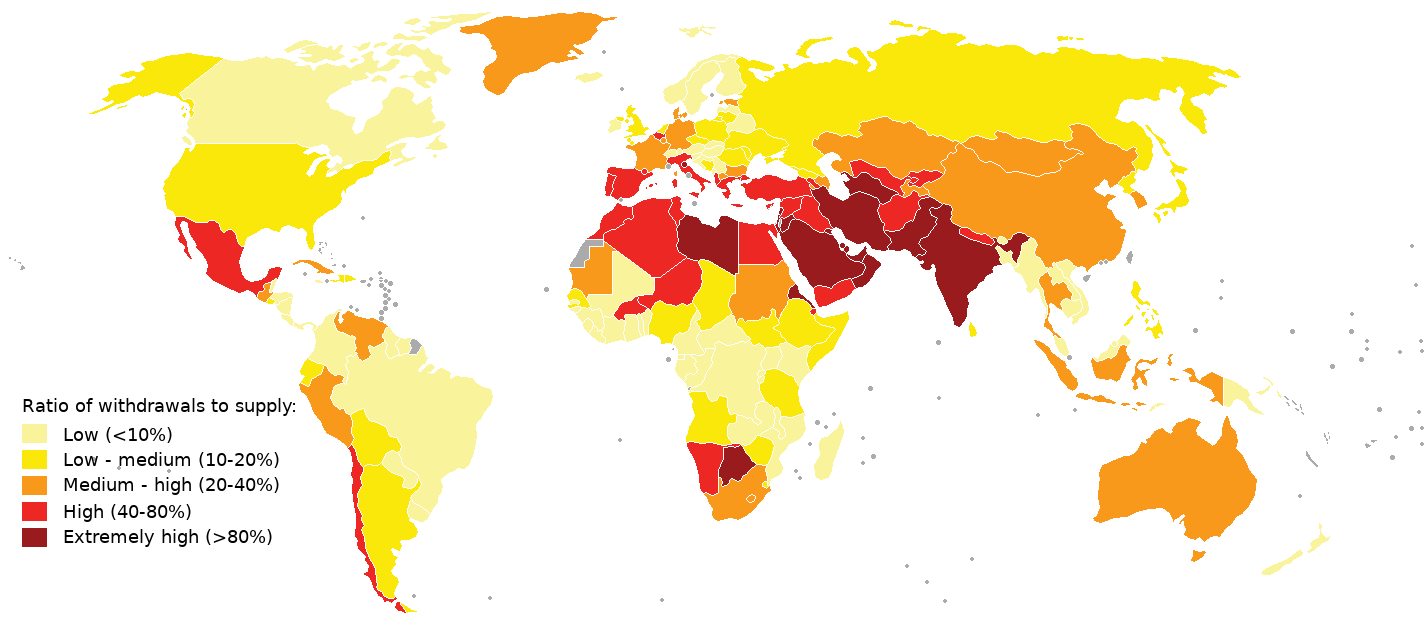
Global water scarcity refers to the chronic lack of sufficient fresh water resources to meet the standard demands of a region, encompassing both physical availability and economic accessibility. This phenomenon is not merely about drought; it's a complex interplay of climate change, population growth, unsustainable consumption patterns, and inadequate infrastructure. From the arid expanses of Central Asia to the rapidly urbanizing centers of sub-Saharan Africa, the impacts are profound, affecting agriculture, industry, public health, and geopolitical stability. Addressing this requires a multi-pronged approach, blending technological innovation with policy reform and a fundamental shift in how humanity values and manages its most precious resource.
🎵 Origins & History
The concept of water scarcity isn't new; ancient civilizations like the Nabataeans in Petra developed sophisticated water harvesting systems to survive in arid environments. However, the modern understanding of global water scarcity, driven by industrialization and exponential population growth, began to crystallize in the late 20th century. Pioneering work by figures like Masanobu Fukuoka in sustainable agriculture and Jacques Cousteau in oceanography highlighted the finite nature of freshwater. The historical precedent of resource competition, from ancient aqueducts to modern pipeline disputes, foreshadows the geopolitical tensions that water scarcity now exacerbates.
⚙️ How It Works
Water scarcity manifests in two primary forms: physical and economic. Physical scarcity occurs when the actual amount of available freshwater—from rivers, lakes, groundwater, and precipitation—is insufficient to meet all demands, including those of ecosystems. Regions like the Middle East and North Africa are classic examples, often experiencing low rainfall and high evaporation rates. Economic scarcity, conversely, arises not from a lack of water itself, but from a failure to develop and maintain the necessary infrastructure and technology to access, treat, and distribute it. This is prevalent in many developing nations, such as parts of Sub-Saharan Africa, where investment in dams, pipelines, and purification plants lags behind population needs. The interplay between these two forms is crucial; even regions with abundant physical water can suffer economic scarcity due to poor management or political instability.
📊 Key Facts & Numbers
Key figures driving the discourse on water scarcity include Peter Gleick, president of the Pacific Institute, who has extensively documented water conflicts and solutions. Organizations like the WWF and the Water.org initiative, co-founded by Matt Damon, are at the forefront of advocating for sustainable water management and access. The UNEP and the WMO provide critical data and policy frameworks. Governments worldwide, through ministries of water and environment, are increasingly grappling with national water strategies, often in collaboration with international bodies like the IWMI. The private sector, too, plays a role, with companies like Veolia and Suez developing advanced water treatment and distribution technologies.
👥 Key People & Organizations
Water scarcity profoundly shapes cultures and societies. In arid regions, water often holds deep spiritual and cultural significance, influencing religious practices and social customs. The struggle for water has been a recurring theme in literature and art, from ancient myths to contemporary documentaries like A Plastic Ocean (though focused on plastic, it touches on resource depletion). The unequal distribution of water resources fuels social stratification, with marginalized communities often bearing the brunt of scarcity. Geopolitically, water has become a potent source of tension and cooperation, influencing diplomatic relations between nations sharing river basins, such as the Nile River basin or the Indus River basin. The very concept of 'water rights' is a cultural construct that varies dramatically across legal and societal frameworks.
🌍 Cultural Impact & Influence
Extreme weather events, such as prolonged droughts in the American West and devastating floods in Pakistan, are becoming more frequent and intense. Innovations in desalination technology, like those pioneered by IDE Technologies, are offering new sources, but at significant energy costs. Smart water grids and precision agriculture techniques are gaining traction as ways to optimize usage. Furthermore, the concept of 'virtual water'—the water embedded in traded goods—is gaining recognition as a critical factor in understanding global water flows and dependencies.
⚡ Current State & Latest Developments
The debate around global water scarcity is multifaceted and often contentious. A central controversy lies in the tension between physical and economic scarcity: some argue that physical availability is the primary constraint, while others contend that poor governance, lack of investment, and unequal distribution are the root causes of water scarcity. The ethics of water privatization versus public utility management remain a persistent point of contention, with concerns over affordability and equitable access. Furthermore, the impact of industrial agriculture and its water footprint is a subject of intense scrutiny.
🤔 Controversies & Debates
The future outlook for global water scarcity is dire without significant intervention. Climate models predict further intensification of droughts and altered precipitation patterns, particularly impacting already vulnerable regions. However, there is also a growing wave of innovation. Expect to see continued advancements in desalination, water recycling (e.g., Singapore's NEWater program), and atmospheric water generation technologies. The integration of artificial intelligence for water management and leak detection in urban systems will become more sophisticated. Geopolitical cooperation, or lack thereof, over shared water resources will be a defining feature of the coming decades. The potential for 'water wars' remains a concern, but so does the possibility of novel transboundary water management agreements driven by necessity.
🔮 Future Outlook & Predictions
Practical applications for addressing water scarcity are diverse and rapidly evolving. In agriculture, drip irrigation systems and drought-resistant crop development are crucial for reducing water consumption. In urban environments, advanced wastewater treatment and reuse technologies are becoming standard, turning sewage into potable water. Industries are increasingly adopting closed-loop water systems to minimize their water footprint. Desalination plants, while energy-intensive, are vital for coastal communities. Even individual households can contribute through low-flow fixtures, rainwater harvesting systems, and conscious water usage. The development of portable water purification devices, like those from LifeStraw, offers immediate solutions for communities lacking safe drinking water.
💡 Practical Applications
Global water scarcity is intrinsically linked to several other critical global issues. Understanding its dynamics requires exploration of its interconnections with climate change, economic development, and social equity.
Key Facts
- Category
- nature
- Type
- topic