
Contents
Overview
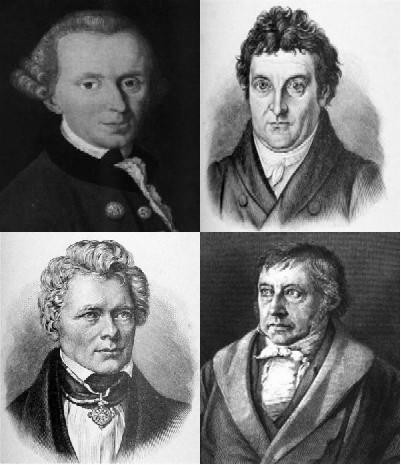
German Idealism emerged in Germany during the late 18th and early 19th centuries, a period marked by the intellectual ferment of the Enlightenment and the political upheavals of the French Revolution. It is widely considered to have begun with the work of Immanuel Kant in the 1780s and 1790s, particularly his critiques of reason. This philosophical movement was closely intertwined with Romanticism and the broader political landscape of the era. The period following Kant's work is often referred to as post-Kantian idealism or post-Kantianism. Scholars often categorize German idealists into transcendental idealists, such as Kant and Johann Gottlieb Fichte, and absolute idealists, including Friedrich Wilhelm Joseph Schelling and Georg Wilhelm Friedrich Hegel.
⚙️ Core Tenets
At its core, German Idealism posits that reality is fundamentally mental or mind-dependent. This contrasts with materialism, which asserts that matter is the primary substance of reality. Idealism, in its various forms, suggests that ideas, consciousness, or spirit are the ultimate foundation of existence. Immanuel Kant's "transcendental idealism" distinguished between the phenomenal world (the world as we experience it through our senses and innate cognitive structures) and the noumenal world (things-in-themselves, which remain unknowable). Later idealists, like Hegel, radicalized this view into "absolute idealism," arguing that reality itself is the unfolding of an Absolute Spirit or Reason, and that the distinction between mind and world is ultimately overcome.
🌍 Key Figures and Developments
The movement's trajectory is often traced through its principal figures. Immanuel Kant laid the groundwork with his "critical philosophy," attempting to reconcile rationalism and empiricism by arguing that our minds actively structure our experience of reality. Johann Gottlieb Fichte, building on Kant, developed a "subjective idealism," emphasizing the "I" or the self as the source of all reality and critiquing Kant's concept of the "thing-in-itself." Friedrich Wilhelm Joseph Schelling explored "objective idealism," seeking to bridge the gap between mind and nature, and later developed "absolute idealism." Georg Wilhelm Friedrich Hegel is perhaps the most prominent figure, known for his "absolute idealism" and his dialectical method, which views history and reality as a process of thesis, antithesis, and synthesis. His philosophy of history, for instance, saw societies progressing towards greater rationality and freedom, a concept that would later influence thinkers like Karl Marx.
🔮 Legacy & Influence
The impact of German Idealism on subsequent philosophy and culture is immense. It challenged the Enlightenment's skeptical and materialist worldview, restoring reason to a central role and influencing fields as diverse as politics, science, art, and religion. The movement's ideas about freedom, self-consciousness, and the state have shaped modern political theory, critiquing liberal individualism and re-envisioning the social contract. Thinkers influenced by German Idealism include figures like Charles Darwin, Karl Marx, and Sigmund Freud, demonstrating its far-reaching legacy. Contemporary philosophy continues to grapple with the questions and concepts first articulated by the German idealists, making it a foundational movement for understanding modern thought. The ideas of German Idealism continue to resonate in discussions about the nature of consciousness, the relationship between mind and reality, and the human condition, echoing debates that began with Kant and his successors.
Key Facts
- Year
- late 18th - mid-19th centuries
- Origin
- Germany
- Category
- philosophy
- Type
- movement
Frequently Asked Questions
What is the main difference between transcendental idealism and absolute idealism?
Transcendental idealism, as proposed by Kant, argues that our experience of reality is shaped by the innate structures of our minds, but it concedes the existence of 'things-in-themselves' that are independent of our cognition. Absolute idealism, developed by figures like Hegel, goes further by asserting that reality itself is fundamentally mental or spiritual, and that the distinction between mind and the external world is ultimately dissolved or overcome.
Who are the main philosophers associated with German Idealism?
The four most prominent figures in German Idealism are Immanuel Kant, who laid the groundwork; Johann Gottlieb Fichte, who developed a subjective idealism; Friedrich Wilhelm Joseph Schelling, who explored objective and absolute idealism; and Georg Wilhelm Friedrich Hegel, who is renowned for his comprehensive system of absolute idealism and dialectical method.
How did German Idealism challenge the Enlightenment?
While influenced by the Enlightenment's emphasis on reason, German Idealism challenged its more skeptical, materialist, and antimetaphysical tendencies. It sought to restore reason's preeminence and explore the subjective and ideal aspects of reality, which were often downplayed by Enlightenment thinkers who prioritized empirical observation and scientific materialism.
What is the concept of the 'thing-in-itself' in Kantian philosophy?
The 'thing-in-itself' (Ding an sich) refers to reality as it exists independently of our perception and cognitive faculties. Kant argued that while such things exist, we can never know them directly because our knowledge is always mediated by our senses and the categories of our understanding. This unknowable realm is a key aspect of his transcendental idealism.
What is the legacy of German Idealism?
German Idealism had a profound and lasting impact on Western philosophy, politics, art, and culture. It influenced subsequent philosophical movements, including Marxism, existentialism, and phenomenology, and continues to shape contemporary debates on consciousness, ethics, and the nature of reality. Its emphasis on reason, freedom, and the self has left an indelible mark on modern thought.
References
- en.wikipedia.org — /wiki/German_idealism
- iep.utm.edu — /germidea/
- amazon.com — /Understanding-German-Idealism-Movements-Thought/dp/1844650960
- reddit.com — /r/askphilosophy/comments/l2ggg6/explain_germ%C3%A1n_idealism_to_me_please/
- cam.ac.uk — /research/news/the-impact-of-idealism
- cambridge.org — /core/books/cambridge-companion-to-german-idealism/introduction/9AF5A44AAECB1205
- filozofia.uni-miskolc.hu — /wp-content/uploads/2011/11/Understanding_German_Idealism__Understanding_Movemen
- reddit.com — /r/askphilosophy/comments/1evkmik/what_was_german_idealism_and_what_elements/