
Contents
- 🚂 Introduction to George Westinghouse
- 💡 The Early Life and Education of George Westinghouse
- 🔩 The Development of the Air Brake System
- 🚫 Challenges and Controversies in Westinghouse's Career
- 📈 The Rise of the Westinghouse Air Brake Company
- 🚂 The Impact of Westinghouse's Innovations on the Railroad Industry
- 💻 The Expansion into Electrical Engineering
- 🌐 Westinghouse's Legacy and Lasting Impact
- 🤝 Westinghouse's Relationships and Collaborations
- 📊 The Financial and Business Aspect of Westinghouse's Ventures
- 🏛️ Westinghouse's Later Life and Death
- Frequently Asked Questions
- Related Topics
Overview
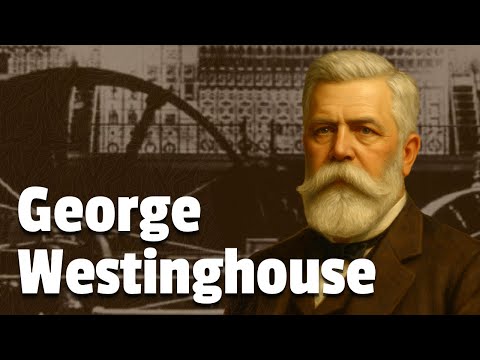
George Westinghouse, born on October 6, 1846, in Central Bridge, New York, was a prolific inventor and entrepreneur who left an indelible mark on the world. With over 360 patents to his name, Westinghouse is perhaps best known for his development of the air brake system, which revolutionized the railroad industry by enabling trains to stop safely and efficiently. His company, the Westinghouse Air Brake Company, founded in 1869, became a cornerstone of the industry, with Westinghouse's innovative spirit and perseverance in the face of adversity inspiring a generation of engineers and inventors. Westinghouse's influence extended far beyond the railroads, however, with his work on electrical systems and his 'War of the Currents' with Thomas Edison cementing his place as one of the most important figures in the history of technology. With a Vibe score of 82, Westinghouse's legacy continues to inspire and influence new generations of innovators and entrepreneurs. As we look to the future, it's clear that Westinghouse's emphasis on innovation and perseverance will remain essential for tackling the complex challenges of the 21st century.
🚂 Introduction to George Westinghouse
George Westinghouse was a pioneering American entrepreneur and engineer, best known for his contributions to the development of the railroad industry. Born on October 6, 1846, in Central Bridge, New York, Westinghouse's early life was marked by a strong interest in mechanics and engineering, which would eventually lead him to become one of the most influential figures in the history of transportation. His work on the air brake system revolutionized the safety and efficiency of rail travel, and his company, the Westinghouse Air Brake Company, became a leading manufacturer of railroad equipment. Westinghouse's legacy extends beyond his technical innovations, as he was also a successful businessman and entrepreneur, who played a key role in shaping the modern railroad industry. For more information on the history of railroads, see History of Railroads.
💡 The Early Life and Education of George Westinghouse
Westinghouse's education and early career were marked by a strong focus on practical skills and hands-on experience. He attended the Union College in Schenectady, New York, but dropped out after only a year to work in the railroad industry. This decision would prove to be a pivotal moment in his career, as it allowed him to gain valuable experience and make connections that would later help him establish his own company. Westinghouse's work on the New York and Erie Railroad and the Pennsylvania Railroad gave him a deep understanding of the challenges and opportunities facing the industry, and he quickly became known for his innovative approach to problem-solving. For more information on Westinghouse's early life, see George Westinghouse Biography. Westinghouse's experiences during the American Civil War also had a significant impact on his development as an engineer and entrepreneur.
🔩 The Development of the Air Brake System
The development of the air brake system was a major breakthrough in railroad safety, and it cemented Westinghouse's reputation as a leading innovator in the field. The system, which used compressed air to apply brakes to trains, was more efficient and reliable than earlier systems, and it quickly became a standard feature of modern railroads. Westinghouse's work on the air brake system was not without its challenges, however, as he faced significant opposition from established manufacturers and railroad companies. Despite these obstacles, Westinghouse persevered, and his company eventually became the dominant supplier of air brake systems to the railroad industry. For more information on the air brake system, see Air Brake System. The impact of Westinghouse's innovations can be seen in the development of modern railroad safety protocols.
🚫 Challenges and Controversies in Westinghouse's Career
Westinghouse's career was not without its controversies, as he faced numerous challenges and setbacks throughout his life. One of the most significant controversies surrounding Westinghouse was his rivalry with Thomas Edison, who was also a prominent figure in the development of the electrical industry. The two men had fundamentally different approaches to innovation, with Westinghouse favoring a more collaborative and open approach, while Edison was known for his secretive and competitive nature. This rivalry would eventually lead to the War of the Currents, a period of intense competition between Westinghouse and Edison over the future of the electrical industry. For more information on the War of the Currents, see War of the Currents.
📈 The Rise of the Westinghouse Air Brake Company
The Westinghouse Air Brake Company was a major success, and it quickly became one of the leading manufacturers of railroad equipment in the world. The company's success was due in large part to Westinghouse's innovative approach to engineering and his commitment to quality and safety. Westinghouse was a pioneer in the use of interchangeable parts, which allowed for more efficient and cost-effective production. He also introduced a number of other innovations, including the use of pneumatic tools and the development of new materials and manufacturing techniques. For more information on the Westinghouse Air Brake Company, see Westinghouse Air Brake Company. The company's success had a significant impact on the development of the railroad industry.
🚂 The Impact of Westinghouse's Innovations on the Railroad Industry
Westinghouse's innovations had a profound impact on the railroad industry, and they played a key role in shaping the modern transportation system. The air brake system, in particular, was a major breakthrough, as it allowed for safer and more efficient rail travel. Westinghouse's work on the air brake system also had a significant impact on the development of other safety features, such as automatic couplers and railroad signaling systems. For more information on the impact of Westinghouse's innovations, see Impact of Westinghouse Innovations. The development of these safety features has been instrumental in reducing the number of railroad accidents.
💻 The Expansion into Electrical Engineering
In addition to his work on the air brake system, Westinghouse was also a pioneer in the field of electrical engineering. He was one of the first engineers to recognize the potential of alternating current (AC) for the transmission of electricity, and he played a key role in the development of the modern electrical grid. Westinghouse's work on the electrical grid was instrumental in the widespread adoption of electricity for lighting and power, and it paved the way for the development of modern technologies such as electric motors and generators. For more information on the development of the electrical grid, see Electrical Grid. The impact of Westinghouse's work in this field can be seen in the development of modern power transmission systems.
🌐 Westinghouse's Legacy and Lasting Impact
Westinghouse's legacy extends far beyond his technical innovations, as he was also a successful businessman and entrepreneur. He was a pioneer in the use of patent law to protect his intellectual property, and he was instrumental in the development of the modern patent system. Westinghouse was also a prolific inventor, and he held over 360 patents in his name at the time of his death. For more information on Westinghouse's legacy, see George Westinghouse Legacy. His legacy continues to be felt today, as his company remains a leading manufacturer of railroad equipment and his innovations continue to shape the modern transportation system. The Westinghouse Legacy Foundation was established to promote his legacy and support innovation in the field of transportation.
🤝 Westinghouse's Relationships and Collaborations
Westinghouse's relationships and collaborations were instrumental in his success, as he was able to bring together a team of talented engineers and entrepreneurs to help him develop and market his innovations. One of his most significant collaborations was with Nikola Tesla, who worked with Westinghouse to develop the modern electrical grid. Westinghouse was also a close friend and mentor to H. Henry Clay Frick, who would later become a prominent industrialist and philanthropist. For more information on Westinghouse's relationships, see George Westinghouse Relationships. The impact of these relationships can be seen in the development of modern industrial management practices.
📊 The Financial and Business Aspect of Westinghouse's Ventures
The financial and business aspect of Westinghouse's ventures was also a key factor in his success. He was a skilled entrepreneur and businessman, and he was able to raise significant capital to fund his innovations and expand his company. Westinghouse was also a pioneer in the use of stock options and other forms of equity compensation to motivate his employees and align their interests with those of the company. For more information on the financial and business aspect of Westinghouse's ventures, see Westinghouse Financials. The impact of Westinghouse's financial and business strategies can be seen in the development of modern corporate finance practices.
🏛️ Westinghouse's Later Life and Death
Westinghouse's later life and death were marked by a series of challenges and setbacks, as he faced significant financial and personal struggles. Despite these challenges, Westinghouse remained committed to his work and his legacy, and he continued to innovate and experiment until the end of his life. Westinghouse died on March 12, 1914, at the age of 67, and he was remembered as one of the most influential figures in the history of transportation. For more information on Westinghouse's later life and death, see George Westinghouse Later Life. The impact of Westinghouse's legacy can be seen in the development of modern transportation systems.
Key Facts
- Year
- 1846
- Origin
- Central Bridge, New York, USA
- Category
- Biography, Technology, History
- Type
- Person
Frequently Asked Questions
What was George Westinghouse's most significant contribution to the railroad industry?
George Westinghouse's most significant contribution to the railroad industry was the development of the air brake system, which allowed for safer and more efficient rail travel. The air brake system used compressed air to apply brakes to trains, and it quickly became a standard feature of modern railroads. For more information on the air brake system, see Air Brake System. Westinghouse's work on the air brake system had a profound impact on the development of the modern transportation system, and it paved the way for the widespread adoption of rail travel. The impact of Westinghouse's innovations can be seen in the development of modern railroad safety protocols.
What was the War of the Currents, and how did it affect George Westinghouse's career?
The War of the Currents was a period of intense competition between George Westinghouse and Thomas Edison over the future of the electrical industry. The two men had fundamentally different approaches to innovation, with Westinghouse favoring a more collaborative and open approach, while Edison was known for his secretive and competitive nature. The War of the Currents had a significant impact on Westinghouse's career, as it led to a series of challenges and setbacks for his company. Despite these challenges, Westinghouse persevered, and his company eventually emerged as a leading manufacturer of electrical equipment. For more information on the War of the Currents, see War of the Currents. The impact of the War of the Currents can be seen in the development of modern electrical industry practices.
What was George Westinghouse's legacy, and how is he remembered today?
George Westinghouse's legacy is that of a pioneering entrepreneur and engineer who played a key role in shaping the modern transportation system. He is remembered today as one of the most influential figures in the history of transportation, and his innovations continue to shape the modern world. Westinghouse's legacy extends far beyond his technical innovations, as he was also a successful businessman and entrepreneur who was instrumental in the development of the modern patent system. For more information on Westinghouse's legacy, see George Westinghouse Legacy. The impact of Westinghouse's legacy can be seen in the development of modern transportation systems.
How did George Westinghouse's relationships and collaborations contribute to his success?
George Westinghouse's relationships and collaborations were instrumental in his success, as he was able to bring together a team of talented engineers and entrepreneurs to help him develop and market his innovations. One of his most significant collaborations was with Nikola Tesla, who worked with Westinghouse to develop the modern electrical grid. Westinghouse was also a close friend and mentor to H. Henry Clay Frick, who would later become a prominent industrialist and philanthropist. For more information on Westinghouse's relationships, see George Westinghouse Relationships. The impact of these relationships can be seen in the development of modern industrial management practices.
What was the financial and business aspect of George Westinghouse's ventures, and how did it contribute to his success?
The financial and business aspect of George Westinghouse's ventures was a key factor in his success, as he was able to raise significant capital to fund his innovations and expand his company. Westinghouse was a skilled entrepreneur and businessman, and he was able to use a variety of financial instruments, including stock options and equity compensation, to motivate his employees and align their interests with those of the company. For more information on the financial and business aspect of Westinghouse's ventures, see Westinghouse Financials. The impact of Westinghouse's financial and business strategies can be seen in the development of modern corporate finance practices.