
Contents
Overview
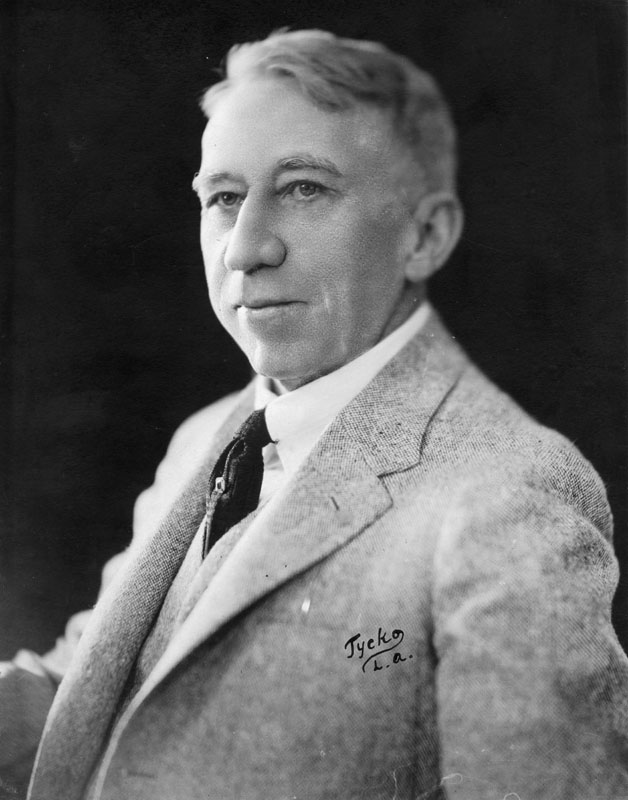
George Franklin Getty (October 17, 1855 – May 31, 1930) was an American lawyer and an early pioneer in the oil industry, whose shrewd investments and business acumen laid the groundwork for the vast Getty family fortune. Born in Maryland, he pursued a legal career before pivoting to the burgeoning oil fields of Oklahoma and Texas in the early 20th century. Getty's foresight in acquiring land and mineral rights proved instrumental, transforming him from a legal practitioner into a significant player in the petroleum sector. He is most famously known as the father of J. Paul Getty, who would later expand the family's empire into one of the world's largest oil companies. Despite his own considerable success, George Getty's legacy is often overshadowed by his son's monumental achievements, yet his foundational role in establishing the Getty name in industry is undeniable.
🎵 Origins & Early Life
George Franklin Getty's story begins in Grantsville, Maryland, on October 17, 1855. Born in Maryland, he received a solid education, attending the University of Michigan and later the University of Michigan Law School, culminating in studies at Ohio Northern University. This legal training provided him with a critical foundation, equipping him with the analytical skills and understanding of contracts and property rights that would prove invaluable in his later, more lucrative ventures.
⚙️ The Legal and Oilman Transition
Getty initially practiced law, but the allure of the rapidly expanding American industrial economy, particularly the nascent oil industry, proved too strong to resist. He began investing in oil leases, a move that marked a significant pivot in his career. He focused his attention on the promising oil fields of Oklahoma and Texas, territories that were becoming epicenters of petroleum production. His legal background allowed him to navigate the complex land ownership and mineral rights issues inherent in the oil business, a crucial advantage in an era of rapid expansion and often-contentious claims.
📊 Key Facts & Financials
While precise figures for George Getty's early investments are scarce, his successful transition into oil is evident in his family's subsequent wealth. By the time of his death on May 31, 1930, he had amassed a considerable fortune, estimated to be in the tens of millions of dollars, a substantial sum for the era. His wealth was primarily derived from his oil holdings, particularly his stake in the Midland Oil Company. His financial acumen was characterized by a conservative approach, focusing on acquiring land and mineral rights rather than speculative ventures, a strategy that ensured stability and long-term growth.
👥 The Getty Family Nexus
George Getty was the patriarch of a family that would become synonymous with oil wealth and philanthropy. He married Sarah Catherine McPherson Risher, and together they had two children: Gertrude Lois Getty and the future oil magnate, J. Paul Getty. His relationship with his son, J. Paul Getty, was complex; while George provided the initial capital and business foundation, J. Paul would dramatically expand the family's oil interests, forming the Getty Oil Company and becoming one of the wealthiest men in the world. George Getty's role as a father and progenitor of this influential dynasty cannot be overstated.
🌍 Influence and Legacy
George Getty's influence, though often overshadowed by his son, was foundational to the Getty family's rise to prominence. His early investments in oil established a critical foothold in a booming industry. He demonstrated a keen understanding of the legal and financial intricacies of resource extraction, a foresight that allowed him to capitalize on the opportunities presented by the petroleum age. His success provided the crucial initial capital and business framework that his son, J. Paul Getty, would later leverage to build a global empire, influencing not only the energy sector but also art and philanthropy through institutions like the J. Paul Getty Museum.
⚡ The Later Years and Death
The later years of George Getty's life were marked by his continued involvement in his oil interests, albeit with a more hands-off approach as his health declined. He passed away on May 31, 1930, in Los Angeles, California, leaving behind a substantial legacy and a family poised for even greater industrial and financial success. His death marked the end of an era for the family's direct involvement in the foundational stages of their oil fortune, passing the baton to the next generation to navigate the complexities of the 20th-century global economy.
🤔 Debates on His Role
A persistent debate surrounds George Getty's exact contribution versus that of his son, J. Paul Getty. While George Getty undeniably provided the initial capital and established the family's presence in the oil industry, some historians and biographers argue that his business strategies were more conservative and less ambitious than his son's. This perspective suggests that George Getty laid the groundwork, but it was J. Paul Getty's aggressive expansion, strategic acquisitions, and global vision that truly cemented the family's status as oil titans. The tension lies in attributing the true genesis of the Getty empire: was it the father's prudent investment or the son's audacious enterprise?
🔮 Enduring Impact
The enduring impact of George Getty's life is intrinsically linked to the Getty family's broader legacy. His early success in oil provided the financial bedrock upon which his son built a global enterprise. This wealth, in turn, fueled significant philanthropic endeavors, most notably the J. Paul Getty Museum and the Getty Trust, which have had a profound impact on art history, conservation, and scholarship worldwide. While his name might not resonate as widely as his son's, George Getty's role as the progenitor of this influential dynasty remains a critical piece of American industrial history.
💡 Business Acumen
George Getty's business acumen was characterized by a pragmatic and legally informed approach. His transition from law to oil was not a leap of faith but a calculated move, leveraging his understanding of property rights and contracts to secure valuable oil leases in promising regions like Oklahoma. He was known for his conservative investment strategy, prioritizing the acquisition of land and mineral rights, which provided a stable foundation for wealth generation. This methodical approach, distinct from the more aggressive tactics of some of his contemporaries, allowed him to build a substantial fortune that would serve as the launching pad for his son's more expansive ventures in the global energy market.
Key Facts
- Category
- person
- Type
- person