
Contents
Overview
The intricate interplay between an athlete's genetic makeup and their capacity for peak physical performance is a frontier of scientific inquiry, blending the precision of molecular biology with the raw power of human achievement. While environmental factors like training, nutrition, and coaching are undeniably crucial, a growing body of research suggests that genetic predispositions can significantly influence an individual's potential in various athletic domains. From muscle fiber type distribution and oxygen utilization to injury resilience and even psychological drive, specific gene variants are being identified that correlate with enhanced athletic capabilities. This field, often termed 'sports genetics,' seeks to understand how inherited traits can confer advantages in speed, strength, endurance, and recovery, thereby shaping the landscape of elite sports and potentially influencing training methodologies and talent identification.
🎵 Origins & History
The study of genetics and athleticism has roots stretching back to observations of familial athletic talent. The IOC's stance against genetic testing for talent identification in 2004, however, highlighted early ethical concerns, even as the scientific exploration continued.
⚙️ How It Works
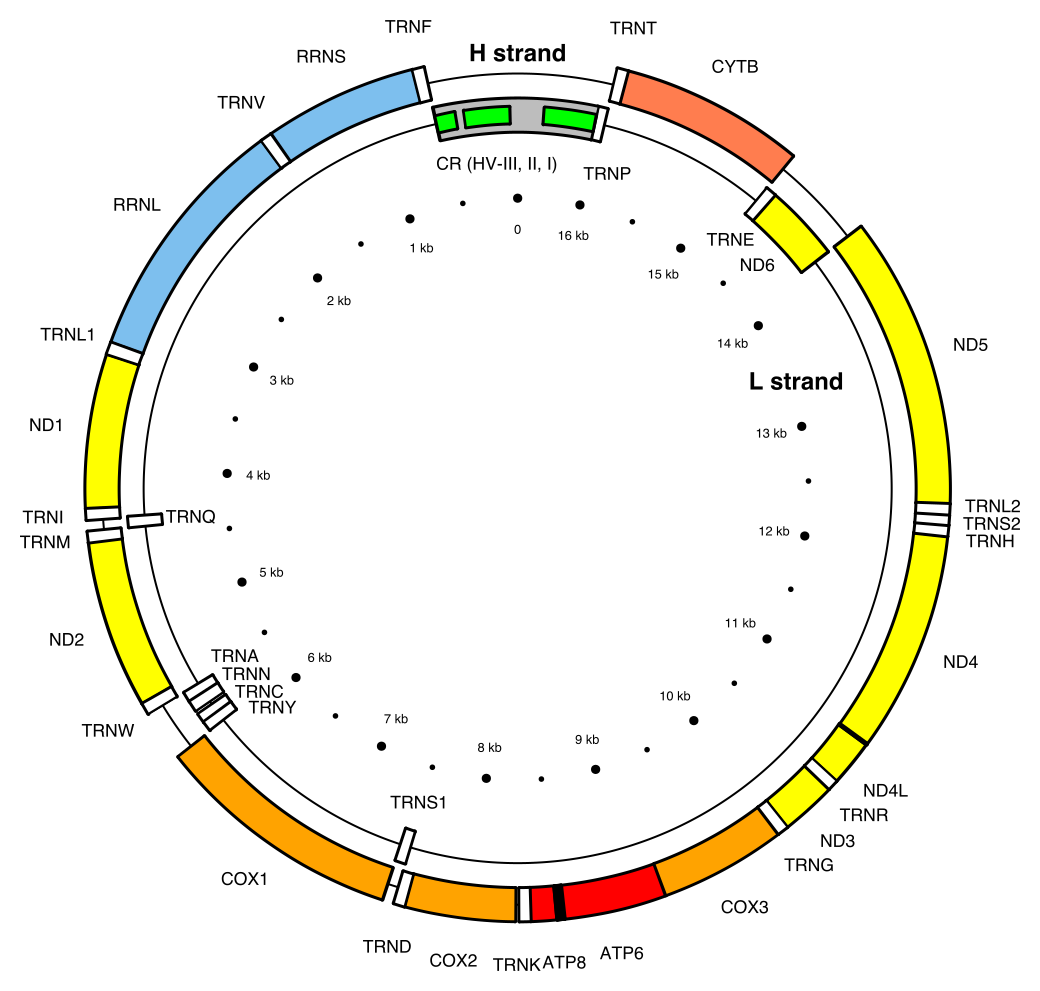
At its core, genetics influences athleticism through the expression of genes that dictate physiological characteristics. The ACTN3 gene, for instance, codes for a protein found in fast-twitch muscle fibers crucial for explosive power. Individuals with the RR genotype are often overrepresented in sprint and power sports, while those with the XX genotype may have a predisposition for endurance activities due to differences in muscle metabolism. Similarly, variants in the ACE gene are associated with differences in cardiovascular efficiency and muscle growth, potentially impacting both endurance and strength. Mitochondrial DNA also plays a role, influencing energy production and aerobic capacity. Beyond these, genes affecting bone density, tendon strength, neuromuscular coordination, and even pain perception can confer subtle yet significant advantages or disadvantages in athletic pursuits. The complex interplay of hundreds, if not thousands, of these genetic variations, alongside epigenetic modifications influenced by training and environment, ultimately shapes an individual's athletic potential.
📊 Key Facts & Numbers
Estimates suggest that genetics can account for anywhere from 30% to 80% of an individual's athletic potential, depending on the specific trait and sport. For example, the prevalence of the R allele of the ACTN3 gene (associated with power) is reported to be as high as 90% in elite sprinters compared to around 50% in the general population. Studies have shown that individuals with the 'AA' genotype for the ACE gene tend to have higher VO2 max values, a key indicator of aerobic endurance. Research published in The Journal of Applied Physiology in 2008 indicated that the ACTN3 gene variant alone could explain up to 3% of the variance in sprint performance. Furthermore, the heritability of endurance performance has been estimated to be as high as 70% in some studies, suggesting a strong genetic component. The global sports supplement market, valued at over $15 billion in 2023, indirectly reflects the pursuit of optimizing performance, often with an implicit understanding of underlying biological predispositions.
👥 Key People & Organizations
Key figures in the field include Henning Krag Kristiansen, a Danish researcher who has extensively studied the ACTN3 gene and its link to athletic performance. Claes M. Östlund from the Karolinska Institute in Sweden has also made significant contributions to understanding genetic predispositions in athletes. Organizations like the IOC have grappled with the ethical implications of sports genetics, while research institutions such as the University of Birmingham and the University of Queensland host leading sports science departments actively investigating these connections. Companies like 23andMe and Ancestry.com offer genetic testing that can provide insights into athletic predispositions, though their interpretations are often debated by specialists. The WADA also monitors developments, particularly concerning potential misuse of genetic information.
🌍 Cultural Impact & Influence
The cultural impact of understanding genetics and athleticism is profound, influencing how we perceive talent, success, and even human potential. It fuels narratives of 'born athletes' versus 'hard workers,' sparking debates about nature versus nurture that resonate far beyond the sports arena. The rise of personalized training plans, informed by genetic insights, is beginning to reshape athletic development, moving away from one-size-fits-all approaches. For instance, the success of athletes like Usain Bolt is often discussed through the lens of his presumed genetic advantages, particularly his ACTN3 genotype. This fascination extends to popular culture, with documentaries and articles frequently exploring the genetic lottery of sports. The commercialization of genetic testing for athletic traits, offered by companies like Atlas Genetics, further embeds this concept into mainstream consciousness, albeit with varying degrees of scientific rigor.
⚡ Current State & Latest Developments
The current state of research is characterized by an increasing focus on polygenic analysis, moving beyond single-gene associations to understand the cumulative effect of multiple genes. Sophisticated GWAS are identifying novel genetic variants associated with traits like endurance performance, strength training response, and injury risk. Companies are developing more refined genetic testing panels for athletes, promising personalized insights into training optimization and injury prevention. However, the field is also experiencing a surge in critical evaluation, with researchers emphasizing the limitations of current genetic tests and the paramount importance of environmental factors. The IOC continues to monitor the ethical landscape, particularly regarding potential discrimination and the fairness of competitive sports.
🤔 Controversies & Debates
The most significant controversy surrounding genetics and athleticism lies in the potential for genetic determinism and discrimination. Critics argue that overemphasizing genetic predispositions can lead to a 'genetic lottery' mentality, potentially discouraging individuals with less 'favorable' genetic profiles and creating unfair advantages. The debate over whether genetic testing should be used for talent identification, as opposed to optimizing training for identified talent, remains heated. Furthermore, the accuracy and interpretation of commercial genetic tests for athletic traits are frequently questioned, with many experts warning against overreliance on them. The ethical implications of gene doping, while currently theoretical, also loom large, raising concerns about the future integrity of sports and the potential for a genetically enhanced elite.
🔮 Future Outlook & Predictions
The future of genetics and athleticism points towards increasingly sophisticated polygenic risk scores and personalized training regimens. We can expect advancements in understanding gene-environment interactions, revealing how specific training stimuli can modulate gene expression to enhance performance. The development of AI-driven platforms that integrate genetic data with physiological monitoring and training logs will likely become more prevalent, offering hyper-personalized coaching. However, the ethical and regulatory frameworks will need to evolve rapidly to keep pace. The potential for gene editing technologies like CRISPR-Cas9 to enhance athletic capabilities, though currently fraught with ethical and safety concerns, represents a distant but significant future possibility. The ongoing debate about the role of genetics versus environment will continue to shape how we define and pursue athletic excellence.
💡 Practical Applications
Practical applications of genetics in athleticism are
Key Facts
- Category
- science
- Type
- topic