
Contents
Overview
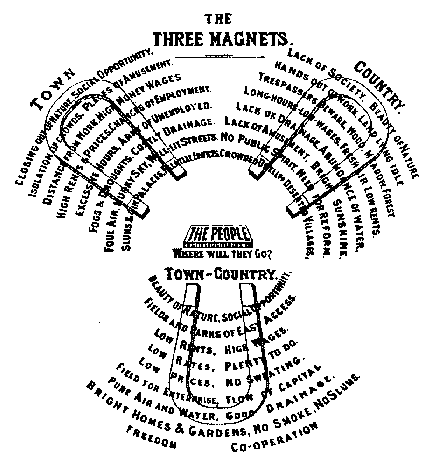
The garden city movement was first proposed by Ebenezer Howard in his 1898 book 'To-morrow: A Peaceful Path to Real Reform', which outlined a vision for planned communities that would provide a high quality of life for residents, while also promoting social and economic equality, as discussed by notable urban planners like Lewis Mumford and Buckminster Fuller. This concept was influenced by the ideas of Frederick Law Olmsted, who designed iconic parks like Central Park in New York City, and the urban planning principles of Daniel Burnham, who designed the 1893 World's Columbian Exposition in Chicago. The movement gained momentum in the early 20th century, with the construction of Letchworth and Welwyn Garden City near London, which served as models for future garden cities, and were studied by architects like Frank Lloyd Wright and Le Corbusier.
🏙️ Key Principles & Design
The key principles of the garden city movement, as outlined by Howard, included the creation of self-contained communities with a mix of residential, industrial, and agricultural areas, surrounded by green belts to preserve natural habitats and prevent urban sprawl, as seen in the designs of landscape architects like André Le Nôtre and Capability Brown. This approach was influenced by the ideas of Henry David Thoreau, who advocated for simple living and a connection with nature, and the social reform movements of the time, such as the Arts and Crafts movement, led by William Morris and John Ruskin. The movement also emphasized the importance of community engagement, social cohesion, and cooperative ownership, as promoted by organizations like the Cooperative League of the United States of America, founded by Edward Filene.
🌎 Global Impact & Legacy
The garden city movement has had a profound impact on urban planning and design worldwide, with many cities incorporating elements of the concept into their development plans, such as the green belt around the city of Stockholm, designed by architects like Gunnar Asplund, and the garden city of Canberra, designed by Walter Burley Griffin. The movement has also influenced the development of new towns and cities, such as Brasilia, designed by Oscar Niemeyer, and Chandigarh, designed by Le Corbusier, and has inspired modern urban planning initiatives, such as the smart city movement, which aims to create sustainable and technologically advanced cities, as seen in projects like the Masdar City in Abu Dhabi, designed by Foster + Partners.
🚀 Modern Revival & Innovations
In recent years, there has been a revival of interest in the garden city movement, with many cities and towns around the world incorporating elements of the concept into their urban planning strategies, such as the creation of green roofs and walls, and the development of sustainable transportation systems, as seen in cities like Copenhagen, which has implemented a comprehensive bike-sharing system, and Vancouver, which has developed a greenest city action plan, inspired by the works of urban planners like Jan Gehl and Brent Toderian. The movement continues to inspire new generations of urban planners, architects, and community leaders, who are working to create more sustainable, equitable, and livable cities, as promoted by organizations like the Urban Land Institute and the American Planning Association.
Key Facts
- Year
- 1898
- Origin
- United Kingdom
- Category
- history
- Type
- movement
Frequently Asked Questions
What is the main goal of the garden city movement?
The main goal of the garden city movement is to create self-contained communities that provide a high quality of life for residents, while promoting social and economic equality and preserving natural habitats.
Who is the founder of the garden city movement?
Ebenezer Howard is the founder of the garden city movement, and his book 'To-morrow: A Peaceful Path to Real Reform' is considered a seminal work in the field of urban planning.
What are some examples of garden cities?
Letchworth and Welwyn Garden City in the UK, and Canberra in Australia are examples of garden cities, and many other cities around the world have incorporated elements of the concept into their urban planning strategies.
How does the garden city movement promote sustainability?
The garden city movement promotes sustainability by emphasizing the importance of green belts, public transportation, and mixed-use development, and by encouraging community engagement and social cohesion.
What is the relationship between the garden city movement and modern urban planning?
The garden city movement has had a profound influence on modern urban planning, and many cities around the world have incorporated elements of the concept into their development plans, such as the creation of green roofs and walls, and the development of sustainable transportation systems.