
Contents
Overview
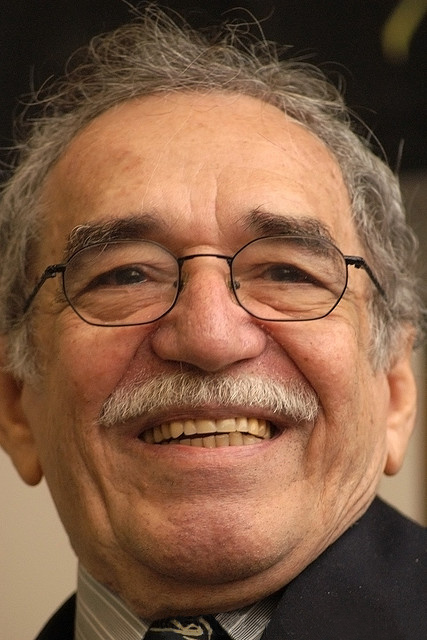
Gabriel García Márquez was born in Aracataca, a small town in Colombia's Caribbean coast, a region that would profoundly shape his literary imagination. Raised primarily by his maternal grandparents, Colonel Nicolás Ricardo Márquez Mejía and Tranquilina Iguarán Cotes, García Márquez absorbed the rich oral traditions, superstitions, and political undercurrents of his homeland. His grandfather, a veteran of the Thousand Days' War, regaled him with fantastical tales, while his grandmother's matter-of-fact recounting of supernatural events laid the groundwork for what would become his signature style. After his grandfather's death, the family moved to Barranquilla, where he continued his education. He briefly studied law at the National University of Colombia in Bogotá, but his true passion lay in journalism, a path he fully embraced by the early 1950s, beginning his career at El Espectador newspaper.
⚙️ How It Works
García Márquez's literary engine ran on a unique blend of journalistic precision and dreamlike invention, a style famously dubbed magical realism. This approach doesn't present the supernatural as extraordinary; rather, it integrates it seamlessly into the mundane, treating flying carpets, ghosts, and prophetic dreams with the same narrative weight as everyday occurrences. His prose is characterized by long, winding sentences that often mimic the flow of memory and oral storytelling, creating a hypnotic rhythm for the reader. The structure of his narratives frequently eschews linear chronology, employing flashbacks, foreshadowing, and cyclical patterns to reflect the complex, often circular nature of history and human experience. This technique allowed him to explore the psychological depths of his characters and the socio-political realities of Latin America through a lens that was both deeply personal and universally resonant, as seen in the intricate family saga of the Buendía family in One Hundred Years of Solitude.
📊 Key Facts & Numbers
Gabriel García Márquez's literary output achieved staggering global reach. His magnum opus, One Hundred Years of Solitude, published in 1967, has sold over 50 million copies worldwide and has been translated into at least 46 languages. The Nobel Prize in Literature he received in 1982 came with a prize sum of approximately $190,000 USD at the time. His novel The Autumn of the Patriarch took nearly eight years to write, a testament to his meticulous craft. By the time of his death in 2014, his works had sold an estimated 100 million copies globally, solidifying his status as one of the best-selling Spanish-language authors in history. His journalism, though less commercially dominant, also garnered significant recognition, including the Simón Bolívar Award for his investigative work.
👥 Key People & Organizations
García Márquez's life and career were shaped by a constellation of influential figures. His wife, Mercedes Barcha Pardo, was a constant source of support and inspiration, famously depicted in his memoir Living to Tell the Tale. His father, Gabriel Eligio García, a telegraph operator and musician, also played a role in his upbringing. Literary contemporaries and friends included Mario Vargas Llosa, with whom he had a complex relationship that famously fractured after a public altercation in 1976, and Carlos Fuentes, another giant of the Latin American Boom. His sons, Rodrigo García Márquez and Gonzalo García Márquez, have also pursued careers in the arts, with Rodrigo becoming a successful film director and producer, often adapting his father's works. His early journalistic mentors at El Espectador and El Heraldo were crucial in honing his craft.
🌍 Cultural Impact & Influence
The impact of Gabriel García Márquez on global literature and culture is immeasurable. He was a central figure in the Latin American Boom of the 1960s and 1970s, a literary movement that brought Latin American authors to international prominence. His unique brand of magical realism, exemplified in novels like Chronicle of a Death Foretold, inspired countless writers worldwide, including Toni Morrison, Salman Rushdie, and Isabel Allende. His work brought a new visibility and appreciation for Latin American narratives, challenging Eurocentric literary canons and introducing readers to the rich tapestry of the continent's history, politics, and folklore. Beyond literature, his political activism and outspokenness on issues of social justice, particularly his complex relationship with Fidel Castro, also cemented his public persona as a significant cultural and political commentator.
⚡ Current State & Latest Developments
Even years after his passing in 2014, Gabriel García Márquez's literary presence remains potent. His works continue to be widely read, studied, and translated, with new editions and adaptations frequently appearing. A previously unpublished novel, En Agosto Nos Vemos (published in English as Until August), was released posthumously, generating significant international interest and debate among critics and fans alike. Film and television adaptations of his novels, such as the Netflix series based on One Hundred Years of Solitude, continue to bring his stories to new audiences, albeit with varying degrees of critical success and fan reception. His literary estate remains active, managing rights and overseeing the publication of his extensive body of work.
🤔 Controversies & Debates
García Márquez's close relationship with Fidel Castro and his perceived alignment with certain political regimes in Cuba and elsewhere have been a persistent source of controversy. Critics have accused him of hypocrisy, given his critiques of Western political systems while maintaining ties with authoritarian leaders. His defense of Castro's government, particularly in the face of international condemnation, drew sharp criticism from human rights organizations and political dissidents. Furthermore, the posthumous release of Until August sparked debate about editorial ethics and the preservation of an author's final intentions, with some arguing that the unfinished work should not have been published, while others celebrated the opportunity to engage with new material from the master storyteller.
🔮 Future Outlook & Predictions
The enduring power of Gabriel García Márquez's storytelling suggests his literary influence will persist for decades. Future generations will likely continue to discover and be captivated by his unique blend of the real and the magical. We can anticipate further adaptations of his work for film and television, potentially exploring less-adapted novels and short stories. The ongoing critical re-evaluation of his political stances in light of contemporary global politics will also continue, offering new perspectives on his complex legacy. Furthermore, the continued study of magical realism as a literary mode will undoubtedly keep García Márquez at its center, as scholars and writers analyze how his innovations continue to shape narrative possibilities in the 21st century.
💡 Practical Applications
García Márquez's literary techniques have found application far beyond the novel. His masterful use of narrative structure and character development has been studied by screenwriters and filmmakers seeking to imbue their own works with emotional depth and imaginative scope. The principles of magical realism, as pioneered by García Márquez, have influenced not only literature but also film, theatre, and even video game design, encouraging creators to push the boundaries of conventional storytelling. His journalistic background also provides a model for writers aiming to combine factual reporting with compelling narrative, a skill valuable in contemporary journalism and documentary filmmaking. His ability to connect with a broad readership through accessible yet profound storytelling offers lessons for anyone seeking to communicate complex ideas effectively.
Key Facts
- Category
- culture
- Type
- topic