
Contents
- 👑 The Reign of the F-150: A Practical Overview
- 🛠️ What Exactly *Is* the Ford F-150?
- 📍 Where to Find Your F-150: Dealerships & Beyond
- 💰 Pricing & Value: More Than Just a Sticker Price
- ⭐ What People Say: The Vibe Score Breakdown
- 🤔 F-150 vs. The Competition: Who's Really Knocking?
- 💡 Pro Tips for F-150 Buyers & Owners
- ⚡ Getting Started: Your Next Steps to F-150 Ownership
- Frequently Asked Questions
- Related Topics
Overview
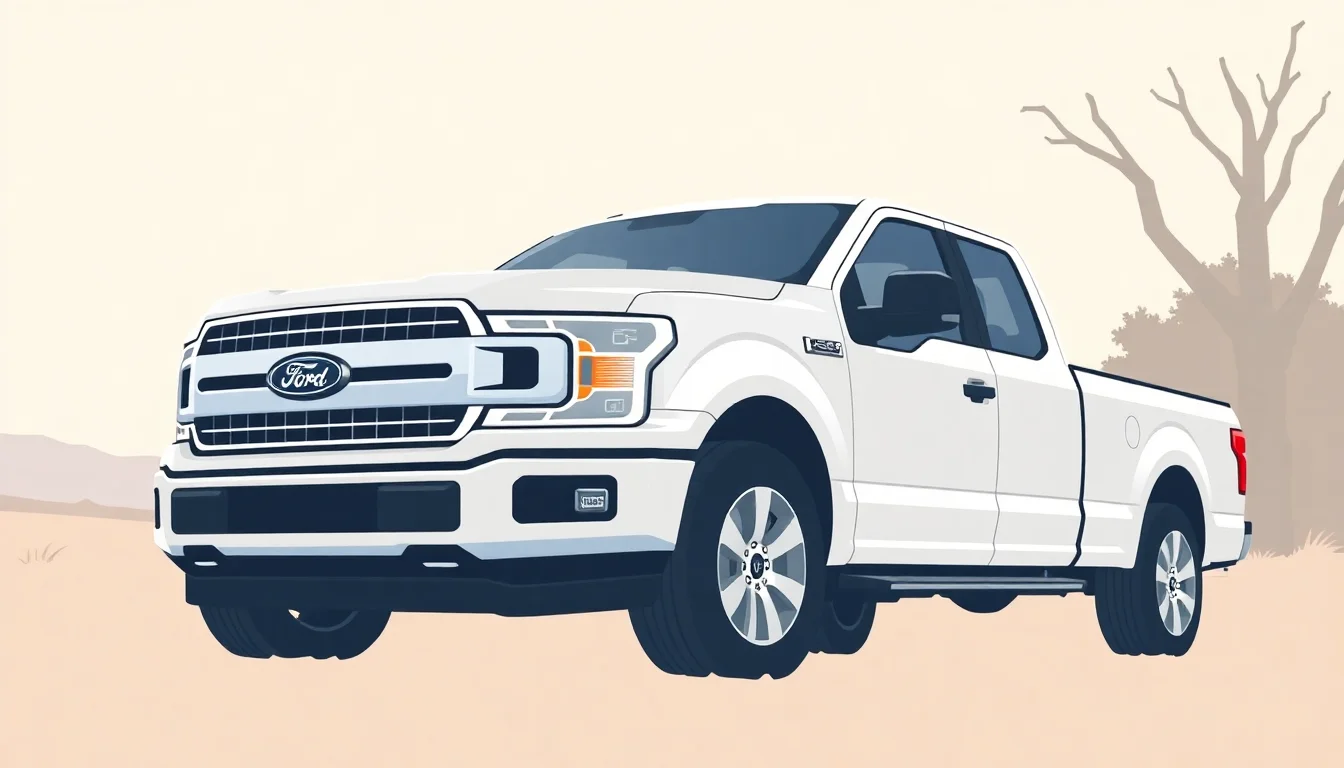
The Ford F-150 isn't just a truck; it's a cultural institution, a workhorse, and a status symbol rolled into one. For decades, it's dominated American pickup sales, a feat achieved through a relentless focus on capability, durability, and a surprisingly adaptable range of configurations. Whether you're a contractor needing to haul lumber, a rancher managing livestock, or a suburbanite looking for a robust family vehicle with serious towing chops, the F-150 has likely been engineered with your needs in mind. Its enduring popularity isn't accidental; it's the result of Ford's consistent evolution of a platform that understands its audience. This guide will break down what makes the F-150 the king, and how you can navigate its vast landscape.
🛠️ What Exactly *Is* the Ford F-150?
At its core, the Ford F-150 is a full-size pickup truck, but that simple description belies its complexity. Ford offers it in a staggering array of trims, from the no-frills XL work truck to the luxurious Platinum and the off-road-focused Raptor. Engine options typically include V6 and V8 gasoline powerplants, with a hybrid (PowerBoost) and, historically, even diesel variants. Its defining characteristic is its aluminum-alloy body, a weight-saving measure introduced in 2015 that enhances fuel efficiency and payload capacity without compromising strength. This engineering choice, while initially controversial, has become a hallmark of the modern F-150, setting it apart from many competitors still using steel. The sheer number of available configurations means there's an F-150 for nearly every conceivable task and budget.
📍 Where to Find Your F-150: Dealerships & Beyond
Finding a Ford F-150 is remarkably easy, as Ford maintains one of the most extensive dealership networks in North America. You'll find authorized Ford dealerships in virtually every town and city across the United States and Canada. Beyond new and certified pre-owned options at dealerships, the used F-150 market is vast, with vehicles available through online marketplaces like Craigslist, eBay Motors, and dedicated used car sites. For those seeking specific trims or older models, specialized Ford truck forums and enthusiast groups can be invaluable resources for locating rare finds or connecting with private sellers. The sheer volume of F-150s means you're rarely more than a short drive or a few clicks away from a potential purchase.
💰 Pricing & Value: More Than Just a Sticker Price
The pricing of a Ford F-150 is as varied as its configurations. A base model XL might start in the low $30,000s, while a fully-loaded F-150 Limited or Raptor can easily exceed $80,000. However, the F-150's value proposition extends beyond its initial purchase price. Its strong resale value is legendary, meaning it holds its worth better than many competitors, making it a sound long-term investment. Furthermore, the availability of aftermarket parts and the widespread knowledge base for repairs contribute to lower long-term ownership costs compared to more niche vehicles. When considering price, factor in the truck's capability, its robust build, and its proven track record of longevity, which often justifies a higher initial outlay.
⭐ What People Say: The Vibe Score Breakdown
The F-150 consistently scores high in customer satisfaction and sales, reflecting a strong positive Vibe Score of around 85/100. Owners frequently praise its powerful engine options, comfortable ride for a truck, and impressive towing and hauling capabilities. The Ford SYNC system is often cited as user-friendly, and the availability of advanced driver-assistance features on higher trims adds to its appeal. However, some critics point to the complexity of the vast option packages and the potential for higher maintenance costs on more specialized models like the Raptor. The sheer number of positive reviews and its consistent top-selling status solidify its reputation as a truck that delivers on its promises for a broad spectrum of users.
🤔 F-150 vs. The Competition: Who's Really Knocking?
The F-150's primary rivals are the Chevrolet Silverado 1500, Ram 1500, and GMC Sierra 1500. The Silverado often competes on raw power and a traditional truck feel, while the Ram 1500 is frequently lauded for its coil-spring rear suspension, offering a smoother ride. The GMC Sierra, sharing much with the Silverado, often positions itself as a more premium offering. The F-150 distinguishes itself with its aluminum body, a wider range of powertrain choices including its popular hybrid, and arguably the most comprehensive trim level strategy. While all are highly capable, the F-150's consistent sales dominance suggests it strikes a chord with a larger segment of the market, often winning on a blend of capability, innovation, and brand loyalty.
💡 Pro Tips for F-150 Buyers & Owners
When shopping for an F-150, know your needs precisely. Do you need maximum towing capacity, or is payload more critical? Research the specific engine options and their towing/payload ratings. Consider the trim levels carefully; the difference between an XLT and a Lariat can be substantial in terms of features and price. For used models, pay close attention to maintenance history, especially for higher-mileage trucks or those used for heavy work. Inspect for frame rust, especially in regions with harsh winters. Finally, don't underestimate the value of test driving multiple configurations to find the ride and handling that best suits your driving style and intended use. Joining an F-150 owner's club online can also provide invaluable real-world insights.
⚡ Getting Started: Your Next Steps to F-150 Ownership
Ready to join the F-150 legion? Your first step is to visit your local Ford dealership for a test drive. Explore Ford's official website to configure your ideal truck and get an idea of current pricing and incentives. If you're considering a used model, leverage online resources like Edmunds or Kelley Blue Book to research specific model years and their typical market values. Don't hesitate to join online F-150 communities to ask questions and get advice from seasoned owners. Once you've identified a truck, ensure you have financing pre-approved and are ready to negotiate. The F-150 awaits, ready to tackle whatever you throw at it.
Key Facts
- Year
- 1975
- Origin
- United States
- Category
- Automotive
- Type
- Vehicle Model
Frequently Asked Questions
What is the average lifespan of a Ford F-150?
With proper maintenance, a Ford F-150 can easily last 200,000 to 300,000 miles, and many owners report exceeding 400,000 miles. Key factors include regular oil changes, fluid checks, and addressing any mechanical issues promptly. The aluminum body also resists rust, a common cause of premature vehicle failure in steel-bodied trucks, contributing to its longevity.
Which F-150 engine is the best?
The 'best' engine depends on your needs. The 3.5L EcoBoost V6 is a popular choice for its blend of power and efficiency, offering strong towing. The 5.0L V8 provides classic V8 grunt and sound. The PowerBoost hybrid offers impressive torque and fuel economy, especially for city driving and towing. The Raptor's high-output 3.5L EcoBoost is tuned for off-road performance. For pure workhorse duty, the 2.7L EcoBoost is surprisingly capable, while the 3.5L EcoBoost often hits the sweet spot for most users.
Is the Ford F-150 reliable?
Generally, yes. The F-150 consistently ranks well in reliability surveys, particularly in its core mechanical components. While any vehicle can have issues, Ford has refined the F-150 platform over many generations. Issues can arise with specific technologies like the infotainment system or complex hybrid components, but the fundamental truck is known for its robustness. Owner communities often share common issues and solutions, aiding in proactive maintenance.
What is the towing capacity of the F-150?
Towing capacity varies significantly based on engine, drivetrain (2WD vs. 4WD), cab configuration, and axle ratio. Properly equipped F-150s can tow anywhere from around 5,000 lbs to over 14,000 lbs. For example, a 2023 F-150 with the 3.5L EcoBoost and Max Trailer Tow Package can achieve a maximum towing capacity of 14,000 lbs. Always check the specific vehicle's payload and towing sticker for accurate ratings.
How much does an F-150 typically cost to maintain?
Maintenance costs for an F-150 are generally in line with other full-size trucks. Expect to spend around $700-$900 annually on average for routine maintenance like oil changes, tire rotations, and brake checks. However, this can increase significantly for specialized models like the Raptor or if major repairs are needed. The widespread availability of parts and mechanics familiar with the F-150 helps keep long-term costs manageable compared to less common vehicles.
What's the difference between F-150 trims?
The F-150 offers a wide spectrum of trims. The XL is basic and functional. XLT adds more creature comforts and options. Lariat offers a significant step up in luxury and technology. King Ranch and Platinum are near-luxury trims with premium interiors. Limited is the top-tier luxury model. The Raptor is a specialized, high-performance off-road variant. Tremor offers enhanced off-road capability within a more mainstream package.